Tuesday, March 29, 2016

SUICIDE IS PAINLESS - ROGER WILLIAMS for KEITH EMERSON

At “the blog of less renown,” famous performers rarely get mentioned. They don’t need it. Their work is easy to find. Only vain idiots would bother upping an entire discography as a “tribute,” adding their own stupid Nazi name as a password (for what they merely stole from other blogs). They do it to get a free Freakyshare account or bitcoins. Some are so pathetic they only want a “nice comment” in return, one that will rock their Swedish-meatball middle-aged fat-faced lonely loser world. English being a second language, stealing a write up from "All Music" and pretending they wrote it, and adding "RIP" is their 16rpm speed.

So, no, you get no ELP or Nice albums here. If you really cared you would’ve bought them already. If you really need an introduction to this stuff, you must be very young or very senile, and that’s your problem not mine.

No, the reason Keith Emerson (November 2, 1944-March 10, 2016) is mentioned here is to acknowledge two things about him that are greater than the sum of his 20 minute show-off organ solos or whatever he did that made progfrogs consider him right up there with Rick Wakeman as a genius of “classical” rock.

Looking at the bigger picture, what makes this guy’s death important even to those who hated his rock groups, is how it happened and what led up to it.

Point One: he suffered from intestinal problems. Add the recently deceased Glenn Frey (colitis), as well as Patty Duke today (death due to sepsis from a ruptured intestine) aging rock fans are beginning to see that food over-processed and chemically altered by modern farming techniques is kicking us in the gut. Maybe some of this doesn’t outright kill us, but it fucks our quality of life and often makes us susceptible to something lethal. Let’s add David Bowie’s cancer to this. Our innards are getting corrupted and it seems the odds are much greater now of getting lethal liver, pancreas or intestine rot than a good ol’ quick heart attack.

More and more people are finding, like the late Keith Emerson and Glenn Frey, that immune-deficiency is a hell on earth. Medication taken to stop the body from attacking itself can also stop the body from defending itself.

This situation has been building over several decades. No less an indestructible force than Frank Sinatra suffered from diverticulitis and had to deal with a very shitty situation involving a colostomy bag before he got any kind of cure. And what happened next? He began to wither in confusion and more misery. His son had prostate cancer and not too long after that, a fatal heart attack.

Most of us grew up never knowing about diverticulitis, Crohn’s disease, ulcerative colitis, AIDS, SARS, ebola, or some of the other seemingly new or newly festering illnesses out there. These things mutate pretty quickly, and one thing leads to another. Glenn Frey had colitis, then arthritis, and seemingly well enough to appear at reunion Eagles concerts, he ended up in a coma, and dead. And before Keith Emerson shot himself?

Here’s a Facebook post from Keith Emerson, from 2010.

No, that doesn't sound like fun, does it? People kill themselves in the midst of problems like that. Yes, Keith Emerson “got better.” Just as Glenn Frey and Sinatra Jr. “got better.” Emerson found more ailments creeping up on him, and his quality of life diminishing. Did he see any hope in dangerous drugs that can cause cancer or suicidal depression? Now we know what drug Del Shannon should NOT have taken. Do we know what warnings should be ignored on new wonder drugs like Remicade or Humera? You’re putting your life in your hands listening to a doctor, a second opinion, or ignoring either opinion. No winners, it seems.

Patty Duke’s sepsis from a ruptured intestine? I’m not sure if that’s a common problem but I would not be surprised if it’s becoming one because our bodies are so weakened by pollution, stress and lack of proper nourishment. Some of this you can blame on the government allowing the Monsanto bunch to do as they please, but a lot is the fault of ignorant slobs who don’t care what poisons they put in their bodies in the guise of a “happy meal.”

While various fan-assholes grumbled that Keith Emerson was a “coward” for killing himself, and depriving them of another tour, or a new album they can complain “isn’t as good as the old ones, just like we were disappointed by the new Jethro Tull and Vanilla Fudge…”) let’s dismiss them. They are FAN ASSHOLES. They are likely to live a shorter life than Keith Emerson because they are happily gorging on ham from shit-covered pigs loaded with infections, burgers from mad cows, and “wings” from bacteria-infected chickens. All washed down with a soda containing 8 spoonfuls of sugar.

The ones who don’t understand Emerson’s suicide, or shrug that Frey somehow just “died too soon” and that’s fate, are just ignorant fools. They laugh at climate change and smirk as they order that “heart attack on a plate” at the deli. They also don’t realize that for every star’s suicide there are hundreds and thousands of ordinary people going that same route, which means the problem is much more severe than what Todd Rundgren once called the “tortured artist effect.”

And so it was, that Keith Emerson put an end to his misery. “Suicide is Painless,” as the song says.

Your download is the Roger Williams cover version of the M*A*S*H theme, since it’s a lot more obscure than the one on the original soundtrack to the movie. You’d expect the song to get the stereotypical Roger Williams treatment of “falling leaves” piano glissandos but this item is closer to what a Percy Faith would’ve done. It’s got a full orchestra (which Roger did not conduct), and even a chorus just like the film. The TV show never did offer a lyrical version of “Suicide is Painless” in any episode. Maybe Alan Alda and his gang knew something from operating on people who tried to kill themselves and didn’t quite complete the job? Maybe suicide isn’t painless. You can’t ask Keith Emerson.

Roger Williams Suicide is Painless

Saturday, March 19, 2016

Final Score: Frank Sinatra 82 - Frank Sinatra Jr. 72

The ad for the show Frank Sinatra Jr. had to cancel.

Frank Sinatra Jr. (January 10, 1944-March 16, 2016) was a realist about his mediocre career. A few years before his sudden heart attack (while touring in Florida) he reflected: ’I’ve never been a success. I have never had a hit movie, a hit television program, a hit record. It would have been good for my personal integrity, my personal dignity to have had something like that. I have never made a success in terms of my own right. I have been very good at re-creation. But that is something that pleases me because my father's music is so magnificent.”

Junior’s career, especially in the past 25 years, was basically being a tribute act. Aging Baby Booers now mellow enough to appreciate "The American Songbook" might go to his shows, but were more likely to try for a ticket to a Tony Bennett-Lady Gaga show. The crowd for Junior was mostly old farts. They'd come up to him for an autograph, either saying, “You did your Dad proud,” or “You’re pretty good in your own right.” Or some other pathetic “compliment.”

The sad fact is that Frank just never fit into the slots that were occupied by his contemporaries, who were either successful Sinatra imitators (Bobby "Beyond the Sea" Darin) or had the puppy-eyes and soft round faces to be teen idols (Paul Anka comes to mind). If teenagers sighed "Frankie" in 1965 it was over Frankie...Avalon, who looked natural in a swim suit. Frank Sinatra Jr. was a stiff; he sang cold, and he looked too much like his father. No, he didn't even have that ONE hit that goofy Gary (son of Jerry) Lewis managed. That had to burn him up.

Gary Lewis or his manager managed to find a hit song in "This Diamond Ring," and was also able to regurgitate a hit by re-covering "Sealed with a Kiss" in 1968. Gary wasn't a great singer but he was a typical nerdy teenager and Jerry fans identified with him. By contrast, teens didn't like Frank Sinatra and were lukewarm to the guy's stone-faced son. They DID like his sister, though. Nancy Sinatra was a star in the mid and late 60's with a string of hits. Well, Nancy Sinatra Jr. didn't have the shadow of her famous mother in her way. After some experimenting, she ended up a blonde toughie, rocking C&W with her "Boots." Frank Junior was stuck with looking like his father and having the same name and...making poor choices with his singles. And albums.

Frank, Mr. Nepotism, did indeed sign his son to Reprise back in 1965. The debut album seemed to emphasizes this was "Frank JUNIOR," as the boy was dressed in a tux and singing Daddy's rejects, shit like "S' Wonderful" and "I Got the Sun in the Morning." It was with RCA Victor in 1967 that the kid had his best shot at singles success. At the time, there was still a chance for a singer or 30 or 40 or even older to score a hit if the song was something catchy by Mancini or Bacharach or Jimmy Webb. Below, two examples of what Junior chose.

“Building with a Steeple,” which opens in a minor key, as if it might break into a Del Shannon “Stranger in Town” rocker, limps toward Lee Hazlewood. But instead of singing ala sullen and gritty Lee, Junior can’t stop a’swingin’ and his vocal style just doesn’t fit the song.

“Shadows on a Foggy Day,” has backing from “High Hopes” brats. It’s a sappy happy sunshine song that in no way brings fog or shadows to mind. And who gives a crap if a rich man's son is happy? Frank Senior, on drek like "High Hopes" or his duet with daughter Nancy on "Something Stupid," was enough of an actor to fake some charm. Junior just couldn't seem to do it, and his pavement-hard vocals don't levitate what should be a cheery and optimistic fluff song.

Bobby Darin remained the young listener's Sinatra till Bobby died. The field was then dominated by Paul Anka in a tuxedo, and hipper satellites like Tom Jones and Neil Diamond. Junior issued the embarrassingly titled "His Way" in 1972 and spent the next 20 years being a budget version of his father in smaller venues, and then moving on to being the nostalgia link to the past, when the alternatives were non-relatives like Steve Lawrence, Jack Jones and Tony Bennett.

Yeah, pity the guy a bit, since being the son of a famous man can be tough. Frank Sr. wasn’t around much in Junior's early life. He was busy with his career, not the type to play baseball with his son or sit around playing with crayons or watching cartoons and watching the boy laugh. Nope. Frank would’ve preferred to be out drinking, and slamming Ava Gardner. Junior had to grow up fast and deal with a lack of fatherly warmth.

Frank Jr. became famous for being kidnapped. After four frightening days as a captive to a bunch of clueless cretins, he was rescued and they were jailed. Some considered it all a “publicity stunt.” To his credit, the kid bore up well under the ordeal, and also under the camera flashes that greeted him wherever he went. He developed, if not poise, stoicism. A stone face. The result was that over the years people didn't feel that sorry for him. He seemed to be polite and distant to fans and to even friends. When he died, even his own family reacted with little emotion.

If you checked Facebook, you saw very unemotional posts about him. Mia Farrow (who was a year younger than Frank when she married his father) offered the standard "condolences" and "RIP." Farrow used that familiar "Rest in Piece" shorthand? Really? That's how rock forum members used to dismiss some bore who died. They'd hear that some guy who used to upload Ray Price and Ernest Tubb albums died, and all they'd do is maybe add "RIP" to the list of others who couldn't be moved to add anything more. Yeah, RIP, Lazy Rebel. RIP. RIP. Condolences.

As for 75 year-old Nancy, her dry-eyed Facebook post added the line "Keep Warm, Frankie," which sounds like a a sarcastic suggestion as to his final destination. She did get some "nice" comments from, er, the late Ava Gardner, and Joe Piscopo, the SNL comic who used to get some snickers by imagining Frank Sr. singing disco tunes in a burly Joisy accent.

Junior didn't seem to get along with anyone too warmly. He was married only once, and it lasted for two years, just enough to squeeze out a son. The son, Michael Sinatra, offered this quote: “He was a man who was loved so much despite being so flawed - and that was always a great inspiration for me.”

A few months ago I watched the HBO documentary on Frank, and Junior did much of the talking for the family. His tone was clipped, dry, and strangest thing of all, he insisted on calling his father “Sinatra,” and not “Dad,” saying it was “out of respect.” Warmth apparently didn’t come that easily to him, and perhaps the majority of people noted the chill and that was why he didn’t make it too big in show business. He gave off the vibe of a Sinatra impersonator, settling for a career he really didn’t want for himself, but making the best of the cards he’d been dealt.

JUNIOR BUILDING WITH A STEEPLE

JUNIOR SHADOWS ON A FOGGY DAY

Another Dead Jewish Woman: GOGI GRANT (“The Wayward Wind”)

A few months ago, it was Kitty Kallen. Now we say Kaddish for another Jewish woman who had her name changed so she seemed she was born in Tennessee. Philadelphia’s Myrtle Audrew Arinsberg (September 20, 1924 – March 10, 2016) became, thanks to her record label, “GOGI GRANT.” If that first name seems impossibly stupid, well, it was the era of America’s Binnie Barnes and England’s Googie Withers.

Grant’s strong, mystical “The Wayward Wind” blew Elvis Presley’s ‘Heartbreak Hotel’ off the #1 spot exactly 60 years ago. It was an unlikely achievement for a 30-something, who had begun her recording career only a year earlier. On the small Era record label she'd had the modestly charting “Suddenly There’s a Valley.”

Back then, anything could happen…if you had the right name. An Italian became a cowboy song hero as “Frankie Laine.” And so Gogi, and Kitty Kalen (and Dinah Shore) passed as wholesome middle-Americans, not Jews to be jeered or stolen from by every Hans and Christer. I once had a discussion about this phenomenon with Gene Simmons, and how sad it was that he couldn't have been the hip, hot, rocking leader of KISS if he remained Gene Klein. Wouldn't it be nice if stereotypes could be smashed? "Yeah, I know what you're saying," came the reply. But he added he was happy being Gene Simmons. Just as Bob Zimmerman was more comfortable as Bob Dylan.

While racism implies that you’ll be shut out if you don’t assimilate, many nice people simply expect certain stereotypes in their lives. They want their Italian restaurant run by Italians. They want a Jewish accountant. A yoga instructor from India. Speaking of India, we may know that Ben Kingsley was born Krishna Pandit Bhanji, but we appreciate him taking the effort to toss his 'eathen real name AND, allow him to play Gandhi because we know what his real name was.

“The Wayward Wind” was the perfect storm of singer and song. Her follow up, available below, was the predictable “When The Tide is High.” Chart failure didn't bother Gogi much. Her fame was strong enough to take her to a Hollywood studio where she dubbed Ann Blyth for the musical biopic “The Helen Morgan Story.” The soundtrack was a best-seller. The following year, 1958, she starred in “The Big Beat,” one of those jukebox movies full of top singers and musicians of the day.

Gogi issued three RCA albums in 1958-59, “Welcome to My Heart,” “Torch Time,” and “Granted it’s Gogi,” but there was a lot of competition in singing “The American Songbook.” Her versions of songs such as “That’s My Desire” were very competent but not all that exciting. Fans seemed to long for tangy country-lilted things like "The Wayward Wind." Another aspect of stereotype is expecting a star to stay in the style that made 'em famous.

Willing to try roots music again, Gogi recorded a 1960 album for Liberty called “If You Want to Get to Heaven.” It was loaded with Gospel shouters, which seemed to reinforce the idea that she was Christian. Her next and last stop was CRC-Charter in 1964: “City Girl in the Country.”

40 years later, 80 years old, Gogi Grant thrilled nostalgists by singing “The Wayward Wind” on a PBS nostalgia special.

Gogi did herself proud that night. She was one of the highlights. Reports say that she was still turning up for cameo stage appearances into her late 80's. And, no, Gogi did not end up cremated, and tossed into "The Wayward Wind." She can be found at Hillside Memorial Park, a Jewish cemetery in Los Angeles that is also the final rest for Jack Benny, Eddie Cantor, Leonard Nimoy, David Janssen, Michael Landon, Lorne Greene, Milton Berle, Al Jolson, Allan Sherman, Dinah Shore and Moe of The Three Stooges.

GOGI GRANT When the Tide is High

Wednesday, March 09, 2016

JIMMIE RODGERS - (When I was) LEADER OF THE BAND

Some years ago, Jimmie Rodgers autographed a CD for me and said, “Say hello to Bobby Cole for me.” While they were not exactly similar in style, they covered some of the same songs, had some of the same highs and lows, and ironically, wrote eerie, beautiful ballads about age and fame.

Bobby’s most legendary number is “Growing Old.” Sometimes, late at night in a club, he'd offer “So Sleeps the Pride,” a bittersweet meditation on his time in the spotlight. He never recorded it, which his fans always lamented. And Jimmie Rodgers, who did record the pensive “Child of Clay” never waxed “Leader of the Band.” It appears below via a live rendition done some 16 years ago.

Sadly (on this day that we remember the passing of George Martin at 90), in the case of both Bobby and Jimmie, there wasn’t a producer (or agent, or manager) able to take a “Growing Old” or “Leader of the Band” to some influential artist who could make it into a hit. Of course in that regard, luck plays a part. The well-connected Randy Newman hoped Frank Sinatra would cover the bitter “Lonely at the Top.” Frank never did.

James Rodgers was born September 18th, 1933 in Camas, Washington. The other Jimmie Rodgers, a legendary C&W star, had died several months earlier. By the time Rodgers began performing, there didn’t seem any reason to worry about any confusion with the long dead competition. Now, of course, any Google of “Jimmie Rodgers" will get a pastiche of both. It doesn’t help modern confusion that Jimmie’s early singles, like the 1957 hit “Honeycomb” sound quaintly country and might be mistaken for much earlier C&W fare. Jimmie also covered a lot of folk songs in those early days.

After his breakout year (aside from "Honeycomb" he also married, and made his “Ed Sullivan Show” debut), Rodgers was welcomed on live show tours around the country. In 1958 and 1959 he was on the same bill with The Everly Brothers, Paul Anka, The Tune Weavers, Eddie Cochran, and Buddy Holly among others. Yes, Jimmie was going to be part of Buddy Holly’s ill-fated winter tour, but had to cancel due to illness. Jimmie continued to have hit records, but not all the money that he deserved. This was because he was on the notorious Roulette Records, which labelmate Tommy James would later expose as Mafia-run.

In 1963, Jimmie moved over to Dot Records, and in 1967 with folk-rock now popular, signed with A&M, the label that also had faith in Phil Ochs. Rodgers’ career, which had flagged a bit, instantly gained a strong new direction via his ballad “Child of Clay.” But 1967 ended up as the worst year of his life.

Rodgers told Rolling Stone (in a 1986 "Where are they Now" piece), “"I got beaten up by an off-duty Los Angeles policeman. I went to a Christmas party in December of 1967. On the way home a car pulled up behind me, blinked its lights. I pulled over and stopped. This guy got out, stood outside the car. I rolled down the window, and he hit me through the open window with a bar or something. I don't know what transpired because I was unconscious. I might have said something to him, 'Who are you?' or whatever, and that's all it took. Whether I cut him off on the road or what, we don't really know."

It’s possible Rodgers was being vague out of worry for the still-powerful president of Roulette, who had made no secret of telling people that if they dared to leave the label they’d get the same treatment as Rodgers. Apparently the mob, following Oscar Wilde's advice ("revenge is a dish best served cold") had waited a few years for the right time to get Jimmie, which coincided with his big comeback and new hit single. Rodgers wasn’t beaten up by just one off-duty cop. There were three on the scene, and all became implicated when Jimmie ultimately sued and settled.

The cop version seemed to change from an excuse that Jimmie was drunk and had needed to be subdued after being pulled over, to the even more ludicrous insistence that Jimmie had merely fallen down and injured himself. Once he had stopped falling down and injuring himself, they’d merely put him in his car and abandoned him so he could sleep it off.

Rodgers went through three brain surgeries. His loyal pal Joey Bishop publicized the problems via his late night talk show. He interviewed Rodgers during his road to recovery, and booked Jimmie in 1969 for a comeback appearance. It was at this point that I really became aware of this singer. Yes, I sort of knew of those early hits, but it was traumatic for a kid to see a guy lying in a hospital bed half-dead, and a comedian (Bishop) somberly interviewing him and wishing him well. (Years later, when I had a chance to communicate with Bishop, I mentioned that my first memory of him was not the sitcoms or stand-up, but his talk show and his concern for Jimmie Rodgers).

Unfortunately, Jimmie’s health situation was still far from perfect: “I started having convulsions,” he recalled. “I couldn’t get back. Nobody wanted me.” The fragile ex-pop star worked for a while painting houses. He eventually found his way back to the less strenuous world of show business, and was well enough to record again…and suffer the usual problems an artist has. He went into the studio in Nashville for a session, and nothing happened. A while later, somebody had seized the masters and marketed a 2 record set on K-Tel; no profit to Jimmie. He eventually managed to buy back the masters, but it didn’t do him much good with a semi-bootleg already out for several years.

Here at the blog where Mr. Ochs is so well remembered, I do have to say that for me, the most important part of Jimmie’s career remains the A&M years, and the folk rock material, not the happy folk stuff, pop material or C&W tracks. His best new song, "Leader of the Band," echoes the mood of the introspective A&M years.

Rodgers continued his sporadic comeback of live shows, records, and original songs. He was among the aging pop stars who managed to find a home in Branson, Missouri, where he had a small theater and played to the nostalgia trade…home folks who mostly wanted to hear “Honeycomb” or ‘Sweeter than Wine” or “that song that they re-wrote for the Oh-Oh Spaghettio’s commercials!”

Rodgers left Branson for semi-retirement some years ago, and his last gig, according to his website, was in Sandusky, Ohio, in August of 2014. I’m sure he gave the crowd a lot of smiles and a helping of “Honeycomb.” I don’t know if he went to open D tuning and sang about those days when he was…”Leader of the Band.”

Jimmie Rodgers Leader of the Band

BYE BYE BLACKBIRD? WHAT WHAT? (Gene Austin)

Funny, that a song written 90 years ago (1926) needs to be explained. Some think that “Bye Bye Blackbird” is some kind of racist tune, and that at best, it’s sung by a black who is happy to get away from a bunch of rednecks.

As the old sheet music above would indicate, the song is actually about bidding a symbolic farewell to the black bird of gloom. This, as opposed to Poe's "Raven," who still is sitting, still is sitting...

It’s easy to spin-doctor this old song, especially when you consider that “Blackbird” by Paul McCartney does indeed have a racial message. Macca insisted that the song was inspired by the plight of blacks in America, and anyone finding a double-meaning in black birds as either birds or oppressed humans was on solid ground.

A few weeks ago, Dave Grohl sang “Blackbird” at the Academy Awards, offering dual meanings. It was sung during the “In Memorium” segment, with visuals of some deceased stars (Lizabeth Scott) but not others (Abe Vigoda). Obviously the message was that those now with sunken eyes would be heaven-bound. The more coded but intentional double meaning was: “Hey, the Oscars failed to nominate Will Smith and other black birds, so they’re racist!"

So, what about “Bye Bye Blackbird?”

The song was written by two white guys, composer Ray Henderson and lyricist Mort Dixon. From the start it was sung by just about everyone from white man Gene Austin to black woman Josephine Baker. Whoever sang it, it was a croon with an uptempo jazz beat; the singer is happy and optimistic about leaving for someplace better:

Blackbird, blackbird singing the blues all day
Right outside of my door.
Blackbird, blackbird why do you sit and say
There's no sunshine in store?
All through the winter you hung around.
Now I begin to feel homeward bound.
Blackbird, blackbird gotta be on my way
Where there's sunshine galore.

The infamous chorus has a bit of sadness to it (“No one here can love or understand me, oh the hard luck stories they all hand me.”) But the good news is that the singer is headed home: “Where somebody waits for me, sugar’s sweet, so is she [or he].” It's probable that the racial tinge to the song came from so many quick versions of the song eliminating all but the sorrowful chorus.

In the second stanza, the bird shifts color, from the black bird of misery to the bluebird of happiness:

Bluebird, bluebird, calling me far away
I've been longing for you.
Bluebird, bluebird, what do I hear you say?
Skies are turning to blue, I'm like a flower that's fading here,
Where ev'ry hour is one long tear.
Bluebird, bluebird this is my lucky day.
Now my dreams will come true.

The era was loaded with songs about change and movement (“Toot Toot Tootsie, Goodbye”) as well as every cliche about color, including “Blue Skies” as symbolic of carefree tranquility.

Yes, there were also songs that addressed race, and used color symbolism. Fats Waller comes to mind with his song "(What Did I Do To Be So) Black and Blue)?" But, “Bye Bye Blackbird” ain’t one of ‘em.

Side note: Puffins are now on the International Union for Conservation of Nature (IUCN) Red List of Threatened Species. They join the depleted ranks of European Turtle Doves, Pochards and Slavonian Grebes. Among others. So in addition to a hipster reference to Charlie Parker ("Bird Lives") let's not neglect other species. "BIRD LIVES MATTER." GENE AUSTIN Bye Bye Blackbird

Monday, February 29, 2016

You Cunts! Beatle John diddles them San Francisco Bay Blues

One of the stupidest songs ever recorded is "San Francisco Bay Blues." It's one of those shitty up-tempo pseudo-vaudevillian pieces of crap. It's the kind of "let's wear bell bottoms and hold flowers" things that an Andy Williams might've sung on a 60's variety show, in a duet with Cher and/or Mama Cass (the vaginal Laurel and Hardy).

The irony is that it's an actual blues, written by a black guy named Jesse Fuller back around 1954. Unfortunately, he was a "one man band" who apparently was a novelty act for crowds of affluent white tourists. Based on a YouTube video of him doing this awful song, I can imagine him on the pier, banging his drum, twanging his guitar, and yeah, tooting a fucking harmonica between choruses, smiling as the hat on the ground filled with coins. Who was in San Francisco back then besides vacationers looking for amusement and a fish dinner with Rice-a-Roni?

By the late 60's the hipsters and the Boho homos took over. For the latter, "Ghirardelli Chocolate" was just code for wanting to ass-fuck an Italian. Also by then blues and R&B were eclipsed by several nefarious music forms, all of them somehow warping "San Francisco Bay Blues" like Jimmy Savile alone with a child.

Fuller's corny tune was picked up by the late 50's and early 60's folkies, the "let's all wear the same striped t-shirts" 3-man folk groups. They tricked up this blues piece the same way they trivialized Mexican rhythms ("Tijuana Jail") and hammering a mild joke into an overbearingly rousing gag tune ("The M.T.A. Song.") If you could get the crowd banging spoons on the table at the notion of a man unable to get off a fucking subway train because he didn't have a nickel (and his wife threw him sandwiches each day INSTEAD of a nickel), then the "snappy" ode to S.F. Bay was just your cup of espresso.

I'm not sure if one-man-band Fuller played kazoo or that was an affectation added by Greenwich Village musos, the type who failed to impress some girl who wore all-black clothes and mascara that could've been applied by a State Highway tar crew. The type who ended up coming home alone to moodily smoke an un-filtered Pall Mall, tap the bongos, and listen to Jean Shepherd musing on life's miseries on late night radio.

From the early 60's when Ramblin' Jack and the sprightly Peter Paul & Mary covered it, "San Francisco Bay Blues," like the infamous chicken, laid in the middle of the road. There it was plucked up by most any lame late 60's act. By then there was a new type of MOR music. One writer who got diverticulitis from sucking a lollipop with his ass all day called it "zunshine pop." You know the genre. It included retro-20's schlock and outright crap: "Winchester Cathedral," "Lady Godiva" and "Up Up and Away."

I don't know if this bit of Charleston Chew spewed from the gobs of the Nitty Gritty Dirt Band or Ian Whitcomb, but I wouldn't doubt it. I'm sure it was a fave of all those psyche-dipshit bands that were melding pop and jug band or New Orleans "funk," and naming themselves Fungo Jerry or maybe Bill Wicks and His Dipsticks. Remember them? They were the kind that had at least one member wearing a top hat and a handlebar mustache, another never smiling, another was always grinning like an imbecile, and the lead singer milking crowd reaction with a prop box containing Mickey Mouse gloves, oversized orange granny glasses and a version of the arrow-through-the-head trick.

One thing about "San Francisco Bay Blues" that you have to admit: it's catchy. Downright infectious. It almost invites a Clark Terry parody. Terry you'll recall, performed "Mumbles," his "tribute" to marble-mouthed Ray Charles-styled blues singers. Well, ex-Beatle John, who was a wicked guy, would sometimes play around in the studio parodying rock stars and styles. He probably wore out his copy of Peter Sellers taking the piss out of Lonnie Donnegan. And so, sick and tired of uptight mama's little chauvinists in the recording booth taking too long of a toke break when he wanted to make some recordings, he skiffled over "San Francisco Bay Blues," mocking-up the lyrics, strumming like he had Formby's uke, and ending with an appropriate curse.

Off you go...

John's Minute Doodle of San Francisco Bay Blues

Friday, February 19, 2016

Red Skelton and a Phil Ochs pianist: "SPRING DAY"

What's that photo? It looks like the late Red Skelton, spiritually guiding Lincoln Mayorga through a performance of "Spring Day."

In dreams. It's a Photoshop job; Mayorga on stage was playing Gershwin's "Rhapsody in Blue" as part of "Broadway on Ice." The show was at the Royal Opera House (in Oman, of all places) back in December of 2014. No photo of Gershwin superimposed, much less "one of America's clowns," as Red humbly billed himself.

In just a month, we'll encounter our first "Spring Day." Maybe only one, considering climate change.

Some 50 years ago, Red was interested in emulating other musical comedians, from Chaplin to Jackie Gleason (who was very successful conducting "easy listening" albums). Red would eventually write his own theme song, to be played when he walked on stage for his one-man shows. In the mid 60's, Liberty gave him a two album deal conducting standards and some self-written numbers as well.

Leading off the second album is "Spring Day," a Skelton original. Like every other cut on the album, it was arranged by Lincoln Mayorga. Phil Ochs fans will instantly know that name. Mayorga supplied the fascinating piano work on several of Phil's A&M albums. It might be a bit of a stretch, but Lincoln's piano embroidery for "Spring Day" might recall the burlesque of easy listening that he did on Phil's track "The Party," probably only a year or two later.

In a Spring day in March, Lincoln Mayorga will turn 79. You can find out much more about him at his dotcom.

As we look to Spring, we can hope (against hope) for some good new music in the world. Maybe some of it will come from comedians. I once had a lively talk with Phyllis Diller on the kind of band we could assemble made up of comedians (Phyllis on piano, Jackie Vernon on trumpet, Morey Amsterdam on cello, Henny Youngman and Jack Benny on violins, Woody Allen on clarinet, Pete Barbutti and Judy Tenuta on accordion, etc.)

Steve Allen was a pianist and Johnny Carson a drummer; today's late night stars are also musical and some very ambitious about it, too. Jimmy Kimmel plays clarinet. His CBS rival Stephen Colbert recently tried to replace James Taylor in duetting "Mockingbird" with guest Carly Simon. The most obsessed of the lot is Jimmy Fallon who will strum a guitar and imitate (ad nauseum) Neil Young. He has insisted on doing karaoke regularly. He has done the good (a duet with McCartney imagining what "Yesterday" would've been like if it had remained "Scrambled Eggs") the bad (literally falling all over the piano and the stage while duetting with Billy Joel) and the ugly (too much to chronicle here.)

The late musical comedian Michael Flanders recalled enjoying a Spring day in Great Britain: "I missed it last year. I was in the bath." Just in case the temperatures do indeed shift rapidly from cold and rainy to overbearingly hot and humid, you can perpetually enjoy THIS "Spring Day" below. And if that's not optimism, well, it's not.

RED SKELTON SPRING DAY

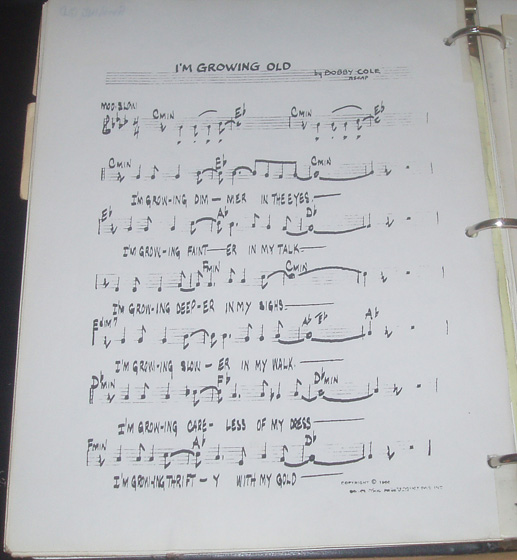
BOBBY COLE - "GROWING OLD" (10 Years After)

Ten years ago on this date, THIS BLOG appeared.

One of the first things I posted was "Growing Old," written and recorded by my late friend Bobby Cole.

We didn't talk much about his old songs. He was pretty modest about his sheet music, his many looseleaf binders of music study, and whatever "unreleased" material he was still working on. I remember checking out some of the songs and asking, "Why did you write them down in such complicated keys?" Much of his stuff was in 4 flats, 3 sharps, etc. He said, "Hadn't thought of that."

And then we were off for a walk, or a discussion of beer, women, and anything but song. After all, you don't expect a doctor or a lawyer to "talk shop" after hours? They're trying to get away from it.

There's no getting away from today's anniversary, so I'll acknowledge it. Yep, 10 years of this blog. But I have no profound comment to make about it; no paragraphs of nostalgia about all the changes over the years. As with Bobby and his music, living it was enough. Just enjoy what remains. The blog has some 1,000 or so links. And below is one of them.

Ten years ago I wrote:

"I'm Growing Old" is Sinatra's "It Was a Very Good Year" gone very bad. The singer here isn't looking backward fondly, he's accepting a very unpleasant future. The song puts a final chord on the forewarning of an earlier song (on Bobby's solo album) called "Lover Boy."

In that one, he tells a playboy that Life will eventually provide the truth: "taking in exchange...your youth." Here, the truth is "I'm Growing Old," and it's so painful Bobby told me that grown men in the audience would cry. That might also explain why Lou Rawls emphatically turned this song down when Bobby offered it. PS, Bobby had better luck when Nancy Sinatra covered one of his tunes (Flowers)."

BOBBY COLE I'M GROWING OLD

Tuesday, February 09, 2016

Angie Bowie Tribute: ZIGGY STARDUST in French by NUIT D'OCTOBRE

From inside a British reality TV madhouse, Angie Bowie cried, "The Stardust is Gone!"

She wasn't referring to the eye shadow on David Gest. She was referring to the death of her ex, David Bowie, aka Ziggy Stardust, The Thin White Duke, Aladdin Sane and The Avant Garde Anthony Newley. The news was so sad she eventually quit the show. Which was too bad, because before that, Gest had also quit, and she probably had a good chance of winning the grand prize. Which I think was a box of Kit-Kats without the wafers.

Longtime readers know that this is the "blog of less renown." (Some might even get the obscure Les Brown band reference). No way a guy as famous as David Bowie needs a tribute here.

But…how about Nuit D'Octobre? The scant album notes on the obscure "Dark Side of David Bowie" album only say of the Swiss band: "Still not well known, they really deserve more attention." So let's take the death of Bowie to give it to them. And let's also take a moment to offer a kind word or two for Angie.

It was 20 years ago today, give or take a day or a year, when a German record label got the idea to do a tribute to Bowie. They cobbled together indie, goth, alternative and heavy metal acts who covered the songs in various sober, artsy and sludgy ways. The band names were certainly a lotta fun: Crimson Joy, Syria, Dreadful Shadows, Gallery of Fear, Burning Gates, Kill the Audience, etc.

It was probably around that time that I met Angie Bowie for the first and only time. I was at a party with my better half (there has to be one!). She (the better half) was getting bored trying to identify the D-list celebrities (I think she was tempted to include me as one). We noticed a very gregarious (ie, over-served) lady who seemed to find everything hilarious, and who seemed to know everyone. We didn't want to know her. Happy people make us irritable.

Happenstance and no other available seating got us next to her, and to our surprise, when she turned her extroverted joy in our direction it changed our mood. She was really good company. It was maybe an hour before we made the connection that the lady who introduced herself simply as "Angie," was in fact, Angie Bowie. We figured it out the more the conversation turned to our mutual tastes in music.

While she is often treated with scorn and derision, for me, the name Angie Bowie conjures a memory of warmth and joy.

As for David Bowie, I'll agree he influenced just about every publicity-seeking artist in the world. After his death, dozens of unlikely rock and pop stars insisted he was a major influence. Madonna conspicuously wanted to make the connection in the days after his death, to the point of hilariously fainting face-first after doing "tribute song" to him.

No question the guy legitimately influenced many struggling bands who began by covering a particular look of his, and ultimately forge a more original identity to create new and worthy songs. I just can't think of any. After all, whatever became of the people on the "Dark Side of David Bowie" album, like NUIT d'OCTOBRE? Oh, "Ziggy Stardust is Gone..." but here, their French language cover version lives on.

ZIGGY STARDUST Nuit d'Octobre

The bittersweet "LOVE THEME FROM SHIP OF FOOLS"

Bob Dylan may have said it best: "Too bad what we have can't last."

But musically, there's still a shimmer to Ernest Gold's poignant "Love Theme" from "Ship of Fools."

As you might guess from the movie's title, "Ship of Fools" was symbolic, pretentious and overly long.

Even so, it had some vivid moments of foolish if not appalling behavior. Most of the latter concerned particular forms of cruelty to animals, immigrants and Jews, among other easy targets.

The film, based on Katherine Anne Porter's novel, also focused on the angst of relationships sinking like the Titanic or going as wrong as most any Carnival Cruise.

For a "love theme," this piece is very sad. This confused me at the time, since I hadn't actually seen the film when I bought the record. Back in the day, when new albums pushed the older ones aside pretty quickly, soundtracks were an endangered species. Once the film was out of the theater, the "souvenir" music album would go to the bargain bin. I figured if the movie had a well-known composer involved, why not give it a try?

I finally saw the film recently, and it turns out the moment that uses this music in the background, is indeed sad. Oskar Werner plays the ship's doctor, who has a heart condition, and Simone Signoret is a washed-up drug addict. Their feelings for each other are tender. Their prospects for a happy future? Well, tough.

In the movie still above, you see Oskar Werner contemplating the problem, and thinking, "Does she remind me more of Broderick Crawford in drag, or Lon Chaney Jr.?"

Among the other stars making the film worthwhile; Lee Marvin as a boorish baseball player, Vivien Leigh in her last role, and a little fellow who once, with a female partner, sang songs in New York City cabarets: Michael Dunn.

SHIP OF FOOLS Love Theme by ERNEST GOLD

Tuesday, January 19, 2016

BLOWFLY IS DEAD...like ROTTEN FISH

The past week has seen the progrock world moaning about The Thin White Duke, Smiley the "Breathlessly Beautiful," and the drummer from "Mott the Hoople." I think you knew better than to anticipate a tribute on this blog to them. They have more than enough fans. So the salute here is to BLOWFLY, and I have more albums by him than the other three put together. Which isn't to say that any of 'em even contain a song at the same level as "Space Oddity" or "Putting Out Fire (the theme for Cat People)". But hey, weren't the BLOWFLY album covers a lot less pretentious than the BOWIE album covers?

In the world of Blowfly, you wouldn't waste your time on Mott the Hoople when there was a chance to Suck the Nipple. You wouldn't be squealing "Wham Bam Thank You Ma'am" to a suffragette while secretly dreaming of being in bed with Mick Jagger. And your re-write on The Shirelles would go like this:

"Tonight your head is mine completely. As you jerk it in my cunt so freely…but will you still eat me when my period comes on?"

OK, I didn't say the guy's lyrics scanned that well. There was a decent, or rather, indecent shock laugh to some of what was on those old Blowfly records. A main problem with him, over 4 decades and spanning oldies parodies and funk porn, is that he was not on a major label and was elbowed aside by others. Early in his career, the stuff from Doug Clark and the Hot Nuts was much more accessible, and later, his funk was fairly mild and inept compared with the much more offensive and angry rap material out there from Ol' Dirty Bastard, 2 Live Crew or Li'l Kim.

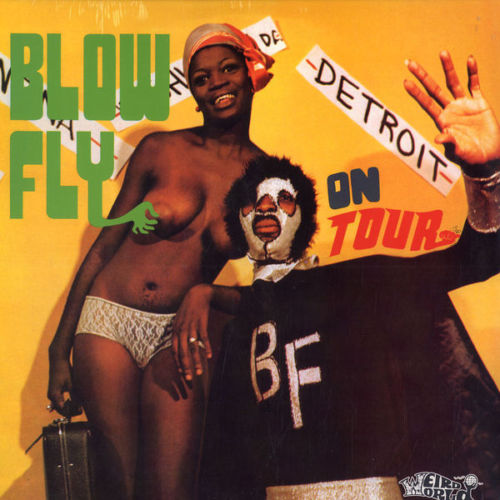
Back in the early 70's, it wasn't easy to find Blowfly albums, which were on the obscure "Weird World" label. Record stores were afraid to put the records on the shelf, since they usually had the skankiest topless women on them, and Blowfly in his ridiculous superhero outfit. Much of what was on the black vinyl was, frankly, aimed at blacks only…and ones with a nasty sense of humor.

Blowfly was Clarence Reid (February 14, 1939-January 17, 2016). and as Clarence, he had some success in the "clean" music world. His legit songs turned up on albums by K.C. and the Sunshine Band, Betty Wright, and Sam and Dave. K.C.'s label, TKO, released "Rap Dirty" back in 1980, which Blowfly would later insist made him "the first rapper," and a true pioneer. What he definitely was, in his Blowfly guise, was a crapper. This included his parody, "Shittin' on the Dock of the Bay." Like most parodists, he ran afoul of copyright holders. The courts were on his side, though, since parody was, and is, considered "fair use," as long as the profits are split. After all, if you change the lyrics but keep the music, the original composer should still be paid. Too bad if the lyricist who wrote "What A Difference a Day Makes" doesn't find it funny to hear "What a Difference a Lay Makes."

Reid's rather stupid comedy name was something he received as a child. Foul-mouthed almost from the time he could talk, Clarence liked to jerk around with whatever he heard on the radio. Singing along to Chubby Checker's "Do The Twist," Clarence changed the words to "Suck My Dick!" His grandmother declared, with awe if not enthusiasm, "You is nastier than a blowfly." Well, it could've been chigger, which would've been worse.

With his legit songwriting and his underground fame as Blowfly, Clarence managed to stay in showbiz year after year, and by the 1990's, the world had somewhat caught up with him, and he was getting better gigs and less hassles. Record stores that had been busted just for selling his "Porno Freak" album now stocked all his stuff. He toured with his sex songs and often was welcomed on the bill with other established acts, like Flea and the Fishbone, or colleague in dirty vinyl, Rudy Ray Moore. Jello Biafra was a fan, too.

But...Blowfly wasn't exactly going to sell out big venues, and it's no surprise that as he struggled into his 70's, his bookings were less frequent. That he was seeing little royalties from airplay or record sales in the age of Spotify and piracy, meant that he had to keep pushing to do live shows, even if his health and stamina wasn't what it once was. His website, not updated often, didn't list any dates after the summer of 2014 when he managed to book a few shows.

He probably sold t-shirts at his gigs. He had one as part of his infamous CD box set. The 3-CD set "Blowfly X-Rated" includes a t-shirt AND a membership card. Just who'd be impressed if you flash it, I don't know. I've never flashed it, and I've never taken the t-shirt out of the plastic bag it's in.

Blowfly was popular enough to even grant interviews with such prestigious publications as SCREW. I dug up some Q&A from a slowly tanning few pages from a 1991 issue of SCREW. It's Blowfly talkin' with Al Goldstein:

AL: "You are not on everyone's list because your message and your songs have not reachd the public. How do you view your career? "

BLOWFLY: "Most ofthe other guys just be plain nasty. Anybody can be nasty…it takes blues like "When somebody fucks you, it's no good unless he fucks you all the way…" You can't help but laugh. It's the combination of nasty and funny."

AL: "Is a black woman offended by being told hey, you're my bitch? "

BLOWFLY: "No, because they're used to hearing it. They know the definition of what it means….Bitch is just like calling a man he's a motherfucker. Bad means, like, good." AL: "It used to be when I was in school the black guys would say "My Bitch will suck my dick but I don't eat her pussy…" Has that changed?

BLOWFLY: "Oh, that has changed now. It's like the opposite way. We got it from you Jewish guys."

AL: "Have you had any relationships with Jewish women?"

BLOWFLY: "A couple."

AL: "They like to be in charge. They want you to be submissive. Do you enjoy that?"

BLOWFLY: "Well, his particular chick wanted me to get into a sexual thing with her and she wanted to play the dominating role. The least I can do is obey her, because one favor deserves another."

AL: So you're saying she made you do it…and you put the dildo up your ass for her sake. Is that what you're telling us?"

BLOWFLY: "Shut this guy's mouth!"

And now, Blowfly's mouth is shut. However, like a corpse in a badly constructed casket, the smell lingers on. Below are two examples of the Blowfly's nasty sting.

ROTTEN FISH, a Jamaican novelty, channels Benny Hill, turning an old joke into a rhyme: "…I can always tell when a chick is a nasty whore. When she's dancing and doin' the splits and her ass sticks to the floor."

SHE'S BAD, something Michael Jackson might've done had he been heterosexual, is really no different from a lot of rap and R&B from the late 80's and early 90's. Reid's vocals don't add much to the predictable melody and sass: "The bitch is built to the hilt, she keep her pussy wrapped in silk…she will make you come in yo pants until there's nothin' left. Her pussy's so motherfuckin' good that she wanna fuck herself!"

ROTTEN FISH Blowfly tries some raunchy reggae

SHE'S BAD How bad, Blowfly? Less feminine-looking than Michael Jackson?

GLENN FREY - Mexican parody: (WELCOME TO) SOUTHERN CALIFORNIA

Regular readers of this, the "blog of less renown," know that Glenn Frey is too famous to be chronicled here. Unlike some stars who I've defended here (such as Patti Page and Frankie Laine), nobody questions that Frey (pronounced Frye) was a cool and talented musician worthy of respect.

So…below is NOT a Glenn Frey song. You probably own as much solo Frey and Eagles stuff as you want already. Your link is to a parody of his best lyric, "Hotel California." It's by the obscure team of Rick D'Elia and Adam Stone. They impersonate two stereotypical Mexicans illegally invading Southern California, where they delight in the smell of a Taco Bell (the restaurant, not a person). In the low budget video for the song, they are seen selling oranges on a highway and acting like a moronic version of Cheech & Cheech.

This is pre-Donald Trump and his idea of building a wall at the border, but it's still easily categorized as "racist," which is applied to any ethnic comedy today. Let's be honest, it's now impossible to make fun of annoying ethnic characteristics and behavior without hearing a whine of "ewww, yew are prejudiced." You know who says that most? Faggots. But I digress (and I assume I needn't add that I was also joking?)

Fact is,there are a LOT of reasons why something isn't funny, besides racism. This thing barely gave me a chuckle or two. But it's here to a) call attention to Frey the lyricist, and b) point out that Mexicans are annoying. (I keed, I keed).

No, point a is quite valid. Is Frey usually on any a list of lyricists? One that would include Taupin, Robert Hunter, or even Sting? Nah. And yet at times this guy was sort of a working man's Keith Reid, honing the lines down to blunt couplets: "It's a girl, my Lord, in a flat-bed Ford" ("Take It Easy") and "Wonder why the right words never come. You just get numb" ("Tequila Sunrise"). He also had a co-write, with Don Henley, on "Desperado."

"Hotel California" is somewhat Dylanesque, as in "what the FUCK is going on, is the place haunted? Who is dead? Is it Frey? But he didn't die till the other day, when Don Felder said "TGIFD, Thank God it's Frey Dead (and not ME, and hey everyone, I wrote the music to that song, dammit! And did you miss me being on the reunion tour??")

Speaking of reunion tours, the Eagles did make it out on the road with Frey a year or two ago, which would indicate that his ulcerative colitis was somewhat under control. The problem is that it can flare, it can be so bad an operation is needed, and drugs for it can leave a patient open to more immune-deficiency diseases. Frey had rheumatoid arthritis, which, yes, is another of the awful-awful illnesses that are becoming more and more common in this germ-infested, stress-filled world. Ultimately, with these two illnesses, Frey was in a very weakened condition. It's also hard to imagine how hellish it was, to be suffering stomach agony, inflamed bowels, and also arthritic conditions rendering the body creaky and immobile and in pain.

Ultimately, as Bob Seger mentioned the other day, "...he caught a very virulent set of pneumonia. They were trying like hell to keep him alive. He'd been at Columbia Medical Center since November...." and Glenn was even placed in an induced coma, to try and give his body a chance to heal. It was reported that Frey had undergone intestinal surgery, which would be the most desperate option for acute ulcerative colitis. It would mostly likely involve removing the colon and creating an opening for a colostomy bag. With someone already having a compromised immune system, pneumonia could be a hazard.

Yeah, combine constant pain and having to run to the bathroom with being too arthritic to run to the bathroom, and you have hell on Earth. As for pneumonia, my late father called it "the old peoples' friend." Meaning, when you're so aged that life is nothing but misery, pneumonia comes along and puts you into a lovely coma, sometimes pretty quickly. But Frey was, at 67, not old. Not by today's standards.

And so, the inevitable happened: TWEETING.

Almost as deadly as the above diseases, are tributes from well-meaning but moronic celebrities and D-list idiots. Below, picked at random from the "Tweeting" that serves as an easy way of sending condolences and a fine publicity ploy, we find three examples. There's media whore George Tacky Takei throwing in some kind of "Star Trek" space-type reference. We find Rita Wilson, a singer better known as the wife of Tom Hanks and proof that he isn't gay, offering something even a Muppet would find maudlin. Yeah, that "rainbow above you" line is actually a glaring clinker in "Desperado" but it is much worse pulled from its comfy musical moorings and thrown on a Tweet like a Hallmark card through the letter slot. And last but not least, Steve Martin. Let's believe he knew that Glenn's last name was spelled FREY but typed FRYE so that everyone would pronounce it right.

The song "Hotel California" is often considered, along with "Stairway to Heaven, "Whiter Shade of Pale," and "The Laughing Gnome," to be a masterpiece of progrock. As such, the blog acknowledges its main creator, the unfortunately disease-ridden-to-death Glen Frey. And also as such, the blog offers a tasteless and stupid parody of the great song.

Hotel California Parody Mexican Illegals: Welcome to South California

Saturday, January 09, 2016

KITTY KALLEN - The Jewish Lady who sang Big Band and Buddy Holly

A new year means new deaths. One of the first casualties of 2016: Kitty Kallen (May 25, 1922-January 7, 2016). To the dismay of Roger Waters, thousands of Allah-kazam followers of Islam, and the skinhead Orbison lovers who wear Nazi-esque Iron Cross medallions, the obits have all mentioned that her real name was Katherine Kalinsky. She was Jewish. Yet she could sing like she was born in Tennessee, like Kitty Wells.

Kitty Kallen began her career as a big band singer, and her hits were anything but Jewish. The first, in 1944, was the #1 novelty "Besame Mucho." Which, if you're Jewish, could translate as "Joe Besser is Too Much." But it actually means "Kiss Me A Lot." Fronting the Harry James orchestra, Kitty hit the Top Five with "I'm Beginning to See the Light," "I'll Buy that Dream" and "It's Been a Long, Long Time." And as long as she had a generic name (like another Jewess, Dinah Shore) nobody was insisting she stick to "Bei Mir Bist Du Schoen" (which was a hit for the goyish Andrews Sisters. Go figure).

Kitty's most memorable #1 was "Little Things Mean A Lot" in 1954. The following year her father died, and coincidentally, she suffered "paralysis of the vocal cords," which kept her silent for several years. She went to several therapists to see if the condition was psychological, as well as checking in with doctors and voice experts. Eventually her voice returned, and with Big Band no longer popular, she turned to country-pop. Her cover of Hank Williams' "Hey Good Lookin'" arrived in 1961, as did an album track of Buddy Holly's "Raining in My Heart."

Her last Top 20 hit was "My Coloring Book" in 1962. Just where a girl from Philadelphia got the voice of a Tennessee gal like Kitty Wells, I have no idea, but Kitty Kallen had it. Of the crossover artists, Kitty's sound might remind you a bit of Gogi Grant, who sang "The Wayward Wind." Gogi was also born in Philadelphia, her real name Myrtle Audrey Arinsberg.

Not long after "My Coloring Book," yet another health ailment, this time involving her lungs, sent Kitty Kallen into retirement, and the life of a housewife. It also set the stage for Kitty Kallen imitators to try and fool nightclub owners into hiring them. A headline in April of 1978 was: "KITTY KALLEN DEAD? NO, SINGER REPORTS." Kitty was alive and well in Englewood, New Jersey. Her husband had gotten the shocking call asking about his wife's death. Huh? She'd just stepped out to do some shopping! One of her imitators, Genevieve Agostinello had passed on in Los Angeles, and since she was prone to cashing check as "Kitty Kallen" when she worked, she had some ID and papers that fooled the hospital where she died.

The last time most of us heard of Kitty Kallen was in February of 2008, when she joined Patti Page, Frankie Laine, Tony Martin and others in filing against Universal Music Group. It was, of course, a losing battle.

As the New York Times reported: "“The estates of some of American music's biggest names, including Count Basie, Benny Goodman and Sarah Vaughan, have sued Universal Music Group for more than $6 million, claiming the company cheated them out of royalties, The lawsuit, which was also filed on behalf of some living artists, asserts that the company withheld record royalties, engaged in self-serving schemes with record clubs and suppressed payments from Apple’s iTunes and other digital distributors. The court papers accuse Universal of breach of contract, breach of fiduciary duty and unjust enrichment. The 14 plaintiffs are Patti Page, Tony Martin, Dick Hyman, Richard Hayman, Kitty Kallen and the estates of Basie, Goodman, Vaughan, Woody Herman, Les Brown, the Mills Brothers, Jerry Murad, Frankie Laine and the gospel singer Sister Rosetta Tharpe. The lawsuit, filed in State Supreme Court in Manhattan, says Universal has been using questionable accounting practices since at least 1998."

Obviously, the lawsuit didn't help Kallen or her fellow musicians. And by that time, the Internet was doing worse damage. Idiot "Seniormole" types and Mephisto-jerks claimed stealing music was a good idea because big record labels and the RIAA and ASCAP were already cheating the artists out of money. They could point to Kitty's lawsuit for proof.

Just why they figured it helped matters to scream "copyright is copy wrong" and help Kim Dotcom of Megaupload become a billionaire by selling premium accounts and cheating artists, I have no idea. Why they also thought Spotify was the "paradigm for the future" is also bizarre, but it's not uncommon for people NOT in the business to claim they know how to run the business. And not listen to the phrase "mind your own business."

Below, a little tribute to one of the greats of a bygone era. She was a talented lady, and at a time of great unrest due to religious fanaticism, her work reminds us that assimilation is possible and something to be proud of. Kitty Kallen sounds like what she was: an American artist. Imagine no religion? It's easy if you listen….

KITTY KALLEN The Jewish lady goes all country-Buddy Holly. Shel Silverstein was probably impressed. RAINING IN MY HEART

KITTY KALLEN Her best known hit: - LITTLE THINGS MEAN A LOT

"American Beauty" And Sappy Movie-TV-Commercial Soundtrack Music

Have you noticed how lame movie soundtracks are? TV soundtracks? Music in TV commercials? It's worse than Muzak now; it's New Age shit. It's either loaded up with synthesized strings or a dull wash of anesthetized, meandering chords. The average idiot Jennifer Lawrence movie, the latest dumbass romance film of any kind, even the dopey Daddy-Is-a-Moron film comedy, will have repetitive meditative noodling going on.

It's bland music for bland scenes like "Dad goes for his morning jog" or "it's 9am and the business office is coming to life" or "Yuppie couple realizes they are attracted to each other while they look at naked statues at the museum." Inane moments of screen time are matched to a few idiot notes repeated on a marimba, or a Casio programmed to "fake violins."

This shit's been adopted for TV commercials, which try and hypnotize you by playing two or three notes over and over while you're told what headache reliever to buy.

I believe the father of this horrible Muzak is Thomas Newman, cousin of Randy. Randy's soundtrack music can be pretty sludgy but Tom's is written to a formula of predictability. It goes on and on; people listen to it the way they chew gum that's lost its flavor. It's just a monotonous, somehow-comforting ritual.

For me, music intended to soothe is enraging and distracting. The first Thomas Newman soundtrack that had me growling with disgust was "American Beauty," a sicko film that promised pedo-Lolita lust. Instead it was just metrosexual wimpiness that ended up with some bizarre message that most fag-haters are actually latent homosexuals…and probably most men who crave young girls would be just as happy with young boys.

The music for this drek-flick was a creepy combo of "perky" marimba percolations and oh-so-pretentious portentious smears of aural goo. The "best" of the soundtrack is below, 12 of its 40-odd minutes. If you can stand it, congrats, the Percodans have rendered you permanently mellow.

Thomas Newman's father was the famous Oscar-winning soundtrack composer Alfred Newman, who died way back in 1970. Alfred, along with Max Steiner, Franz Waxman and Erich Korngold and a few others, specialized in grandiose, symphonic sweepings that bore the general term "semi-classical." Folks that couldn't stand to put on a symphony or even Ravel or Debussy because there were quiet or difficult moments, could get "the best" of symphonic music with this lush, easy-listening stuff.

But by the 60's, Alfred Newman was out of style (and almost dead). There was Henry Mancini. There was Dominic Frontiere, John Williams and Bill Conti, who would give you one bombastic and memorable piece of music for a movie's climax. Maybe if you were lucky, a film like "Theater of Blood" would have a haunting semi-classical opening theme (by Michael J Lewis). The average commercial flick might open with a catchy Burt Bacharach or John Barry song. But by the 80's nobody was buying movie soundtracks because the generic music sucked. It was the duty of small labels like Varese Sarabande to bother with most of this boring crap.

Thomas Newman, who got his first Oscar nomination for "The Shawshank Redemption," quickly joined Danny Elfman in self-parody. Newman would go on to join his cousin Randy in being nominated over and over for predictable background music. In Tommy's case it was for "Road to Perdition," "Finding Nemo" and "Lemony Snicket's Unfortunate Events" among others. Give him a cloying topic like "The Help" or "The Iron Lady" and he would dutifully create busywork-music for it, helping a lazy director set the "oh, this is a comedy" mood, or help a wooden actress with a "this is supposed to be serious" scene.

You can do some of this yourself, especially for TV commercials. Take two fingers. Place them on a keyboard in a music shop. Toggle those two notes back and forth. That's the soundtrack to a dozen TV commercials for latte, yogurt, gluten-free cheese, tasseled loafers and pubic hair remover.

While "elevator music" has been part of our lives since the 50's, it used to be scorned. Albums of it by Mantovani and his pals were not taken seriously at the Grammy awards. Companies that intentionally reduced the formula to a science, such as Muzak, didn't even bother marketing that stuff to record stores. Now every movie is pluckin' ridiculous, with dumbed down New Age hokey-yoga baby-on-board lullabies and narcotic repetition, far removed from David Rose's notorious "Holiday for Strings" or Strauss's annoying "Pizzicato Polka."

If you have any taste, you probably won't be able to stand more than 2 minutes of the "best" of "American Beauty" below. It's on the blog only as criminal evidence of the state of soundtrack music today. You'll prefer being waterboarded. The "Medication Valse" from "One Flew Over the Cuckoo's Nest" is less numbing and more satisfying as movie soundtrack music. So is Liberace plinking the keyboard and playing "Humoresque." Movie and TV and TV commercial soundtracks aren't funny.

12 MINUTES of AMERICAN BEAUTY

WOOLY BOULEZ - Pierre Boulez Dies at 90 - "Pavane for a Dead Princess"

What a Jeckyll and Hyde this guy was. Pleasant and radical!

To the average music fan who considers classical music an amusing high-brow dabble, like going to a museum, Pierre Boulez ( March 26, 1925,-January 5, 2016), was just a teddy bear. He won dozens of Grammy awards for his interpretations of the standards as he led the London, Cleveland, New York and Chicago symphony orchestras.

But Pierre was also Wooly Boulez, and he championed Arnold Schoenberg and Frank Zappa ("The Girl in the Magnesium Dress"). He composed difficult weird stuff, like the eerie atonal and dissonant "Hangmen of Solitude" (based on a Rene Char poem). He made his money via standards in staid concert halls, but he often wished he could invade the Fillmore or Palladium with his radical music: "The most expensive solution would be to blow the opera houses up. But don't you think that would also be the most elegant?"

Boulez began his career as an "infant terrible" composer, amusing the avant-garde world and pushing boundaries, tonalities and theories. Back then, audiences were having enough trouble just appreciating Stravinsky. Just as art lovers go to the museum to see Renoir and Matisse and only glance at Rothko or Pollock classical fans want Mozart and Debussy, barely tolerate Stravinsky, and time their bathroom break for when the program includes a "modern" classical piece.

And so it was that Boulez made his living as one of the steady conservative conductors in the post-"Living Stereo" 50's era. Back in the late 50's and early 60's "Living Stereo"-styled records made stars of Reiner, Stokowski, Bernstein, Walter, Von Karajan, Munch, Steinberg and many more maestros. They laid down definitive versions of the classics and stereophiles tossed their Toscanini monos.

All that Boulez, Haitink, Abbado and the others from the 70's onward could do was keep the podium warm, and put out "souvenir" recordings for people who attended the shows, or who thought digital CD sound was better. Boulez suffered comparisons to Leonard Bernstein, whom he replaced as leader of the New York Philharmonic. About the only thing they had in common was that they were gay, but Boulez chose to be secretive about it while Bernstein, especially toward the end, was outrageously flamboyant. I saw Bernstein take the stage once trailing a 20 foot long feather boa, his nose in the air, being as campy as a drag queen.

I never saw Boulez conduct in person (not that he was an exciting guy to watch…he didn't care for the traditional tuxedo, or even a baton) but I did buy some of his records way back when. Below are a few downloads from my vinyl of "Boulez Conducts Ravel." And no, I didn't buy his own wacko compositions. Boulez cautioned, "I don't think music is an entertainment product. It's a product of culture — not for marketing, but to enrich lives…All these years, I've been trying to convince people that music is not there to please them; it's there to disturb them."

Had I the chance, I would've asked French Pete, "Isn't it more difficult to please people than to just disturb them? You can bash around on the piano without even knowing how to play, and you'll happily enrage the crowd. But it takes years of practice to soothe the savage breast by being able to play even a simple Kabalevsky ballad. Yeah?" Meaning, while I appreciate Pollock's paintings, and understand modern classical and modern jazz...I can only stand it in small doses.

Below are two examples of more traditional classical music by Ravel, taken from my own well-used vinyl. The more challenging of the two is the "Danse generale" from Daphnis and Chloe Suite No 2. Don't worry, this excerpt is the length of any rock song: 3:30. It's a pretty fucking remarkable piece of work, with soaring voices adding to the excitement.

The previous post mentioned the garbage-like nature of movie soundtracks. Here's a study in the difference between real classical music and limp fakery. Even the best movie soundtrack guys couldn't come up with something like this.

Since the guy's dead, it was logical to include the contemplative "Pavane for a Dead Princess," sometimes translated as "Pavane for a Dead Infant." French composers seem to enjoy oddball titles for their works. Satie was a master at this, with his "Flabby Preludes for a Dog." Ravel himself cautioned that a pavane is a just a dance. Go ahead, think about a deceased princess or any loved one, and appreciate that you can dance, and be thankful to be alive. It's no different than Elton John's "Candle in the Wind" with new lyrics about Princess Diane. Sad songs say so much…mostly, "she's dead, I'm not, and I'm glad to be able to enjoy this sweet music." Or dance a pavane that is slow enough that you won't get a heart attack.

Living to the ripe age of 90, it's doubtful the average Boulez fan shed a tear over his passing, but if they dusted off the old vinyl as I did, and played "Pavane for a Dead Princess" and a few others, that's tribute enough.

DANSE GENERALE Boulez conducts a little stunner. No, really.

PAVANE FOR A DEAD PRINCESS In other words, be thankful that while the earth has stopped up the ears of the dead, you can enjoy this, and even slow-dance to it.

Saturday, December 19, 2015

Phil Ochs performs "Chords of Fame" for John Lennon

Today is the 75th birthday of Phil Ochs, for whom, in a Spoonerized way, this blog was named. The blog began as an attempt to pay tribute and give space to "ill folks," unique singers and songwriters who often are on the other side of fame.

Phil was born December 19, 1940 in Texas. Despite that infamous "Rehearsals for Retirement" tombstone album cover photo claiming he died at the Democratic National Convention in Chicago in 1968, he killed himself April 9, 1976.

At that time, political singer-songwriters were pretty much obsolete, and replaced by guys like James Taylor and Cat Stevens. Phil's struggles with alcohol and depression make up the sad final chapters in two biographies.

Phil's romantic demise, and the realities and mythology of the late 60's, have led to a variety of websites and Facebook groups using his name. Some do it with sincerity, and some are trying to play his chords of fame to advance their own names. A few blogs and sites seem to want to shove the Ochs family aside and take over as keepers of the flame, and the real deal authority on the man and his work. That they are sensitive enough to choose Phil to ring the bells and wring their hands, outweighs their vainglorious egotism. Usually.

It's optimistic to know that there are any Millennials out there concerned with topical songs or political and social change. That there's anybody here who wants to call attention to a person whose songs are over 40 years old...songs that have been around a longer time than the creator of them. It's pessimistic to also admit that some in the small circle are, to put it bluntly, fucking idiots and paranoid pains in the butt…an irritating assortment of Yippie wannabe's, hipsters faking being hippies, and paranoids who live to babble conspiracy theories.

Both groups have converged on the 75th birthday, and on the chewy topic of: "If he was alive today, what would Phil be singing about THIS and saying about THAT?"

My guess, if you take a look at Phil's surviving contemporaries, is two words: "not much." The surviving folkies and musical satirists from Tom Paxton to Eric Andersen to Loudon Wainwright to Tom Lehrer aren't waving torches and leading the way anywhere. At best, Randy Newman jibed a track he pretty much gave away on YouTube for lack of commercial interest, "In Defense Of Our Country."

There used to be wild, innovative and often topical comedians on the bill at the folk venues. People expected "the word" from iconoclastic comics as well as the new generation of folk singers. In fact, there were topical folk comedians who seemed like they could be the new heroes of the day, from Shel Silverstein to the Smothers Brothers. The brothers are retired. Nobody's wondering "what would they have to say about today's situation." They aren't interested. Mort Sahl is, but he's a twitching, unfunny right-winger who hasn't muttered a quotable joke in 40 years. Anyone care what Jackie Mason, "Dice" Clay or Howard Stern think of anything? Are they quoted much? You think that "they're take on today's problems" would warrant one paragraph much less the cover of Time magazine?

"If he was alive today..." is a kind of sad thing to speculate on, whether it's Phil or Lenny Bruce or any other cult favorite. Better to be a Realist and accept that nobody's doing it the way it was done generations ago. Ramblin' Jack is still rambling somewhere, but nobody fuckin' cares. (If you believe he ignored Sammy Walker at the Phil tribute and made sure Sammy didn't even perform, then you REALLY don't fuckin' care!). As for the icon still with us, Bob Dylan, is anyone breathlessly waiting for his take on today's issues? Not really. Nor are they expecting "the word" on love, hate, getting older, or climate change. Bob dropped out of pure protest songs long ago. You can't blame him for preferring faux-Delta blues, considering the critical disgust he received on tunes about George Jackson and Joey Gallo. There's the distinct possibility that half of his riveting "Hurricane" is untrue and the boxer may well have killed several people. The man is more likely to have his eye on Alicia Keyes than any politician. You can't count him out because he can still glare with blood in his eyes, but nobody's even saying, "I can't wait for Dylan to sing about this…" Or any other songwriter. It's just not what music is about anymore, and both stand-up and music will not likely be used with the same political fire as they were a generation ago.

We are in the musical age of such lame names as Adele, Justin Bieber, One Direction and Taylor Swift. At one time, young men such as Mr. Phil Ochs and Mr. Sammy Walker sang about the problems of the "Flower Lady" and an old woman dying alone on a "Cold Pittsburgh Morning." What's Ed Sheeran singing about? Or Sam Smith? Them selfies? We are in an age without disc jockeys or meaningful rock critics. There's no direction home. When the Grammy show is hosted by Jay-Z and dominated by rappers and teen idiots, don't expect a new Ochs, Zevon or Randy Newman to find any meaningful size of audience.

It's nice that there are "Phil Ochs Nights" in Portlandia, or upstate New York somewhere, and some Millennials are fascinated with 1968 and want to wear hippie beads or leather jackets and strum an acoustic guitar and sing about fracking. But most are Viley Virus types who wear a dildo or twerk and only sing about fucking. We've got Millennials who don't even know John Lennon's music, or whether he's alive or dead. Seriously. Last Friday night, Jimmy Kimmel's put-on street interview bit included a very depressing moment. A woman in her late 20's was told, tongue-in-cheek, about the recent Beatles reunion with John Lennon and George Harrison taking the stage. Instead of snarling, "You're putting me on," the young interviewee allowed that it was nice news for Beatles fans.

I don't expect the average bint to know who Phil Ochs is, or to know his music, but to not know John Lennon was murdered?

Your download is "Chords of Fame," as performed by Phil for John Lennon. Phil, you may recall, was on the bill at Lennon's "John Sinclair Rally," performing "Here's to the State of Richard Nixon." In a hotel room, an eager Mr. Lennon learned about the history of folk protest songs from an awed, and stuttery Phil Ochs.

Phil played the long "Joe Hill" for John. As the tape starts rolling for "Chords of Fame," Ochs explains how he borrowed the "Joe Hill" melody from previous folk ballads, "John Hardy" and "Tom Joad." Part of the true "sharing" of folk music is that you borrow ideas, pay tribute by re-using or adapting melodies, and pay it forward by modernizing old lyrics. Lennon was keenly interested in the traditional process of American folk and topical ballads. Some of that interest you'll find on this blog, with entries on how British ballads were adapted in America and turned into "Farewell to Nova Scotia" and "Lily of the West."

On this strange and mournful day, I don't ask "What would Phil say" or sing. I just feel wistful that he's not around to enjoy his family, and the satisfaction that so many of his songs haven't aged at all. Some are even more powerful now, like his ominous "No More Songs," with a line that seemed to predict the phenomenon of whales beaching themselves and preferring death over polluted seas. But Phil is not with us, actively singing to a small circle as Tom Paxton or Eric Andersen is. He's not in happy retirement or semi-retirement like some of his contemporaries from Oscar Brand to Judy Henske and back. He is gone. And I guess you better cover his songs…and listen to his old stuff…while you're here.

John Lennon listens to Phil Ochs sing Chords of Fame

Patti Page and George Jones Duet - Lookin' Good and Sounding Great

The greatest female vocalist in the history of American pop music was Patti Page (real name Clara Ann Fowler...she inherited "Patti Page" when she replaced a local radio singer by that name.) She could sing jazz, rock, spirituals and country, a much wider range of Americana than Billie Holiday or Patsy Cline. Her beautiful voice was expressive. Unlike Doris Day, Rosemary Clooney and quite a few others, you can instantly tell when Patti's singing by her distinctive lilt and light touch of vibrato. If she'd had the right arrangers, and never sang "Doggie in the Window," she'd be higher on the "best female vocalist" list than the more obvious choices such as Ella Fitzgerald and Barbra Streisand.

As for George Jones, he was pure country, and that limitation runs him second behind Frank Sinatra, who sang everybody from Cole Porter to Jimmy Webb. If you want to be weird, you might place George third behind the now very dated and almost ridiculous Al Jolson, who was certainly a distinctive stylist at home with folk, swing, pop, ballads, and even traditional Hebrew melodies. Sinatra himself said George was the best…except for himself!

It's a shame that two of the greatest voices in American song didn't work together more often. It may have been because despite "Tennessee Waltz" (which could be countered by "Old Cape Cod" anyway), Oklahoma-born Patti didn't overtly move into the country music field until late in her career. Also, she and George weren't on the same music label very long.

"You Never Looked That Good When You Were Mine" is a pretty good song. What makes it great is the ache in Jones' voice and the exquisite angst in Patti's. Despite the C&W cliche of a nauseating steel guitar, the production allows these two voices to brew up a dreamy butter-rum flavor. It's intoxicating because it's a double shot…Page and Jones. Rather than corny pathos, the tone here includes some genial and wistful good humor; it's two old pros together not to recall old times, but to have a good time making a new memory.

Here's the immortal combo of George (September 12, 1931 – April 26, 2013) and Patti (November 8, 1927 – January 1, 2013).

Alias Page and Jones You Never Looked That Good When You Were Mine

TEENAGE BRAIN SURGEON Spike Jones Cover by DOCTOR X

Spike Jones was too corny for critics to call a genius. In his lifetime, he wasn't even given credit for the brilliance of his arrangements and the expert musicianship of his band. What Spike did in a 40's recording studio in one take would take most any band a month of rehearsals and weeks of Pro Tools overdubs and punch-ins.

Compulsively smoking, intensely scowling, Jones was the perfectionist who made sure every gunshot, every smack of a tin can, every toot of a horn, was perfectly timed and in the right key. He had a keen ear for young talent, and gave breaks to a lot of beloved weirdos like Red Ingle, Doodles Weaver and Paul Frees.

Jones had an uncanny ability to produce comic art, not just parody. While "Weird Al" has done some great things, let's face it, it doesn't take much skill to bawl "Eat It" as a parody of "Beat It," especially when you're not altering the music too much. Compare that with Spike Jones' innovative mash-ups, like turning "Dance of the Hours" into a car race complete with feverishly corny announcer Doodles Weaver. Red Ingle's brawling "Chloe" is so great, it stands on its own as great comedy more than a spoof. When I first listened to it, I had no idea there was actually a serious song about a guy trudging swamps searching for "Chloe," like a cartoonish bag in some Mad Magazine panels hunting for her boy Little Willie Elder. As for "My Old Flame," after pretending to offer a traditional version of it, a Jeckyl band singer gives way for Mr. Hyde, Paul Frees doing his definitive version of Peter Lorre. Lorre himself was impressed by it. A pioneer in sick humor, Spike offered a pretty disturbing comic punchline: immolating the ex-girlfriend and punctuating the match-strike with her sudden scream.

At the time it was released, "Spike Jones in Stereo" (well, it was also released in monaural as "Spike Jones in Hi-Fi") got little respect. Spike's 40's formula of cacaphony and corn was no longer novel, and it seemed that critics and fans didn't appreciate the subtleties that Spike brought to long-play albums. It seemed that a very narrow circle of warped comedy fans and Forry Ackerman-esque pun-appreciative devotees of those famous monsters of filmland made this disc a cult classic.

Aside from demanding the best vocal talent and musicians, Spike Jones and his arranger added a vast repertoire of sonic seasonings to the mix. One of my favorites was the perfect monster mash-up of Poe's "Raven" to Dvorak's "Humoresque." Yes, the poem's cadence and the unlikely music match perfectly.

Another example of freaky finesse, is how the opening melody of "Teenage Brain Surgeon"is body-snatched from "Elegie," written by Jules Massenet in 1872. Most anyone else (except maybe Tom Lehrer) would've just knocked off a frantic rock song, content to match a teenybop dance melody to some sick humor. Here, there's a comic shock between the opening, legitimately chilling creepiness of "Elegie" and it's sudden kick into a teen beat. The original was rendered extra-spooky by gloriously deep-voiced Thurl Ravenscroft, best remembered as the voice of "Tony the Tiger" in vintage Frosted Flakes commercials and the guy who sang "You're a Mean One, Mr. Grinch."

Since you should get the album, and since this IS the blog of less renown, that version isn't below. Instead, it's "Teenage Brain Surgeon" covered by somebody called Doctor X. It appears on a crazy album called "The Crazy Album," issued in 1978 and long out of print. The double-vinyl indie bootleg compiled novelty originals ("Martian Hop" by The Randells) and covers ("They're Coming to Take Me Away" by The Duke of Waterloo). The bootlegger swiped the original Spike Jones "Der Fuhrer's Face" but didn't also filch Spike's version of "Teenage Brain Surgeon."

Doctor X is no Ravenscroft, and the anonymous musicians don't have the panache and splash of Spike's band, but the essential brilliance of the concept is still there, which is the musical expertise to know what oldie to borrow and how to make it new.

PS, calling attention to "Teenage Brain Surgeon" doesn't mean this blog endorses Ben Carson for President. The blog only endorses obscure cover versions, musical oddities, and offbeat (but on key) neglected works of genius.

Doctor X Teenage Brain Surgeon

RICHARD SHORES "HATE" (lost gem from the "Man from UNCLE" soundtracker)

Henry Mancini captured the Pink Panther's prowl. Lalo Schifrin provided the tense soundtrack for "Mission Impossible." Martin Denny instantly transported us to a "Quiet Village" in the jungle. And Richard Shores?

He created literal mood music, like..."Hate." It's your download below.

You might recognize his two minute instrumental as the soundtrack to violent chases through dark alleys on vintage TV cop shows. It was a generic piece of background music that could be licensed for any cheap movie scene of some psycho killer getting violent. I'm pretty sure it was also used by low-budget local TV stations in the 60's when they ran a weekly low-budge "Saturday Morning Horror Movie" or "The Late Night Thriller" and needed a theme to play behind the cheaply done art work for the show.

If Richard Shores' name seems familiar at all, it's probably because it flickered on your TV screen during the end credits for many TV episodes, including "The Man from UNCLE." Yeah, while Johnny Williams, Jerry Goldsmith, Henry Mancini and others wrote TV theme songs, they usually didn't waste their time writing all the background music for every single episode. Those chores were handled by unsung veterans like Shores.

Shores concocted mood music for key scenes of love, hate and violence in episodes of "Richard Diamond" and "Johnny Midnight," vintage late 50's TV shows starring David Janssen and Edmund O'Brien. As a staffer at Universal/Revue, he supplied music for "Alfred Hitchcock Presents" "Dick Powell Theater" and "Checkmate" (the jagged theme song on the latter was done by Johnny Williams).

Many masters of schlock and drang issued MOR albums which competed with original TV soundtrack recordings. You could find a lot of exotica from everyone from Les Baxter to Martin Denny. But Richard Shores? Richard did manage to get signed to Mercury for an album. It was titled "Emotions" and also, to get the attention of the prurient, issued as "Music to Read Lady Chatterley's Lover By."

Oddly, I think Mercury figured the words "LADY CHATTERLEY'S LOVER" were so strong, any kind of illustration would've had record stores hiding the vinyl under the counter.

The album has separate tracks for: Love, Hate, Sorrow, Gay, Blues, Surprise, Frustration, Nostalgia, Fear and Hysteria.

Being a music-seeker ever since I could work a turntable, I haunted record stores and thrift shops for anything within my budget, in most any musical genre. If it was recorded, I figured I might like it or learn from it. I didn't know who Shores was when I came across the vinyl, in just its inner sleeve, for 39 cents. Though I often held out for items in the "three for a dollar" bin, 39 cents was ok.

It was decades later that I learned why that record was dumped in the bargain bin without a jacket. "Emotions" had a lady on the cover who wasn't wearing a jacket! Some pervert had ditched the record but saved the cover! The nudity used to sell obscure artists peddling instrumental music wasn't all that rude back in the day, and is pretty mild by today's standards. But it's the album cover, sought after by nudie-cutie "record cover lovers" that makes this thing still pricey in surviving record stores.

Shores stayed busy in the TV field long after the "mood music" era of the late 50's and early 60's mellowed out. His late 60's soundtrack work included vivid "stings" and romantic ballad moments for many episodes of "The Wild Wild West" and "Hawaii 5-0" among others. Welcome to the formerly distant Shores, and I hope you love "Hate."

HATE Richard Shores