Sunday, August 29, 2010

LEE MARVIN (and COUNT BASIE AND BUDDY MORROW) M-SQUAD


"I woke up early the day I died…" might've been a hard-boiled line from Lee Marvin on August 29th. It's actually a line from notorious novelist and director Edward D. Wood Jr., but this isn't the anniversary of Wood's death, it's Marvin's. Lee died on this date, August 29, 1987. Illfolks also takes this opportunity to remember the birthday of Count Basie (born August 21, 1904).

A snub-nosed ex-Marine who earned a Purple Heart after being shot in the back, Lee Marvin was working as a plumber when he subbed for an actor who was drained during rehearsals. Lee found acting a lot easier than plumbing, and began to get some small roles in off-Broadway shows. Marvin moved to Hollywood in 1950, getting a few small but meaty roles in "Wild One." "Caine Mutiny" and "Bad Day at Black Rock." Enthused Bosley Crowther of the New York Times: "''He is rapidly becoming the No. 1 sadist of the screen.''

Cynics would say a hero is just a villain who channeled his malice in the right direction, and Lee proved it by using his tough guy attitude on the hard-boiled TV cop show "M-Squad" (1957-1960). The theme song by Count Basie was as much a part of the show's success as the iconic few notes of "Dragnet," the prowling Henry Mancini theme for "Peter Gunn," or the peppery spray of drums and guitars that began every episode of "Hawaii-5-0."

Lee Marvin went on to balance nasty and tough film roles ("The Man Who Shot Liberty Valance" and "The Dirty Dozen") and won an Academy Award for the dual-role of mean villain and drunken hero in "Cat Ballou." He even managed to get himself a hit single in England when "Paint Your Wagon" arrived in 1969 and his rendition of "Wandrin' Star" was released. Lee found some unwanted off-screen fame when long-time girlfriend Michelle Triola sued him for "palimony." She wanted half of Marvin's millions, but was bumped down to $104,000. Two years later, an appeals court reversed the award, leaving Michelle with nothing but infamy. Lee Marvin looked back on the unpleasantry and growled, "Everyone was lying. Even I lied."

The gutsy actor suffered inflammation of the colon, no surprise considering all his aggravation and his advancing years. He continued to work, and made "Delta Force" in 1986, the same year he underwent intestinal surgery. The following year he died of a heart attack. He was only 63. The patriotic actor is buried at Arlington National Cemetery.

And so it is, that our tribute to Lee Marvin is a selection of various renditions of "M-Squad." You get five of 'em. It's interesting how these different jazz artists, including Mundell Lowe, Buddy Morrow, Stanley Wilson and Ralph Marterie handle the assignment with different brands of swing and malice. One of the best is Buddy Morrow's take, from the fantastic Living Stereo album of TV themes, "Impact." PLUS, the bonus of the theme from "Police Squad," which borrowed from the venerable Count Basie theme to create the (im)proper mood of comedy for comical cop Leslie Nielsen.


A bunch of M-SQUAD renditions. And "Police Squad" thrown in.

‪LIU WEI‬ plays Richard Clayderman - with no hands


With America's Got Talent slowly sinking toward its finale, and Australia's Got Talent and Britain's Got Talent already crowning talentless winners, the newly created China's Got Talent has begun its run. The first contestant to become an International sensation is not an ugly fat lady, chubby ventriloquist or quasi-operatic tenor. It's Liu Wei, who simply plays the piano with his feet.

Liu Wei played Richard Clayderman's "Mariage d'Amour" and when it was done, the armless pianist saw the entire audience standing and clapping their hands. One of the three judges brushed away a tear.

During a childhood game of "hide and go seek," Liu Wei accidentally electrocuted himself, and doctors could not save his burnt hands and arms. Rendered an amputee, he learned quickly that sobbing about his fate, looking for nice comments ;) and calling attention to himself via begging for donations were disgraces. He chose hard work and an honest life instead. He chose to honor music and his self-respect. At the age of 19, he decided to learn how to play the piano.

Some of us have mild toe dexterity, but to stir those primitive nerves, and to make those toes function in any way close to fingers, took not only practice, but the tenacity to overcome a tremendous amount of physical pain. He worked so hard that within 4 years, he could appear on a national TV show this summer, mastering a light classic piano piece. What will Liu Wei do to dazzle judges in the second round? "Louie Louie?" Below, his slow, charming version of Clayderman's piece, as well as Clayderman performing it.


Liu Wei version

Richard Clayderman version Instant download or listen on line.

Nadja Benaissa INFECTS DICKS; GETS SLAP ON WRIST


Below, a download of "Disappear," a song by Nadja Benaissa and her band "No Angels," which represented Germany at the 2008 Eurovision song contest. The votes came in, and the girls finished dead last.

Speaking of dead, HIV is not something that will "Disappear," and when it comes to unprotected sex, Nadja's sent a message to the world that the odds are not always going to be with you.

I know someone living with HIV…and it's a she, not a he. Too many women think they can't get HIV because they don't share some moron's needles, or don't engage in high-risk activity (such as anal sex, where abrasions are most likely to allow infected semen into the bloodstream). Well, the woman I know has had her life turned upside down and while she's survived for over a decade now, it's been a financial hardship, the drugs she takes have side effects, and unlike Nadja Bernaissa, she always disclosed her condition which effectively stopped a lot of budding romances. Nadja never disclosed her condition, and worse, accepted the logical (but wrong) advice that sex with her was not dangerous since it was almost impossible for a male to get her infection into his bloodstream. Almost.

A year ago, Nadja Benaissa was arrested at a disco in Frankfurt just before she was about to perform. She was told that at least one of her sex partners had developed HIV. Finally the verdict is in: a two-year suspended sentence.

It's a slap on the wrist, but if she was sent to prison for a few years…would that be headline news over and above what she's already gotten in the press? Would it serve as a precedent or a deterrent? Hard to say. There's also Nadja herself…she's not a "bad" person. She and her "No Angels" have feelings. They posed nude (from the back) for German magazine ads on behalf of PETA, the courageous animal rights organization. She expressed remorse for her stupidity, and called herself "cowardly" for hiding her HIV condition from her partners and the media.

In happier times, No Angels had four #1 hits in Germany before their novelty wore off and they broke up in 2003. They re-united in 2007 (moving from five girls down to four) and hoped to stage a comeback with "Disappear." Chances are that No Angels will simply go away. HIV will not. HIV and AIDS infection can happen by accident as much as through human foolishness or ignorance. If anything positive has come out of the HIV positive story of Nadja Benaissa, it's the increased awareness that women can indeed pass along HIV to males. There is no cure for "stupid," but correcting "ignorance" is another matter. Live and learn.


NO ANGELS: DISAPPEAR
Instant download or listen on line. No wait time or pop-under pestiness.

GEORGE DAVID WEISS Sleeps Tonight. Hits for Elvis Presley, Louis Armstrong


In the graveyard, the mighty graveyard, a songwriter sleeps tonight.

Unless he was cremated.

George David Weiss had a hand in some of the most infamous songs of all time: the syrupy "Can't Help Falling In Love" (poured by sweaty Elvis Presley), the obnoxiously cheerful "What a Wonderful World" (as vomited by Louis Armstrong), and the musical lawsuit "The Lion Sleeps Tonight," yodeled by The Tokens.

Weiss was more versatile than that collection would have you believe. He wrote for Broadway. He composed movie soundtracks. His songs were covered by a very wide range of artists from Patti Page to Van McCoy and from Kay Starr to The Royal Guardsmen. He and the team of Luigi Creatore and Hugo Peretti (who worked with him on "The Lion Sleeps Tonight") wrote all the songs for the debut album by The Stylistics. Ask the guy to add lyrics to soul music or classical music, or to knock out music for a gangster movie or a teen beach flick…and George could do it!

In other words, George Weiss was one of a dying breed, literally; the professional songwriter...the guy who uses inspiration or perspiration to write or hack out a tune in most any genre required…and live by his wits and live off his royalties.

Here's part of the reason he ended up in the Songwriters Hall of Fame:


ACAPULCO ADIOS, ALL NIGHT LONG, ALL THAT IS LEFT IS THE LEMON, AND SHE’LL ALWAYS LOVE YOU, AS LONG AS THERE’S A MOTHER, BANANAS, BARCAROLLE OF LOVE, BIG BOAT, BIRD FLIES OUT OF SIGHT, BROOKLYN DODGERS, CAN ANYONE EXPLAIN, CAN’T HELP FALLING IN LOVE, CARNIVAL, CASANOVA CAT. COPS AND ROBBERS, CROSS OVER THE BRIDGE, DANNY THE DRAGON, DON’T CALL MY NAME, DON’T LAUGH AT ME, DON’T WAKE ME UP ‘CAUSE I MIGHT BE DREAMING, DREAM WORLD, ECHOES, EIGHT DAYS OF CHANUKAH, ETHEL BABY…
….EVERY ROAD MUST HAVE A TURNING POINT, FIND HIM FAST, FIVE DAUGHTERS, FOOL OF THE YEAR, FORTUNE TELLING CARDS, FROM THE MOUNTAIN, FUN AND FANCY FREE, FUNKY WEEKEND, GATSBY, GAY BOUQUET, GENTLEMEN DON’T FALL WILLINGLY, GHETTO STAR, GIDGET'S ROMAN MOON, GIVE ME BACK MY LIFE, GOODBYE, MY LOVE, GOODBYE, HAUNTED HOUSE BLUES, HAVE YOU HEARD THE NEWS, HE’S TALL IN THE SADDLE, HELLO HEARTACHE, GOODBYE LOVE, HEY GIRL COME AND GET IT, HIS FATHER WORE LONG HAIR, HORN WITH TWO MOUTHPIECES, HOW ABOUT A BALL, HOW DOES IT FEEL?, HOW IMPORTANT CAN IT BE, HOW NEAR TO MY HEART….
...I CAN’T GET UP THE NERVE TO KISS YOU, I DON’T SEE ME IN YOUR EYES ANYMORE, I FEEL SORRY FOR THE GIRL, I GOT TIME ON MY HANDS, I MAY HATE MYSELF IN THE MORNING, I SUDDENLY FIND YOU AGREEABLE, I TAKE IT OUT ON YOU, I THINK ABOUT YOU, I WISH I WERE A PRINCESS, I WON’T LET IT HAPPEN AGAIN, I’D RATHER BE HURT BY YOU, I’LL KEEP THE LOVELIGHT BURNING IN MY HEART, I’M HIP, I’M KNOWN, I’M ME, I’M NOT FREE, IN DE BANANA TREE, IT HURTS ME MORE THAN YOU, JACQUES D IRAQUE, JAMBO AFRICA, JEALOUS JUDY, JOHN KENNEDY MEMORY WALTZ, JOHNNY FREEDOM, JUST FOR LAUGHS...
...LA DEE DA SONG, LAZY LULLABY, LET ME CRY ON YOUR SHOULDER, LET’S FETCH THE CARRIAGE, LITTLE OLD NEW YORK, MAGGIE FLYNN, MANDOLINS IN THE MOONLIGHT, MICHAEL OR ME, MOMMY OUR DELIGHT, MORE AND MORE OF YOUR AMOUR, MR. CLOWN, MR. JONES OF WALL STREET, MR. WONDERFUL, MURDER, INC., NA NA IS THE SADDEST WORD, NICE COLD MORNING, NIGHT WAS MADE FOR DREAMERS, NOBODY MET THE TRAIN
...ONE HEN, OUT OF BREATH, PEGGY DID, PITTER PATTER, POET AND THE PROPHET, QUARTER TO FIVE, QUE MUNDO MARAVILLOSO, RONNIE, ROUND THE WORLD RHUMBA, SATELLITE CITY, SAXOPHONE JONES, , SEND ME NO FLOWERS, SHE WANTED FURS, SINGIN’ A DOO DAH SONG, SIXTEEN BARS, SMILE, SMILE, SMILE, SNOOPY’S CHRISTMAS, STAN THE REQUEST MAN, STAR ON T.V. SHOW
...TALE OF CINDERELLA, TEARS AND SOUVENIRS, TEHERAN, THAT CERTAIN PARTY IN APT. 1, THAT SAME OLD FEELING, THAT SUNDAY, THAT SUMMER, THAT WAS MY HEART YOU HEARD, THERE GOES THE ONE I LOVE, THERE’S SOMETHING MISSING, THEY’RE NEVER GONNA MAKE ME, TIME ALONE WILL TELL, TOO MUCH HEARTACHE NOT ENOUGH LOVE, TOYS IN THE ATTIC, TREE OF LIFE, VIRGIN ISLANDS USA, WATER PRAYER, WHAT DO YOU THINK OF JOE, WHAT DOES HE THINK?, WHY AM I TO BLAME, WOE IS ME, YOU ALL DAT, YOU MAKE ME LAUGH, YOU’VE GOT AN AWFUL LOT TO LOSE

Good bad or indifferent, he wrote a ton of songs, and that's just a partial list of some of the more colorful titles. "Wheel of Fortune" and "I'll Never Be Free" were hits for Kay Starr. "Confess" and "Cross Over the Bridge" were recorded by Patti Page. "How Important Can It Be?" did well for Joni James. "Smile Smile Smile" was covered by Mike Douglas and also by Steve Lawrence & Eydie Gorme. "Surrender" was sung by Perry Como. Real 50's music buffs might be able to hum a few bars of "I Ran All the Way Home" (Sarah Vaughan), "Jet" (Nat "King" Cole) and "To Think You've Chosen Me" (Eddy Howard). George also wrote novelties and oddities, such as "'Snoopy's Christmas," covered by The Royal Guardsmen, and "His Father Wore Long Hair" by Louis Armstrong. The trendy "Disco Kid" was good for Van McCoy, while "And She'll Always Love You" was covered by impressionist Guy Marks…singing it as Gary Cooper!

George David Weiss (April 9, 1921 in New York City-August 24, 2010 in Oldwick, New Jersey) attended the Julliard School of Music and in the Big Band era began writing musical arrangements for Stan Kenton, Vincent Lopez and Johnny Richards. One of the first important songs he sold, with partner Benny Benjamin, was "Oh! What it Seemed to Be!" which was rejected by Perry Como, but snapped up by Frank Sinatra. Weiss wrote some of the lyrics while riding on the D train up to the Bronx: "''It was just a ride on a train/ That's all that it was/But oh! What it seemed to be!/It was a trip to the stars/to Venus and Mars/Because you were on the train with me.''

Sinatra liked the tune, which saved it from obscurity. The same thing happened with Elvis Presley, who rescued "Can't Help Falling In Love With You." Weiss, in reading the script for "Blue Hawaii," didn't feel inspired until he found a little scene where Elvis is supposed to buy a music box in a shop and hear a romantic melody. THAT, he decided, he could do. "I loved his tender voice," Weiss recalled. "''I thought I could write something sweet for Elvis' voice. I was hearing Elvis in the melody, but the lyrics just came. When I played the song for the publisher, he listened to it, and after a 10-second silence, he said, 'Well, George, it's nice, but we want 'Hound Dog' for Elvis.''' Fortunately Elvis overheard the song being played and loved it.

As for "What A Wonderful World," Weiss loved Louis Armstrong's version, believing that his hard-gravel voice gave the piece the slight touch of cynicism it needed. (Below you get Louis doing "His Father Wore Long Hair.") Weiss insisted that most cover versions of his wonderful song were far too cloying, and that the song wasn't a Pollyanna salute to how great the world is, but how great it "could" be. Bob Thiele wrote the music, and George was also the lyricist for a pair of other powerful melodies that somebody thought should have some words. He gave Cher, Joan Baez, Vikki Carr and hundreds of others a chance to sing Luiz Bonfa's melody "Carnival." And he gave Ella Fitzgerald and hundreds of others something to do besides scat-singing on George Shearing's classic "Lullaby of Birdland."

If you've got some old vinyl around on "Lullaby of Birdland," you might notice the song credited to George Shearing and a certain "B.Y. Forster." What's with blind pianists and weird co-credits, you ask? Back then, songwriters either published through BMI or through ASCAP. No fraternizing. Contractual obligations didn't disappear in the rock era; Capitol's John Lennon, had to become "Winston O'Boogie" to appear on record with RCA's Harry Nilsson. Weiss of ASCAP could not legally co-write with Shearing of BMI, so he literally put the song in his wife's name and let her collect the royalties…until some 25 years later, when he finally reached a settlement with BMI so he could get his name on this very famous song. Working with the famous title "Lullaby of Birdland" wasn't easy…and time hasn't been kind to the cliche lines about turtle doves, "a weepy old willow," crying on the pillow, "farewell and goodbye," and the cringeworthy "high in the sky up above we're in love."

Brief though it was, he was responsible for the lines "In the jungle, the mighty jungle, the lion sleeps tonight." Which is just about all you can sing in that song, besides a froggy croak of "Wimoweh." Before George stuck his finger into it, the folk song was nothing but "Wimoweh" as Pete Seeger mis-heard "Mbube." But for more on this tune, consult the previous Illfolks entry: http://illfolks.blogspot.com/2007/09/lion-sleeps-tonight-wimoweh-mbube.html

Aside from pop hits, Weiss managed to make it to Broadway several times, with a variety of partners. With Jerry Bock and Larry Holofcener, he wrote "Mr. Wonderful" (1956) starring Sammy Davis Jr. In 1959 with Robert Goldman and Glenn Paxton, he gave audiences "First Impressions," starring Hermione Gingold and Polly Bergen. In 1968 he joined his chums Hugo and Luigi for "Maggie Flynn" starring Shirley Jones and Jack Cassidy. Aside from Broadway, Weiss took movie assignments, and scored the music for "Murder, Inc" as well as lesser-known films "Gidget Goes to Rome," "Mediterranean Holiday" and "Mademoiselle." He was very busy and successful from approximately 1948 to 1968, but was still active for many decades after, turning out lyrics for R&B songs, and in 1994 premiering the musical "A Tale of Cinderella" co-written with Will Severin.

Below, you get a lucky 13 of George David Weiss co-writes. There are a half-dozen songs by The Stylistics (including "Can't Give You Anything But My Love and "I'd Rather Be Hurt By You Than Be Loved By Somebody Else). Also: "Snoopy's Christmas," "His Father Wore Long Hair," "Lullaby of Birdland," "Confess," "What a Wonderful World," "Mr. Wonderful," and "Cross Over the Bridge." Helping with this salute: The Royal Guardsmen, Peggy Lee, Patti Page, Katie Melua, Eva Cassidy, Louis Armstrong and Chris Connor.
Rapid Salute to George David Weiss

Thursday, August 19, 2010

KENNY EDWARDS has died

To paraphrase Spike Milligan..."I told you he was ill."


Kenny had been suffering from prostate cancer for the past few months, which sapped his strength and his savings, but it all got worse while he was in Colorado, visiting Karla Bonoff (Kenny was part of Karla's touring band).

He ended up in a Denver emergency room with TTP (thrombotic thrombocytopenic purpura) and the hope was that he could make it back home to Santa Barbara, for better or even for worse.

Hence, the Illfolks posting on August 12th.

It ended August 18th. From his manager, Leslie Merical, sent to his friends and fans: “Kenny passed peacefully at around 5:30 p.m. surrounded by love. Your words, thoughts, generosity, and kindness eased his transition. He was grateful for the love he was shown.”

Karla Bonoff, there at the end, was also there around the beginning: "Oh my gosh — we met in 1967 — I was an aspiring little teenage songwriter and he had been in the Stone Poneys. He was like a rock god. We met at a transcendental meditation lecture or something like that. I followed him around with my acoustic guitar, trying to prove to him that I knew what I was doing.”

The first of probably many tributes to Kenny Edwards will be held on Sunday (Aug 22) at 7 p.m. at Zoey's, 185 Santa Clara St., in Ventura.

Visit www.kennyedwards.com to sign the guest book and read more about Kenny Edwards.

And here's the FIVE song download from the out of print debut Bryndle album with Wendy, Karla and Andrew. These tracks all have the guys on lead vocals:

1. I Want to Touch You
2. Savannah
3. We Walked This Road
4. Streets of Your Town
5. The Wheel.

FIVE BRYNDLE SONGS...featuring Kenny Edwards

Brigitte Bardot vs Denmark's Sport of Dolphin Killing


"Qu'il est vilain."

Translation? "That is ugly."

Years ago, Brigitte Bardot sang a happy tune by that title, which you'll hear in the download below. Now? Now she might use that phrase to describe the heartless and stupid "sport" of herding dolphins to shore where they are butchered to pieces. For fun. (Click the picture above and it will get bigger.)

Today, August 19th, Bardot sent a message to Queen Margrethe II of Denmark saying "This macabre spectacle is a shame for Denmark...This...mass slaughter...has no acceptable justification in today's world."

Christophe Marie, of the Fondation Brigitte Bardot, adds: "The dolphin killing was originally designed to provide people with food, but this is no longer the case." As you see by the picture above, there are no nets to gather food, just a bunch of bloodthirsty Danish idiots carving up defenseless animals and turning the water red.

A report on this, from www.citizen.co.za, quotes the rebuttal from Kate Sanderson, a foreign ministry official: "It's a proper hunt, like any other hunt, it is wild and it may appear inhuman. But people who protest against the fact that these mammals are being killed by knives have never been in an abattoir."

Infuriating, isn't it, when someone who pretends to be a human, can defend the "inhuman," and condone herding up defenseless animals as a "proper hunt," and defend butchery for fun with what goes on in an abattoir for food.

The dolphin species in this case, is mostly the pilot whale. As scientists have determined, and is reported on Bardot's website, most doctors warn against the consumption of pilot whales due to very high levels of mercury, pesticides and other pollutants. (It should also be mentioned that even the legitimate catching of the sea's large fish, such as tuna, is disturbing due to the toxins now in these fish, and the risk of species annihilation.)

Brigitte Bardot is one of the activists of the world, one of the sensitive ones, one of the people who give a damn and want to change things and make the world a better place. She uses what remains of her fame as a 1960's and 70's film star, to show a beautiful conscience and soul in the 21st century. Her legacy was once her songs and films, but is now most prominently includes Fondation Brigitte Bardot.

There is a rising sadism in this world, an unhealthy pride in doing wrong and in showing contempt and selfishness. Worse, are the ones who sit by the sidelines and let it happen...their shrugs and heavy-lidded blindness just as dismaying as the acts of criminality and cruelty that they allow. Many believe that nothing is lower than what is above Belgium...useless countries where decency, rights issues and conscience is stuck in a block of ice and hell has frozen over. Holland. Denmark. Sweden.

Queen Margrethe II will do nothing, and she will go down in history as just another alloy of uncaring and incompetence. Brigitte Bardot could've disappeared like Dietrich or Garbo, but she has too much compassion not to use her time and her fame in the best ways possible. Bardot speaks for the creatures who can't defend themselves. Kate Sanderson speaks for the true animals of the world...the men in Denmark who butcher dolphins for fun...and who salute Bloody Queen Margrethe II.


Thanks for reading this. Here is a happy 60's tune from Brigitte. Instant download or listen on line. No bloody wait time. No bloody pop-op ads.

To read more on Brigitte Bardot's work on behalf of our world's wildlife, visit www.fondationbrigittebardot.fr/

DENNY DOHERTY & THE HALIFAX THREE - - THE MAN WHO WOULDN'T SING ALONG WITH MITCH MILLER


Mitch Miller, who died at age 99 (July 4, 1911 – July 31, 2010) was best known for his "follow the bouncing ball" TV series "Sing Along with Mitch" (1961-1964). A few years earlier, Mitch "and the gang" of middle-aged choristers were making albums that featured gatefolds and multiple sets of lyrics so everyone could gather around the speakers and bellow folk songs, pop hits and Christmas tunes.

Everybody liked to sing along with Mitch! Except… "The Man Who Wouldn't Sing Along with Mitch." The tune, a distant relative to the Kingston Trio's "M.T.A." and other jokey folk-novelties, creased the Top 100 as the only success for The Halifax Three. It was probably just as well that they broke up. It forced member Denny Doherty, to move on to bigger things. Like "The Mugwumps," then "The New Journeymen," then "The Magic Circle" which became "The Mamas and the Papas."

Before he became a TV personality, or had hit singles, Mitch Miller was a producer. He worked with a wide range of 50's MOR acts, matching up songs to artists and dictating the production values. Patti Page's "How Much is that Doggie in the Window," Jimmy Boyd's "I Saw Mommy Kissing Santa Claus," Rosemary Clooney's 'Come on-a My House" and Doris Day's "Que Sera" top most anyone's list of drivel, and are reasons why Miller's reputation is so poor today. Boyd grew up and Clooney salvaged her reputation via Nelson Riddle, but the double-edged sword for Patti and Doris is that they made a fortune with their Miller tales…but were never taken seriously as quality singers. And both were, especially Page, who could validly sing blues, jazz, standards, gospel, C&W and even rock. It's no surprise that critic Will Friedwald wrote: "Miller exemplified the worst in American pop. He first aroused the ire of intelligent listeners by trying to turn — and darn near succeeding in turning — great artists...into hacks. Miller chose the worst songs and put together the worst backings imaginable…"

There were a few exceptions. While Sinatra did indeed rebel against Mitch (who tossed Sinatra throw-aways to Guy Mitchell), Tony Bennett has to be glad that Mitch handed him his signature tune "Rags to Riches." Mitch worked beautifully in turning Frankie Laine into an unlikely Western balladeer ("Mule Train") and bombastic pop star ("Jezebel" and "I Believe"). Miller gave himself hearty hits, leading his band and his "gang" in singing "The Yellow Rose of Texas" in 1955, and a few years later "Colonel Bogey March" (the whistling theme for "Bridge On the River Kwai") and "The Children's Marching Song" (aka "This Old Man" or "Nick Nack Paddy Wack.") People liked this shit. This was the 50's. It wasn't as if Mitch Miller villainously brainwashed people into buying it.

Ultimately, history's verdict is that Miller produced a lot of corny junk that reflected the complacently lame 50's, but that at his best…whether with Tony Bennett on "Rags to Riches" or Frankie Laine on "Mule Train," he helped create pop music that is still memorable. Of course many of his productions are very, very hard to forget no matter how hard you try. In other words your mind can easily make you hear Patti Page's voice and Miller's production as you read these lines: "How much is that doggie in the window, the one with the waggly tail…"


THE MAN WHO WOULDN'T SING ALONG WITH MITCH…with Denny Doherty part of THE HALIFAX THREE

SING ALONG SING ALONG SING ALONG Dr. Marigold's Prescription


Continuing the not-so-sincere tribute to Mitch Miller, here's "SING ALONG, SING ALONG, SING ALONG."

Dr. Marigold's Prescription was, as the name suggests, a vintage pop group (1969-1971 the peak years), and not such a trivial one (though you'd never know it from hearing this forcefully cheery novelty).

On this 1970 single lead vocalist Fred Radley's in Dr. John muppet mode, and Dr. Marigold's prescription happy-drugs have clearly kicked in. Fred offers up a quasi-Southern yet British-skiffle voice that will make you clap yo' hainz in spite o' yo'self and ya mott jus' seenga lawng. But on more serious material, he was more like Dr. Hook's Dennis Locorriere trying to be Barry Gibb. At least, if you judge the Brit by the title track of the Marble Arch album "Pictures of Life" (1969), or listen to his decent cover of Bob Dylan's "I Threw It All Away."

In other words, there's no reason to boo Radley, or his bandmates Alan and Bill French and drummer Dave Morris. (Only Radley remains active…the others are now retired). Their brand of medicine was fine for the times, and it doesn't hold up too badly these days, if you can locate the albums and singles. They had the chops back in the day to be backing Billy Fury and Madeline Bell among others, and get some tour action all over the world (they backed the Walker Brothers in America, and for some reason had a #1 hit single in South Africa). So…sing along, sing along, sing along
.

SING ALONG WITH…DR. MARIGOLD'S PRESCRIPTION

THEY'RE HANGING OLD ZAB TONIGHT - STUART HAMBLEN


Stuart Hamblen (October 20, 1908-March 8, 1989), was best loved for writing and singing religious songs, including "This Ole House." Born in Texas, where they loved to go walkin' the bass, young Stuart toured the South with his father, an itinerant preacher. Though he earned a college degree, the wanderlust remained. He kept up the life of a touring singer, till he settled in California where he starred on his own radio series "Cowboy Church of the Air" and began to make movies.

Hamblen was such an exponent of pure Americana that in 1952 he ran for President (on the Prohibition Party). A follower of Evangelist preacher Billy Graham, Hamblen favored gospel songs, and his sturdy, rather Disney-esque voice rang out on "The Old Rugged Cross" in 1954 as well as"When The Roll Is Called Up Yonder," and "In the Sweet By and By." He made enough money to buy Errol Flynn's home, which he eventually sold to Rick Nelson circa 1980, when the ole house full of Hamblens had become an emptier nest.

Aside from the religious material, Hamblen recorded cowboy lore, the poems of Robert Service, and tunes about such legends as the feuding Hatfields and McCoys, the subject of the download below. Shootin' a McCoy or a Hatfield? Well, some people need buckshot in their britches or a punch in the snoot, because it's better to knock off a lowdown blood sucker than end up with high blood pressure.

So here's the jolly ditty about the attempt to hang Ol' Zab Hatfield. It's got Stuart's thunderous delivery (the guy must've needed Brawny paper towels during his juicy times in front of a microphone) as well as a goofy bass vocalist of the Thurl Ravenscroft variety and a silly chorus crying "ooh, sadness…ooh sadness…" If you've got a soft spot in your head for Chill Wills, Eddy Arnold or the world of Li'l Abner, you just might find this item from Stu a squinty Dinty stew of all those and more.

Tryin' to Hang Ol' Zab - Stuart Hamblen

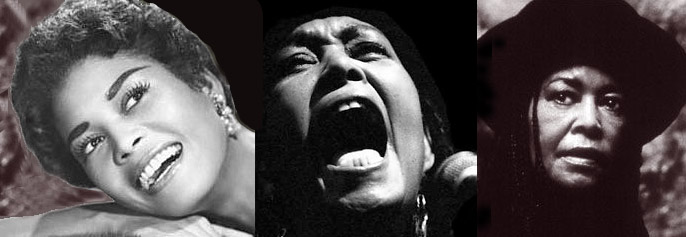
THE GREAT ABBEY LINCOLN (August 6, 1930 – August 14, 2010)


She took her name from Westminster Abbey and Abraham Lincoln.

She gave the world Abbey Lincoln. I'm giving you "Throw It Away," and you can toss it or dig deeper into the songs and albums of an artist who truly deserves the word "great" in front of her name.

I base this on her music, though her life story of activism and integrity is one of greatness as well. But when you write the way Abbey Lincoln did, and sing the way she sang, you don't need a back story to be impressive. I mean, does it matter that much if Abbey Lincoln was raised Anna Wooldridge in Michigan, or Bob Dylan was raised Robert Zimmerman in Minnesota?

Just in case you don't feel like searching around for a bio or obit, here's a paragraph about Abbey, who died in NYC a few days ago (August 6, 1930 – August 14, 2010). With the help of her manager, the lyricist Bob Russell, Abbey first popped eyes with a number in Jayne Mansfield's "The Girl Can't Help It," and a sizzling solo disc, "Affair: Story of a Girl in Love," which had the requisite sexy album cover. Pretty quickly she walked away from being the black Julie London to tackling civil rights issues on tougher jazz releases ("We Insist!" with Max Roach). She also co-starred in Sidney Poitier movies, and did not record much in the 70's ("People in Me") or 80's ("Painted Lady"). She re-established herself as a formidable singer in jazz clubs and in 1990 made her comeback with "The World Is Falling Down," taking her place as a poetic, dignified, earthy, worldly singer of songs that were a fusion of be-bop, traditional jazz, and even Dylan. Jazz albums don't sell much and uncompromising artists such as Abbey Lincoln tend to dwell in nightclubs rather than get high profile TV variety or talk show spots. So she did what she did till her heart literally gave out. She underwent open-heart surgery in 2007.

In some ways Abbey Lincoln commanded respect for the wrong reasons. It's all too easy to be intimidated by her sheer survival, the way Alberta Hunter was lionized in old age. It's too easy to use that white writer's brand of reverse racism and admire her only because she stood up for civil rights, or sang the kind of jazz that you "need to be black to truly understand." Well, it's all in the music. First time I heard "Throw It Away," I was blown away. Maybe you will be, too. The song is mysteriously poetic, bitterly romantic and painfully optimistic.

Abbey's music here has a touch of pop-mystical (Nat "King" Cole's "Nature Boy" comes to mind) while the vocals have a touch of Billie Holiday. In the lyrics, Abbey taps soul truth ("You can never lose a thing if it belongs to you") so God bless the child that's got his own. There's also a very Dylanesque sense of contradiction, with "throw it away" linked to giving, while inner-rhyme draws the listener in deeper and imagery plays on perspective ("a hand to help us stand.") There's humility here ("I think about the life I live, a figure made of clay") and the tragic magic of answers only coming when you are ready to call for them ("…when I'm in a certain mood, I search the halls and nooks. One night I found these magic words in a magic book…") The name of the magic book, of course, Abbey does not reveal. Dylan wouldn't do that, either.

The version of "Throw it Away" below is the slower one (5:45) with dark strings and ghostly percussion, to be found on "A Turtle's Dream." There's also a slightly quicker (5:17) Astor Piazzolla-styled orchestration on "Abbey Sings Abbey," which has a younger, stronger vocal which some might find more positive than the older-but-wiser take. "Throw it away" is not a respectful thing to do to music, but on this occasion, giving a song in memory of a great artist seems the right thing to do.

throw it away - ABBEY LINCOLN

Thursday, August 12, 2010

KENNY EDWARDS (Bryndle) Ill and In Need Of Your Help


Just got an e-mail on Kenny Edwards today:

Kenny is in desperate need of an air ambulance to return home to his beloved Southern California.

The cost of this flight is beyond his resources. His friends have come together to help pay for this flight to bring Kenny home. Any help you can give us would be greatly appreciated.

Please feel free to pass this on. We must bring Kenny home.

Thank You for your help!


The latest news is that he's to be air-lifted home to California tomorrow (August 13th) and more medical care will follow.

Please visit www.kennyedwards.com for more information. There's a PAYPAL donation button on the site.

A bit of a refresher: Kenny Edwards has been a force in the "California Sound" of pop/rock since 1967 when he formed The Stone Poneys with Linda Ronstadt and Bob Kimmel. He's also worked with Brian Wilson,Don Henley, Emmylou Harris, Stevie Nicks and J.D. Souther among others.

In addition to his solo work as a performer, he returned to his roots as a "group member" when he became part of BRYNDLE, along with the three other solo artists who decided to harmonize in this special way; Andrew Gold, Wendy Waldman and Illfolks fave Karla Bonoff.

He's Ill, Folks! I know times are tough, and people are asking you for donations all the time, too. So here's the deal. How about sending FIVE BUCKS to Kenny, not as a donation, but in return for your FIVE song download below. You're getting solid 256 kb downloads of FIVE songs from the first Bryndle album...all with the guys on lead vocals (Kenny and Andrew).

1. I Want to Touch You
2. Savannah
3. We Walked This Road
4. Streets of Your Town
5. The Wheel.

Can you spare $5 for these 5 downloads? If you can Paypal more, that's great. (The Paypal donation button is at www.kennyedwards.com). Thank you.

FIVE BRYNDLE SONGS...For a Five Buck Donation to Kenny's health fund

UPDATE AUGUST 19th.
I'm sorry to have to post the news that Kenny Edwards died yesterday.

Monday, August 09, 2010

DANNY KORTCHMAR "ENDLESS SLEEP" with LINDA R.


Linda Ronstadt on Danny Kortchmar's album "Innuendo."

When deserving studio musicians get a solo shot, superstar friends are ready to help out. It's a tricky thing, though. How overt should the contribution be, and how strongly should it be marketed?

Sometimes the guest star simply turns up in the credits as a nice surprise, like Ry Cooder on guitar for two tracks on Ron Nagle's debut album. Sometimes the artist promotes the lucky favor. After an indifferently received solo album, Gary Brooker trumpeted on the back of his second: "Special thanks to…Phil Collins, Eric Clapton and George Harrison who by their help and company made this record not unworthy of the perusal of most listeners."

Not that it helped him sell many copies. And in this case, the Linda Ronstadt-Danny Kortchmar duet was actually issued as a single, and few seemed to notice. So luck plays as much a part as the guest vocalist. Linda and Danny's version of Jody Reynolds' morbid cult classic "Endless Sleep," is epic. And what a nice touch, to have a song about a woman lost at sea now featuring the frantic voice of a woman!

To be honest, though this album's been part of the Illfolks morgue since it was released, the favorite track has always been "Hair of the Dog," a kind of Zevonesque novelty. There's a jeeringly obvious pun in the refrain. As Danny sings to a girl who might need more lovin' from her bad boy lover, he sneers that she needs "the hair of the dog that bit cha…bitch ya…bitch ya…"

It was during a nostalgic hour of returning to the world of West Coast edgy-hipsters and truth-tellers (ooh, Don Henley, Jackson "Lawyers in Love" Browne, even his brother Sev) that I felt like dragging and dropping the needle on "Hair of the Dog," and then re-exploring the rest of the forgotten album, with its shaving gel advert cover of a moist-faced wet-haired Mr. Danny with a towel around his neck. That's when I literally grooved on "Endless Sleep," with perky Ronstadt on a death trip fer Reaper's sake!

It's surprising that given the Japanese fetish for all-things James Taylor (they love any session man who played with James and even re-issued Craig Doerge's solo album for that reason) Danny's "Innuendo" album never made an appearance in the land of the wan Obi-covered CD.

Surely, as influential as the Illfolks blog is, everything will change now that attention's been called to this lost rendition of "Endless Sleep." I said, surely as influential as the Illfolks blog is…hey...somebody...pay attention...


ENDLESS SLEEP danny kortchmar Instant download or listen on line. No pop ups, porn ads or wait time.

BOBBY HEBB : SUNSET FOR THE "SUNNY" SINGER


Bobby Hebb was a one-hit wonder, and like so many of these guys, after making a splash, he spent a few years floating around aimlessly before sinking to the bottom, dismissed as merely a "fluke." There was a 35 year drought (1970-2005) where the Hebb-cat wasn't on black vinyl at all, with only the "Sunny" side up and available on compilations. "Sunny" was also his ticket to various memorabilia shows and oldies festivals where all he had to do was sing his hit and hope the fee covered a little more than just the travel expenses and hotel.

Every obit on Bobby Hebb steals the basics from the same sources, so you probably know his parents were blind, he and his Nashville-born brother Harold formed a tap-dancing act, and that when they went their separate ways, Bobby turned up in Roy Acuff's band while his brother joined The Prisonaires…made up of other jail birds. Harold did get out of prison and into a real group, The Marigolds, but was never far from danger. And so it was, that in 1963, (coincidentally a day after the JFK assassination, and also Boris Karloff's birthday), he ended up knifed to death, but not before firing a fatal shot into the guy who'd mortally wounded him.

Bobby had begun his recording career by then, replacing Mickey Baker (in "Mickey and Sylvia" of "Love is Strange" fame). As "Bobby and Sylvia," they recorded what is now regarded as a cult item, the cringeworthy "You Broke My Heart and I Broke Your Jaw," which has the same cheery feel as Dave Clark 5's "I Like it Like That." This was the era of the Spector-produced Crystals tune"He hit me, and it felt like a kiss," music by Carole King, lyrics by Gerry Goffin. Even so, the soulful duo are alarmingly garrulous as they swap barbs and seem to suggest that in the ghetto, violence is no big deal. Back then, Bobby's song was a mere Hebbaroid on the giant butt of indie R&B singles. Now the single on Bill Grauer's Battle label, can fetch some decent bucks on eBay. Grauer did a lot better back then with full-sized jazz albums via his main company, Riverside.

In 1966, Hebb's melding of R&B, Nashville and pop, yielded a smash hit with "Sunny." Though it was covered by every annoying finger-snapping singer hitting the TV variety shows of the day, he managed to lay down the definitive version. He just couldn't lay down another hit single to cement his identity with the music-loving public. "A Satisfied Mind" was modestly successful in 1966, and a Hebb-penned song "A Natural Man" was a hit for Lou Rawls in 1971, a year after Hebb's album career sputtered to a seeming end with "Love Games" on Epic. In 2005, the indie label Tuition offered a new album which was aimed mostly at Hebb's following in Japan, where he often toured. He's still best loved for "Sunny," which is, even if you want to dismiss it as mawkish pop, quite an achievement as a piece that melds various music styles together, and in it's major and minor key chorus and verse, captures notes of both blues pessimism and pop optimism.

You get a half-dozen Heb-caps here, five cuts from the tail end of his prime in 1970 (This Bird Has Flown, I've Learned to Love, Grin and Bear It, I'll Be Anything and Good Morning World) and a halfway decent copy of the obscure "You Broke My Heart and I Broke Your Jaw."

Help Yourself to Hebb tracks

JAMES KOMACK - "The Beat Generation"


Imagine if Jerry Lewis had been influenced by Lenny Bruce.

That sort of describes what you'll find on the lone James Komack comedy album "At the Waldorf." It's a mix of comedy and music, Borscht Belt schtick and a touch of the "sick." Back when he was a rising stand-up comic, most felt the highlight of Jimmy's album was his sure-fire brawling "fight announcer" routine: imagine a boxing commentator broadcasting a couple's wedding night! Ya-ha! Today, the more rewarding tracks on the album are his bent musical parodies of drug addiction ( "Man With the Golden Arm") and hipster poetry ("The Beat Generation.")

In the late 50's Komack was also a promising comic actor, standing out from the rest of the wacky Washington Senators singing "Heart" in the film "Damn Yankees." He issued some novelty tracks for Coral (including "Them The Enemy" about "femmanim" women, and his klutzy fascination with them) and in 1957 even managed to get a deal with RCA Victor for a mostly serious singing album. The comical album cover for "Inside Me," showed him on a psychiatrist's couch.

James offered some comic relief on the Jackie Cooper sitcom "Hennesey" but found better luck behind the scenes as a sitcom producer. He helmed the short-lived "Hank" in 1965 featuring the very late Dick Kallman as a guy constantly being chased off a college campus while trying to get an education and degree without the tuition money. He followed it with Roger Smith's TV sitcom version of "Mister Roberts" and then, balancing the failures of "Mr. T and Tina" and "The Roller Girls," he had major successes with "The Courtship of Eddie's Father," "Chico and the Man" and "Welcome Back, Kotter."

We missed James Komack's birthday, August 3rd , 1924. But so did he. He died the day before Christmas, 1997. When I first heard "The Beat Generation," still a school kid, I didn't get all the references. (I did get the joke album title, that he was not playing the posh Waldorf Astoria hotel, but a cheap deli). I still knew there was something cool going on, and that Komack's indie album deserved a better fate than it got. That opinion's grown over the past decades. I think he was pretty flattered that anyone remembered it as fondly as I did, but there are other weirdos out there, and hopefully there will be more now. Some lines have become catch-phrases for me, and it's hard to really explain why. But if I ever get near Sak's Fifth Avenue, I'd go in and "stomp on the floor," just to get a chuckle out of Komack's poltergeist. Assuming it isn't too busy beating the crap out of Pinky Lee's poltergeist. PS, "Beverly Aadland, go home!" (Why, I have no idea. Maybe James was an Errol Flynn fan.) Hear it for yourself. Consider yourself hipped.

JAMES KOMACK the BEAT GENERATION

EARLY GRAVES DEATHMETAL SINGER MAKH DANIELS KILLED AT 28


I know what you're thinking. A guy growling "Goner" in a Death Metal band called Early Graves gets killed before he reaches 30. Was he asking for it?

One thing is certain, the schedule for his band was a killer. The guys from Early Graves and The Funeral Pyre were on one hellacious tour, all over the hot, humid country in July. Nine guys in a van. Take a look and ask yourself if it's a surprise that on August 2nd, the driver fell asleep at the wheel on Interstate 5, one of the monotonous white-line highways that were blinding them:

7/1 Dallas, TX @ Renos Chop Shop
7/2 San Antonio, TX @ Zombies!!!
7/3 Austin, TX @ Red 7
7/4 OFF DATE in Dallas. lets party.
7/5 Memphis, TN @ The Poplar Lounge
7/6 Nashville, TN @ The Black Church. 504 N 3RD ST
7/7 Louisville, KY @ Skull Alley
7/8 Columbus, OH @ 15th House (369 e. 15th ave)
7/9 Columbus, OH @ the Cara Bar
7/10 Gloversville, NY @ Limbos
7/11 Jamaica Plain, MA @ The Midway Cafe
7/12 Boston, MA @ Church Of Boston. 69 Killmarnock St.
7/13 Dover, New Hampshire @ Dover Brickhouse
7/14 Haverhill, MA @ Anchors Up
7/15 Asbury Park, NJ @ Asbury Lanes
7/16 Philadelphia, PA @ The M Room
7/17 Brooklyn, NY @The Union Pool
7/18 Pittsburgh, PA @Belvedere’s
7/19 Toledo, OH @ The Black Cherry
7/20 Milwaukee WI @ the borg ward.
7/21 St Louis, MO @ Fubar
7/22 KC, MO @ Aftershock
7/23 Lincoln, NE @The Manor
7/24 Denver, CO @ Blastomat
7/25 Cheyenne, WY @ Ernie November
7/26 Salt Lake City, UT @ The Outer Rim
7/27 Garden City, ID @ Brawl Studios
7/28 Spokane, WA @ Mootsy's
7/29 Seattle, Wa @ The Morgue
7/30 Portland, OR @ Plan B
7/31 Bellingham, WA @ JINX artspace
8/1 Salem, OR @ TBA
8/2 Reno, NV @ Ryans Saloon
8/3 SF, CA @ Submission Gallery
8/4 Los Angeles, CA @ TBA
8/5 Riverside, CA @ TBA
8/6 Whittier, CA @ The Bamboo Lounge
8/7 Long Beach, CA @ TBA
8/8 Echo Park, CA @ POWER OF THE RIFF FEST

No, they didn't quite make it to the Submission Gallery, or continue their August run. The odds were not with them at any point in this demonic drive. Would you fucking love to drive from Memphis to Nashville within 24 hours? And then Nashville to Louisville? And Louisville to Columbus Ohio? Every damned day they were on the road, going huge distances.

Sometimes they got a break. It's only about a 2 hour drive from Philadelphia to Brooklyn. But from Brooklyn they had to get to Pittsburgh!

That's the reality of trying to make a living by making music, especially when there's no money to be made from selling CDs or mp3's and most of it has to come from live shows. Rationalize it all you want: "Nobody was FORCING them to tour so much," and "They could of had DAY JOBS and played on WEEKENDS," and "They just didn't tell their fans often enough, "if you like it buy it..." What…ev…er…..

Lead singer Matikeef (Makh) Daniels was ejected from the van after driver Justin Garcia (a guitarist with The Funeral Pyre) conked at the wheel, and that was it; over and out. The band's brand of thrash, hardcore, metalcore and Death Metal can be heard on their two surviving CD's, "We the Guillotine" from 2008 and their 2010 release "Goner." You get a lucky seven of those tracks in the download; any more would be pointless because a) the stuff is in print, and b) it all sounds the same. Hear the head-banging drums, thrashing guitars and Cookie Monster ranting for yourself, on:

Goner, Faith is Shit, Old Bones, Give Up, The Man in Black, Ghosts Among Us, and Borrowed Teeth Borrowed Claws.


EARLY GRAVES 7 tracks

Thursday, July 29, 2010

NO MORE MANOLE. Madalina Manole a Birthday Suicide


One of Romania's greatest stars, folk artist turned pop-rocker Madalina Manole turned up dead on her 43rd birthday (July 14th, a gloomy wednesday full of woe), leaving a note for her husband Mircea Petru. She had a one year-old son. She had a prosperous career (with a comeback album released in 2010) but depression is a disease that blinds people to hope and can leave them flailing for meaning and ultimately grasping for the means to end it all.

Fans, depressed and saddened by the demise of a woman they had admired for over 25 years, did not get much comfort from the Romanian Orthodox Church, who would not allow a massive tribute in a church because of her crime — the sin of suicide.

Her fatal means was an overdose of Furadan, a powerful insecticide that is so toxic that the powdered version was banned in the U.S.A. and many other countries. A bit of Furadan, the size of a seed, can instantly kill a bird. The liquid version is also dangerous. A teaspoon of it is fatal to a human and because enough residue can linger on crops and kill small animals, most farmers have voluntarily suspended using it. Many countries have also banned sibutramine hydrochloride monohydrate, something else found in Madalina's system. A diet drug, it's considered dangerous and potentially addictive, and where it is legal, warnings from the manufacturer indicate it shouldn't be used by a patient suffering depression.

You'll note in the pictures below, that Manole looks very thin-glamorous in the picture on the left, and more zaftig in the one on the right, where perhaps the rest of her is a bit more fleshed out as well. As we know from songs such as "Sophie" by Eleanor McEvoy, the neurotic desire to be thin, and the failure to recognize a proper and human weight for a woman, has led to many, many deaths.


Madalena (first name actually Magdalena-Anca) was just 13 when she had her first taste of fame, singing "Pentru noi nu poate fi alt cer" ("For Us There Cannot Be Another Heaven"). It was featured in the film "Nelu." She blossomed into a true beauty, and at 23, she had her first smash hit with "Fata Draga" ("Lovely Girl') written by her future husband Åžerban Georgescu. He wrote most of her early hits, and her next few albums offered an intriguing blend of pop modernity and a respect for Romanian folklore. Her songs and singing were good enough to interest PolyGram, who seemed to think that she might have some crossover appeal, despite the language barrier...since beauty knows no language barrier. Hottie Manole got many endorsement deals for various cosmetics and hair products.

Through the 90's Madalina was a tremendous star, and the TV appearances and concert touring put her on the kind of high that helped her ignore the precarious lows…."the auditoriums and the tens of flower bouquets I was receiving, the joy on people’s faces when they were seeing me live on the streets of their towns, the dolls I was receiving from children at each show, the autographs and the letters from my fans, the songs they sang along line by line, all of these made me forget of the things less pleasant from my life as an artist; the longing for the loves ones at home, the scandalous newspaper articles, and the things that at artist has to give up, sacrifice, or keep a diet."

A casualty of her lifestyle and her maturation, was her marriage to mentor Åžerban Georgescu, who was wealthy, powerful, but also fifteen years older. It seemed that after the painful divorce, she found love again via Petru Mircea, and the child she miraculously delivered at the age of 42. They married in October of 2009, four months after the boy was born. Within another four months, February of 2010, she had a new album out, but newspapers were reporting that she was exhausted, and there was some question about how many TV appearances and how much touring she would be doing. After her death, there were reports that she'd attempted suicide a month earlier.

Your download features a dozen samples of her work, including her first hit, "Fata Draga," which most certainly is steeped in her country's musical heritage, and may strike you as some distant cousin to the strains of "Those Were the Days" (Mary Hopkin) or "Gypsies Tramps and Thieves" (Cher), and that with the right English lyrics, it might've had a quirky chance of being an International hit. The more you listen to it, the catchier it becomes. There's also "Nu Esti Chiar Un Inger," which is your typical power pop ballad with a galloping beat that tastefully manages to slide past disco and twang a little closer to ABBA sensibilities. "Vino Dragostea Mea" actually sounds like some Italian boat song peeled out of a Canned Film Festival. "Vreau Sa Te Uit" could've been a sing-along for Dalida. "Da Te Iubesc" despite its somewhat corny back-up singers, is in the same pop vein as Madonna's "La Isla Bonita," released three years earlier, which is hardly an endorsement but gives you an idea of how slickly commercial Madalina could be.

Several tracks come from "Dulce De Tot," her beautiful 2000 release that capped her most productive period. "Un baiat minuet" is a bit of reggae-tinged oddness. A great track from that album, "Cand Sunt Cu Tine," is included not only because it's an assured, polished performance from Madalina, but is bound to arouse dyslexics. She released 7 albums in the 90's. But after "Dulce De Tot" in 2000, she produced only two more albums…one in 2003 and her comeback/farewell at the start of 2010. Her final album, "09 Madalina Manole" is widely available (even eMusic has tracks) and there are three songs sung in English including the mildly soulful "Loving My Baby."She sings it without betraying that English is a second or third language for her, and after repeat listens, it sounds as decent as any Mariah or Whitney-type wannabe, but what is most memorable with Madalina is the passion she finds in her native language, even if the music's influenced by Western pop. And so it is, that the 13th track, your sample from her last album, is "Suflet Gol," a full-blown ballad, recalling the kind of showstopper one might expect from a Celine Dion or Lara Fabian.


13 from MADALINA MANOLE

JOHN CALLAHAN - Completely Immobile at 59


If you called up John Callahan and got his phone message, you heard: "This is John. I'm a little too depressed to take your call today. Please leave your message at the gunshot."

Callahan, who died July 24th, was a quadriplegic cartoonist, a cross between Sam Gross and Gary Larson…prone toward both "tasteless" cartooning and comical shock just for the fun of being weird.

His particular form of quadriplegia, due to a drunken car accident at age 21, was paralysis from the waist down and weakened use of his arms. He was able to draw only by putting both his semi-lifeless hands together. This resulted in a punkish style that almost seemed intentional, since his cartoon anthologies turned up at a time when Peter Bagge and many others were deliberately mimicking grade-school level drawing, and even The New Yorker was getting edgy via Roz Chast and Jack Ziegler.

Facially, John looked like a cross between Paul Krassner and Warren Zevon. As one might expect, the internal complications from quadriplegia, as well as external sores and infections, were bound to shorten his life, and so he passed on at 59. Unlike indie music quad Vic Chesnutt (also paralyzed below the waist due to a car accident) his end was not a suicide, though his songs often touched on that subject.

A few years ago, John ventured into Chesnutt territory for his indie album "Purple Winos in the Rain." Since even Chesnutt, who did a lot of touring, and had been a professional musician for years, wasn't selling big amounts of CD's in this era of penury and piracy, Callahan's album was no hit. It wasn't reviewed in the major mags, wasn't known to the average music lover (since most don't spend a lot of time auditioning obscurities at CDBaby or eMusic). Even some Callahan fans didn't know of it, unless they were dedicated enough to visit his website. The best tracks are surprisingly gentle in their seriousness, including the Zevonesque "Touch Me Where I Can Feel." After a Portland concert, Bob Dylan made himself available to meet John…not sure if Bob was a fan of the cartooning or the music, or just felt charitable toward someone his entourage felt he should meet.

Callahan's lack of musical success didn't matter much, financially at least. Once living in public housing, he did pretty well syndicating his cartoons, publishing compilations in paperback, and scoring some bucks with cable TV animation based on his drawings, including "Pelswick" and "Quads!"

A documentary was made on him a few years ago, and it made sure to include recitations of angry letters sent to him or his publisher. The irony was that much of the protests came from people unaware of Callahan's handicap. They invariably included an indignant line that the tasteless cartoonist would not be so quick to make fun of the handicapped if he too had to live his life in a wheelchair. Callahan, however, was one of the "equal opportunity offenders," who also pushed buttons with gags about Catholics, blacks, dogs and women (mentioned here, in no particular order). It had to be rather pleasing for John that well into the 21st Century, and with Dwayne Tinsley, R. Crumb and Gary Larson already out there, along with thousands of cartoons published in Hustler, Screw and the National Lampoon (as well as a zillion comic books and indie zines), people were still writing in, offended by his work.

Your download…the rather gentle "Lost in the City," where John's simple lyric and melody is tastefully augmented by minimal backing by professional musicians (John himself could barely strum a ukelele and spit rudimentary harmonica). The extra few minutes at the end are from "Suicide in the Fall." While his songs were often somber, they were also often optimistic. While they might touch on the sad or the pathetic, like some of Zevon's tunes, they seldom involved pity. The full CD of "Purple Winos in the Rain" has a lot of surprises and rewards, including a guest appearance by Tom Waits.


JOHN CALLAHAN Lost in the City-Suicide in the Fall Instant download, no pop-ups pop-unders, porn links or wait time.

DO ME GOOD, BABY! The late JOYA SHERRILL


"I never really left the band," Joya Sherrill once said. "Duke would call me for jobs once a year at least." Which was good enough for the wife and mother that Joya had become long after her initial work with Duke Ellington. She also had a kiddie show on New York's indie station WPIX, where past masters Officer Joe Bolton and Captain Jack McCarthy had hosted Three Stooges shorts and Popeye cartoons.

The New Jersey-born Joya (August 20, 1924 – June 28, 2010) first worked with the Ellington band in 1942, then again in 1944, and more steadily through that decade and into the early 50's. She's often credited as the author of the lyrics to Billy Strayhorn's "Take the A Train." Not always. Strayhorn wrote lyrics that were never used. The piece was often recorded as an instrumental, so the label credit was all his. Joya heard the song on the radio and added some words, which she gave to her father, who had the connections to get it to The Duke. The song was soon recorded with lyrics, but it was up to an astute secretary or somebody at the publishing house to make sure the credit on the label was Strayhorn-Sherrill. But the credit line doesn't end there! Often the credit you see is: Ellington-Strayhorn-Sherrill, because the famous downward chord vamp on the keyboard, which introduces the song and reappears throughout, was Duke's invention. This contribution is as much a part of the song as, say, Matthew Fisher's organ work in "A Whiter Shade of Pale."

Twenty years later, Joya was hired by another Big Band legend, Benny Goodman, for a good will tour of the Soviet Union. Probably her best known single was the Russian tune released via Reprise, "Katusha." And yes, now and then she'd get an offer for a date or two with Ellington and his band…or, the reverse. One day in 1970, the Duke turned up at the WPIX studios on 42nd Street to appear on an episode of "Joya's Fun School." Her series ran (and re-ran) through 1982. After that, she was pretty much the wife of Mr. Richard Guilmenot, a construction superintendent. The couple, and family, lived nicely in Great Neck, New York.

Another New York favorite is the "Joyva Jell." The Joyva company was first known for making halvah (this has already been documented elsewhere on the blog) but also did a brisk business in chocolate-covered marshmallow penny candy, and chocolate covered raspberry jell bars and jell rings.

There's not a more beautiful candy in the world. Bite off either end of a jell bar or bite out a chunk of jell ring, and hold it up to the light; a beautiful, gem-stone shade of purple.

The jell bars began to disappear when penny candy inched upwards of two for a nickel, although Joyva did market a full-sized bar for ten cents eventually (available in pure raspberry enrobed in chocolate, or stripped of chocolate and sprinkled with sugar, and half raspberry, half orange, with a peculiar meringue foam in the middle). As Joya's name instantly brought back a memory of Joyva, the photo gives our singer the treat of a handful of jell rings, which are still sold (by the pound) in stores and via the Internet. Ring-a-ding!

Joya Sherrill's few albums are easy to find on eBay, and on a good week, can be had for a fiver or a tenner. They include her main solo work, "Sugar and Spice" (on Columbia, featuring Luther Henderson) and "Joya Sherrill Sings Duke Ellington" (on 20th Century) as well as odd-ball "halfsy" albums such as "Della Reese and Joya Sherrill" and "Spotlight on Sammy Davis Jr. and Joya Sherrill" (also known as "Sammy Davis Jr. Jumps with Joya.") There's also the original cast album "Duke Ellington's MY PEOPLE with Joya Sherrill." But…for a taste, we go with…"Do Me Good Baby," which Joya certainly does.


DO ME GOOD BABY! Instant download, no pop-ups pop-unders, porn ads or wait time extortion.

FOUR TOPS sans Levi Stubbs live show July 5, 2010


What would The Four Tops sound like without Levi Stubbs?

You'll find the answer in the download below. When The Four Tops take the stage, either at oldies shows, headlining, or co-billed with whatever's left of The Temptations, the announcer usually tells the crowd that the show is dedicated to Levi Stubbs (and mentions a few of the other dead Tops as well).

Which puts The Four Tops into the odd position of simultaneously being the stars of the show and a tribute band. They are billed as THE Four Tops. But without distinctive lead singer Stubbs, it's just a bunch of guys covering the well-loved Motown songs. Since they tend to play in good-time places like theme parks, or to older audiences who are just celebrating being alive, the ethics don't matter much. It's just a little funny when the new lead singer nostalgically describes how the band proved they could handle more than Motown soul when they covered "Walk Away Renee…" even though he wasn't in the band when that happened.

But if you were expecting that familiar, magical sound of Levi Stubbs, who was the lead singer and soul of the band, no, that's gone. In fact, it's best preserved on those old 45's, because the secret of The Four Tops' success as an AM-radio super group, was in over-peaking his vocals and letting the VU meter arrow go raw into red, and also to write the charts a few notes out of his natural range, forcing him to strain and shout the lyrics.

For what it's worth, and it really isn't anything, the Illfolks blog considers The Four Tops to be the best of the Motown groups, with songs such as 'Bernadette," "Seven Rooms of Gloom" and "It's The Same Old Song" far more important and gut-wrenching than the sweet stuff their contemporaries were singing, and that goes for "Tears of a Clown," "Just My Imagination," "Baby Love" and "My Cherie Amour." Not to mention the Jackson Five, please.

Even though a lot of The Four Tops songs did sound alike, they were all good. They managed to vary their sound enough to score hits in the 70's ("MacArthur Park") and 80's ("When She Was My Girl," big on the R&B chart if not the actual Top 100). The band did seem to be "Indestructible," to give you the title of the 1988 song that was really the last time the Four Tops sounded anything like The Four Tops, and seemed immortal.

Still, there's something a bit creepy about not letting an historic group die. Why is it that this generation can't accept death the way past generations did? Past generations let The Andrews Sisters die. They let Spike Jones and his City Slickers die. They let Louis Jordan and his Timpany Five die, and Red Ingle and his Natural Seven.

So why is it that wimps keep resurrecting The Kingston Trio, hauling out bogus versions of The Marcels or The Platters, and running tours of Jay and the Americans without Jay, or Herman's Hermits without Herman, or The Animals with whatever monkeys want to bicker over the name?

"The Four Tops" is an attention-getting name to use. They have one original band member left, which is often enough to pretend "truth in advertising." But when you see Queen, Vanilla Fudge or The Four Tops without the famous lead singer/voice, what, as Marvin Gaye might ask, is goin' on? "Official Four Tops Tribute Band" might be less commercial but more ethical, since the band does not sound anything it did when fronted by Levi Stubbs!

There's a song in "My Fair Lady" that assures us that there will be Spring every year WITHOUT YOU. Last July 4th weekend, a hot and happy crowd seemed to enjoy a nostalgic set of Motown WITHOUT STUBBS. Too bad that the announcer didn't specifically say, "The Four Tops' sound was mainly the work of its lead singer Levi Stubbs. He is very, very dead, but his spirit lives on. The song never dies, just the singer. I give you…an acceptable tribute band that is officially allowed to be called The Four Tops…"

Cut to the download for a frisky non-Stubbs half hour of: Loving You (Is Sweeter Than Ever), Bernadette, The Same Old Song, Shake Me, Wake Me (When It's Over), Walk Away Renee, Something About You Baby, A Simple Game, When She Was My Girl, Ain't No Woman (Like the One I Got), Reach Out (I'll Be There), Can't Help Myself.
FOUR TOPS PERFORM JULY 5, 2010

LARRY JON WILSON "Life Of a Good Man" is still yours in his songs


Larry Jon Wilson (October 7, 1940-June 21, 2010) was an unusual artist who made some fine albums nobody paid much attention to in the early 70's…and came back with one last one that also was neglected.

The problem with C&W artists is that so many are predictable; they sound alike. You have to really listen or care to notice something a little special. How often will a reviewer, who usually has limited space to promote this genre, not even crack open the album from an unknown artist and only cover the latest album from the biggest star? A disc jockey might only pay attention to a lesser known practitioner if the album jacket is a knock-out or the name is catchy...and "Larry Jon Wilson" was not a catchy name and he didn't have knock-out looks.

And so a troubadour with some slyly good songs and an easygoing delivery was mostly ignored. Raised in Augusta, Georgia, the unusual Mr. Wilson favored a stylistic mix of blues and folk, but didn't consider writing or singing professionally till he was past 30. He lived in South Carolina where he had a wife, three kids and a secure job as a technical consultant for a fiberglass manufacturer. He finally got some steam going toward a full-time musical career when he began publishing some songs. Monument, the label that had done so well with quirky Roy Orbison, signed Larry for four albums that began with the 1975 release of "New Beginnings," quickly followed by the rather desperately titled "Let Me Sing My Song To You," and the even more depressingly christened "Loose Change" and the aimless "Sojourner."

Luck is a factor in any career. He thought he had some back in 1975 when Saturday Review noted of his debut album, "Larry Jon Wilson's New Beginnings is, to sum up, the best thing I have heard in country, rock, pop, or you-name-it for a very long time." But it takes publicity, a hit song, and a lot of other factors to build momentum and create stardom, and that impressive line wasn't enough. Larry and his song "Ohoopee River Bottomland" was chosen for a movie called "Heartworn Highways," about the new breed of C&W artists, including David Allan Coe, Townes Van Zandt, Steve Earl, John Hiatt and Rodney Crowell. He was in good company, but the film did not get released till 1981. He was out of the business by then.

One of his last write-ups was in the Tennessean, in 1979. Writer Robert K. Oermann asked Larry why he hadn't been able to promote himself into a bigger career. Larry replied, "I just did what I could afford to do." Oermann thought that another reason might've been the intimate nature of Larry's songs, which were perhaps not too commercial: "…his songs are intensely personal, so painfully moving. He can break your heart, bring on tears, and exhaust you in a single evening…"

That's certainly an apt description for a song such as "Bertrand my Son," which opened Larry's first album and included a spoken introduction:"I have a little boy, Bertrand Tyler Wilson is his name…he was born with his feet and legs different than ours….had a lot of casts and braces and things…so I wrote a song for him." And with lyrics that would bring tears to Shel Silverstein, he sang: "If living on the fruit of the tree of love can help your chances, you'll be runnin' and playin' with me soon, I know."

Larry sang sometimes in small clubs in Georgia and Florida, and in June 2000 his first two albums got a CD re-issue, which led him to realize he was far from forgotten. In fact Mojo called it the "Re-Issue of the Month." He finally released a new album in 2007, simply titled "Larry Jon Wilson." Your download offers tracks from a variety of his albums: "Goodbye Eyes," "Bertrand my Son," "Life of a Good Man," "Drowning in the Mainstream," "Sheldon Churchyard," and "Melt Not My Igloo."

Sorry for the delay in acknowledging Larry (as well as Joya Sherrill), but this blog only posts on the 9th, 19th and 29th of the month, and tries not to be morbidly overloaded with musical obits each time. It also sometimes takes a little extra time to properly research and present the tribute.

LARRY JON WILSON sampler