Thursday, October 29, 2015

Marty Ingels Dead : The "I'm Dickens He's Fenster" March

I was saddened that Marty Ingels (Marty Ingerman, March 9, 1936 – October 21, 2015) died of a massive stroke…and that obits pretty much went with "husband of Shirley Jones" as his fame. He was a pretty unique comedian, even if his style, and his demons, got the better of him.

Yes, Marty was a "piece of work," but he did what he could with some serious problems. In the Shirley-Marty autobiography he mentioned some of the mental frustrations he had to deal with; everything from breakdowns that left him lying flat on his back and unable to move, to phobias that made life difficult (such as his fear of flying). He once suffered an anxiety attack while doing a stand-up routine — during an appearance on "The Tonight Show."

I didn't have that much contact with the guy. I was involved in one project with him, and years later, another which included a series of phone calls. On the latter, which involved a third party, the third party called ME begging, "Please talk to Marty and tell him to stop driving me crazy!" Yeah, Marty could be a bit "noodgy," or just "spooky-serious" (which always seems frightening to people who expect a comic to always be cheerful and cracking jokes). The problem was that these traits couldn't be excused with "ah, but he's a genius." He never got much of a chance to show genius in comedy, not even at the level of the notoriously nutty Red Skelton.

Marty was sort of a Jewish Red Skelton. He was tall, childlike and had a crooked grin and an amusingly raspy delivery style. He played good natured fools who meant well but were bumblingly aggressive and lacked some social skills. Playing Arch Fenster, a "man child" opposite the worried Harry Dickens (John Astin) he won some fans when he starred in the intelligent slapstick sitcom called "I'm Dickens He's Fenster." It was recently resurrected on DVD, complete with a booklet describing the show's pedigree (great writing, directing, co-stars) and how it was somehow a failure that maybe could've blossomed into a hit if given another season.

Marty did manage to tour in stage productions of well-known comedies, take some good supporting roles on TV and was in a variety of pretty dated 60's film comedies, and then turn to managing when he became older. He met Shirley Jones at a party in 1974 and they were wed in 1977. Like most comics whose trade is naive bumbling and goofy rudeness, his schtick just didn't work after middle-age. At that point, whether you're a Tommy Smothers or a Bill Cosby, you better find a new way of presenting yourself or you're going to be a nostalgia act at best. And Marty didn't have much for nostalgists beyond his "Arch Fenster" character. So he ended up Mr. Shirley Jones, and also a bizarre guy who was prone to litigation and fighting with his clients.

Probably his most notorious legal case involved his client June Allyson. In a dubious bit of brand-marketing, which made her the butt of many a stand-up comic's jokes, Marty signed June to do ads for Depend, an adult diaper. Later, Marty was pissed; he claimed June owed him money. He allegedly called her all day about it…making 138 calls. Apparently the phone company verified this, and ultimately Marty lost the case. It would not be the last time his rush to legal judgment ended with him paying court costs and suffering defeat.

As Variety's obit gently observed, "In his later years, Ingels was relentless in promoting various TV, film and stage projects he sought to get off the ground as a producer. He was known to make frequent calls to Variety editors and reporters with story pitches. A conversation with Ingels could be time-consuming, but it was never dull."

He never really changed. Even when he became another D-lister on Facebook, he was prone to driving everyone nuts. He'd suddenly go off on some conservative rage about politics and morality, and amid the "good for you, Marty" and "that's how I feel, too," he'd get a lot of shrugs of chagrin. Sometimes he'd apologize for going off, sometimes not. I am not sure if his Facebook account was "deactivated" when he died, or months earlier. He might well have scuttled it in anger and frustration over some real or imagined insult. The NY Times obit wittily remarked, that Marty "was by all accounts highly voluble, genially combustible, energetically litigious and unmistakably larger than life." Indeed.

Yeah, he was one of those guys that you might think twice about dialing up. He could easily find some reason to seize on a particular remark and become offended, or just take it in a wacky direction. But he was, though not given enough chances to show it, a genuine, authentic and charismatic character. Shirley Jones would tell baffled fans and friends and reporters that she too could find Marty a bit difficult and/or embarrassing. His death was announced via a statement from Jones, which ended with: "“He often drove me crazy, but there’s not a day I won’t miss him and love him to my core.”

So we leave it at that. Sometimes, especially with comedians, whom we are used to seeing as zany, smiling, good-natured and goofy, the other side seems a bit appalling and dark. But on a good day, he was very good.

And below? Two versions of the "I'm Dickens He's Fenster" theme song. The show's pedigree included having Irving Szathmary write the theme song. Who better? Irving (brother of Bill Dana, aka Jose Jimenez, and once known as Bill Szathmary) began his career helping to score Raymond Scott's zany instrumentals. He later recorded an eccentric ten-inch album (as Irving Zathmary) called "Moods for Moderns." It was a Leroy Anderson-type deal; he offered cartoonish versions of such dopey classics as "Sailor's Hornpipe," "Irish Washerwoman," and "Pitter Patter Polka." The kiddie classic "Hickory Dickory Doc" was "swung" into the re-titled ""Dick-Dockery." Irving would later achieve immortality writing the theme for "Get Smart." Here, his intent was very much to establish the link between the modern Dickens and Fenster and past masters at slapstick foibles, Laurel and Hardy.

You get two versions of the Dickens and Fenster march…the original TV soundtrack, and Nelson Riddle's expanded version. Here's to Irving Szathmary, whom Jose Jimenez would have noted, was a very talented Jungarian Hew.

Original TV THEME Just as it was heard on the sitcom soundtrack

Dickens and Fenster in STEREO Nelson Riddle and his Orchestra.

"A Satchel and a Seck" - "Guys and Dolls" becomes "Faygeleh and Doll" via Allan Sherman


One of the earliest parodies Allan Sherman wrote was "A Satchel and a Seck," lampooning one of the stupidest hit songs of the day. A song with THIS lyric just BEGS for parody:

"I love you, a bushel and a peck!
A bushel and a peck, and a hug around the neck!
A hug around the neck, and a barrel and a heap
A barrel and a heap, and I'm talkin' in my sleep.
About you. About you! About you!
My heart is leapin'!
I'm having trouble sleepin'!
'Cause I love you, a bushel and a peck
You bet your pretty neck I do!
Doodle, oodle, oodle. Doodle, oodle, oodle. Doodle oodle oodle oo.

Back in 1951, Frank Loesser's "A Bushel and a Peck" (from "Guys and Dolls") was a big hit. So was Mickey Katz, a Capitol recording artist who specialized in taking pop songs and "kosherizing" them with idiotic kosher food references sung in a stereotypical, high-pitched nasal whine.

Allan wasn't able to interest a major label in his effort to compete with Katz, but he did manage to at least get his novelty tune released (originally on 78rpm). At this point the most notable thing about it, is the unexpected comic insult from duet partner Sylvia Froos: "You sound like a little faygeleh." Allan apparently doesn't know enough Yiddish to realize this is not a compliment!

Allan went on to stardom. It took a decade. As for Sylvia? She'd already known fame. She was a child star in vaudeville. While Al Jolson made the first feature-length "talkie, "Baby Sylvia" starred in two short sound films released six months earlier.

Sylvia, "The Little Princess of Song," remained popular through the 30's, and turned up in Shirley Temple's "Stand Up and Cheer." She even had her own radio show. Well before "A Satchel and a Seck," Sylvia scored some novelty hits including "Who's Your Little Who-Zis?"

This single (Sylvia was not on the flip side) was simultaneously a farewell to the winsomely lilting vocals of Froos and a hello to a new voice in semitic silliness. Allan died in November of 1973. Sylvia enjoyed a long, happy retirement and died in March of 2004.

A SATCHEL AND A SECK

Monday, October 19, 2015

Original Petticoat Junction babe Pat Woodell dead at 71 - Curt Massey sings theme

There were 3 "sisters" on the old sitcom "Petticoat Junction." The eye-catching opening for the show had the three of them (Betty Jo, Billie Jo and Bobbie Jo) skinny-dipping in the water tower. The wet silo was above the "Shady Rest" hotel, and giving the show its name, the girls' elaborate petticoats seemed to always be up there hanging out to dry.

It was a naive age, wasn't it? Kids growing up in the 60's were supposed to sigh and think of which one would be their ideal sweetheart. And ooh, petticoats! That was naughty enough back then!

I'll confess, of the originals, I preferred the kinda slutty Jeannine Riley. It seems most thought she was the hottest, which is why Jeannine stayed around only two seasons, replaced by Gunilla Hutton and then Meredith MacRae. Also leaving at the same time was our recently departed Pat Woodell (replaced by Lori Saunders). In Pat's case, the lure was a singing career and a record contract. The one woman who never left the show was Linda Henning...who happened to be the daughter of the show's producer, Paul Henning.

In a strange twist of fate, the late Woodell's replacement Lori Saunders, was scheduled to appear at the infamous "Chiller Theatre" convention in pathetic Parsippany this weekend (23rd-25th). Lori was ready to allow various old hoobastanks to pose with her and get her autograph. Alas, she had to cancel due to health problems. The show does have Henning, and one of Riley's replacements, Gunilla Hutton. But it's eerie that she cancelled and, as it turns out, Woodell had gotten The Big Cancellation a few weeks earlier.

Yes, Pat Woodell actually died a few weeks ago (July 12, 1944 – September 29, 2015) but for some reason, nobody found out till today, October 19th. The news was broken by the L.A. Times and Variety. She had been ill with cancer for many, many years.

Born far from Hooterville, in Winthrop, Massachusetts, Pat got her break at the Warner Bros. lot, appearing in their various TV shows including "Cheyenne," "Hawaiian Eye" and "77 Sunset Strip." Within a year of these guest spots, she was cast for "Petticoat Junction." Probably her favorite memory of the show was when she and the other sisters pretended to be the female Beatles, "The Ladybugs." Aside from doing songs on the show, "The Ladybugs" managed to get a booking on Ed Sullivan's show. It was nowhere near as earthshaking as The Beatles.

Pat had a promising new start as a singer, opening for Jack Benny across the country, and releasing an album. Pop music in the late 60's was switching from wholesome types to rockin' babes. She switched back to acting, and made a few films in the early 70's, but retired after a few discouraging years. Perhaps somebody told her to have her head examined, because she left show biz for the Erhard Seminars Training group ("est") which offered bizarre pop-cult "awareness" techniques.

She made herself available for some "Petticoat Junction" nostalgists (she was on a documentary about the show) and was still married to husband #2 when she suffered the health problems that eventually led to her demise.

Below is the theme song as recorded by Curt Massey, who co-wrote it (with producer Paul Henning).

And what good would it do to offer one of Pat Woodell's solo songs? Well, it would show that she really could sing. So below is "What Good Would It Do." Pat's legacy remains tied to a petticoat on a sitcom some still remember with fondness and a teaspoonful of lust.

CURT MASSEY Petticoat Junction Theme PAT WOODELL What Good Would It Do?

Colin and Rod, "JUST OUT OF REACH" in 2013 and Now, Too

Look, there's a lot of ageism in rock. The New York Post writers ALWAYS refer to Mick Jagger as a "wrinkly rocker." Keith Richards gets it, too. Should those guys Botox themselves and look like zombies instead?

Speaking of The Zombies, some are complaining that they should hang it up, and that sometimes the high notes are "Just Out of Reach." Yeah, they, McCartney, Brooker, Ian Anderson etc. sometimes hit a clinker, but so what. Perhaps some anhedonia-prone fans get to a certain age, don't like to see their idols aging too, and the twinge of mortality makes 'em say "Please, don't remind me. Please retire!"

Looking on the bright side (as grinning old Eric Idle does), the fact that a geezer won't go away and leave the stage to Viley Virus and Justa Beeper is a rockin' sign of rebellion. As George Foreman once said, "Being 50 is not a death sentence." Or 60. Or 70. Or even 80 in somecases.

If you think about it, it's great that Rod Argent still has ANY enthusiasm playing the same old songs over and over. So if he looks like he's waiting for the Viagra to kick in, fuck it.

As for his cute lead singer, well, the guy's older and his face has character!

Yes, Colin Blunstone looks an awful lot like Bill Murray. So what. It's not a bad look, especially compared to the bassist. (Just keeding...whoever you are).

No kidding, here's a 2013 performance of "Just Out of Reach," which was when the photos above were taken. The crowd's loving it. The Zombies play smaller venues but still have enthusiastic people coming to see them. Who knows how long they'll be staggering around with original band members? Thanks to old fans, and perhaps interest in zombies in general (zombies are now much more popular in film than vampires) they are currently touring the world yet again. They will even be joining the Moody Blues on a cruise in the winter of 2016. Book now!

The average "rockin' 5 day cruise" might be described as Ringo Star's All-Stars without Ringo, but with sea-sick bags. Now why these bags just don't stay in Miami I have no idea. Off they go, climbing aboard a ship in order to see rock acts almost as old as they are. The Zombies' cruise will feature, in addition to those guys who are famous for songs about nights or knights in white satin or Satan, supporting geezer groups The Strawbs and Vanilla Fudge.

Just how many 60's and 70's acts SHOULD hang it up, well, you can find a lot of nasty remarks on YouTube comments for various bootleg camcorder recordings. Still, the unsteady camera jerks want to capture their favorites, and their youth…a time when they weren't obese, impotent and irrelevant. Mostly, the 60's and 70's rockers still out there are doing little harm. But really, if you and Micky are singing "Daydream Believer" together, you should pay closer attention to the hospice care brochures that arrive in the mail.

Hopefully the 2016 Cruise will get a better review than the 2013 version.

Meanwhile, most fans of The Zombies insist their gratefully undead faves ARE almost as good as ever, on a good night. See 'em while you can, because immortality is…JUST OUT OF REACH.

THE ZOMBIES Just Out of Reach

I DO (not) LIKE TO BE BESIDE THE SEASIDE - Bitter End Singers, Lesley Duncan & Suicidal Mark Sheridan

We're approaching Halloween, which means a preoccupation with ghouls, zombies, death and ISIS. Oh, no no, that's TOO grim. Nobody's going to trick-or-treat as Jihadi John. Or suggest that the burqa is a ridiculous costume that shouldn't be worn at all. ("Let's have transparency," declared Julian Assange, looking at a kodachrome slide of Justin Bieber naked).

One of the grim things about this time of year, is that it's COLD out. Christmas greed is just around the corner. And all the seaside resorts from Coney Island to Blackpool are shuttered, or offering shuddery and pathetic off-season attractions at low prices ("Opening Night Offer - Two tickets to see a blobulent geezer who used to be in the rock band SWEET for the price of one. £6 to £8,Concessions £2.00 off!')

Over a hundred years ago, there was a popular song called "I Do Like To Be Beside The Seaside."

Mark Sheridan first recorded it in 1909. The tongue-twister was resuscitated by Basil Rathbone when he impersonated a vaudeville singer during a light moment in "The Adventures of Sherlock Holmes." (And yes, you can go to Blackpool's Grand Theatre and see a production of "Sherlock Holmes and the Ripper Murders" for a bargain price this time of year.)

The eccentric Mr. Sheridan, in top hat, with wacky bell-bottoms strapped to his knees, twirling an umbrella, toured the U.K. again and again yammering about loving to be beside the sea. But beside that, and secretly, he was depressed. At the age of 50, no doubt afraid of being replaced in the public's affections by Miley Marie Lloyd or somebody else, he began his rehearsals for retirement. He recorded only one single in 1912, nothing in 1913, one side in 1914, and just one more in 1915.

Taking the advice of a middle-aged music fan called Senior Mole (I think), he decided "to tour, and forget about making money from recordings." He drew the line at selling t-shirts. All seriousness aside, Sheridan did continue the uncomfortable and unpleasant life of the touring entertainer. He played a comical Napoleon in a show called "Gay Paree." The morning reviews from the Glasgow papers were negative, and Sheridan was positive there was no hope. You'd think that he would've gone to be beside the seaside, and take a rest. Well, he did take a rest. Permanently. He walked into Kevin Grove Park and shot himself.

It would've been more ironic if he drove to the seaside, walked into the waves to had a watery grave. But when you're suicidal you're usually not all that rational, or care about whether you're death will get good reviews and be considered memorably theatrical.

Reflecting the underlying grimness of Halloween, the still-sprightly "I Do Like to be Beside the Seaside" is contrasted here by downloads for utterly depressing seaside death songs from Lesley Duncan and Bitter End Singers.

Duncan's dry-eyed and morose "Walk in the Sea" (written by Alan Hull) starts with loner complaints and drifts into pessimism: "think I'll go walk in the sea. Nothing much better to do. No, nothing for me. Not even you."

The Bitter End Singers received liner note praise from Tony Bennett: "The Bitter End Singers absolutely gassed me." (Gee, Tony, I didn't even know you're Jewish.)

The group's album, tempting fate, was called "Discover the Bitter End Singers." The song, "A Song By the Seaside," is complex, and you'll need to acclimate. Frankly, it didn't get to me the first time around. Once the tangled, sea-weed murky melody line became familiar and I got used to the group's MOR-Mitch Miller approach, I began to get into the repulsive minor key discord that was intending to evoke turbulent seas, and I caught the dank spray of the lyric lines.

The seasick song is about a wife who misses her husband in the worst way: "One day when she cried all the tears she could cry, she ran from the house where the wild swallows fly. She walked to the ocean, she smiled at the foam. She walked in the ocean. She smiled at the foam..." And...you guessed it.

The late (as of June, 2015) Will Holt wrote it. He's best known for "Lemon Tree," which seems like an old folk song but isn't. He also wrote that 60's variety show perennial called "One Of Those Songs." Will always had a kind of amused chagrin about that one. If someone said, "Oh, you're a songwriter, what did you write?" He'd say "Lemon Tree" and get an approving nod. Then he'd say, "I was the first one to record and adapt "The MTA Song" which became a hit for the Kingston Trio." Another nod. Then he'd say, "I also wrote 'One of Those Songs.'" That would get no reaction at all.

Will would then sing the opening line, ala Durante: "It's just one of those songs that you hear now and then..." Ohhhhhh! THAT song...

The Bitter End Singers were three men and three women) including two guys formerly in The Ivy League Trio, and the always provocative Nancy Priddy (mother to Christina Applegate, and already mentioned on this blog in regard to her solo album).

And now, the music.

Mark Sheridan Beside the Seaside

Bitter End Singers Song by the Seaside

Lesley Duncan Walk in the Sea

Friday, October 09, 2015

CRYING OVER... BILLY JOE ROYAL

Yes, that's the "Greatest Hits" CD collection. Billy autographed the back panel for me, and one thing I have to say about getting autographs of CD panels; they preserve very nicely when put back in the plastic case.

"Down in the Boondocks" was, like "Patches" by Bobby Goldsboro or "Harper Valley PTA" from Jeannie C. Riley, a kind of "country crossover" that everyone could love. I mean, everyone. The song charted higher in Great Britain (#3) than it did in the states (#9). It was written by Joe South, who also gave the world "Games People Play" and "I Never Promised You a Rose Garden."

Yeah, the song was a hit back in 1965 but Billy Joe Royal (April 3, 1942 – October 6, 2015) was still working, almost to the end.

Royal's last concert was at the Gwinnett County Fair in Georgia, back on September 24th. Billy was born in Georgia, spending his early years in Marietta. He died in his sleep a few nights ago, at his home in Morehead City, North Carolina.

A down-home, nice and neighborly guy, Billy had a friendly nature, as you can see from this picture:

Though his national fame peaked 50 years ago, Billy scored a few lesser hits (including "Cherry Hill Park" in 1969) and made several C&W albums over the years. It's been said that his song “Burned Like a Rocket” could've returned him to the Top Ten...except that radio stations began pulling it after the Space Shuttle Challenger disaster. Country fans would tell you they bought Top 100 singles by Billy Joe including “I’ll Pin a Note on Your Pillow,” “Tell It Like It Is,” and “Till I Can’t Take It Anymore.” Thanks to these more recent C&W songs, as well as the old classic about the boy from down in the boondocks, Royal was welcome as part of touring shows featuring other older stars including Ronnie McDowell and B.J. Thomas. Billy's 2007 album "Going By Daydreams" was released on B.J. Thomas's record label. Thanks to the universal appeal of his biggest hit, Billy could also turn up at oldies shows, the kind that would feature Peter Noone and Jackie DeShannon.

He weathered sudden but fleeting pop music fame, crossing back into pure country music, and the worries about which new single, if any, would climb the charts and refresh his fame. “I heard stories about how Clark Gable would finish a movie and say, ‘I’m never gonna work again,’” Royal recalled. “So I guess everybody worries about that kind of stuff. After a while I just stopped worrying about it.”

A modest man, Billy said of his smash hit, "Once in a while I hear it on the radio, and it still stands up. The song meant everything to my career. I was making about $125 a week before that."

In 2009 Billy recorded "His First Gospel Album," but it's turned out to be his last. He's survived by his mother, some ex-wives, and his daughter Savannah. Below? Billy Joe Royal was a very fine singer, and he could tackle even the toughest of songs, including the Roy Orbison (Del Shannon, Don McLean) classic, "CRYING."

Crying Billy Joe Royal

KEVIN CORCORAN DIED - JEROME COURTLAND sings "OLD YELLER"

Not many child actors are role models, or handle adulthood very well. Kevin Corcoran, who died the other day, was one of the elite few. For a few years (1957-1964) he was arguably the best kid at playing a kid in movies.

Kevin's nearest competition, at least for being a little kid other little kids could identify with, probably came from television. Despite the regional accent, Ronny Howard's "Opie" on Andy Griffith's show was also a nice looking, average All American Boy. You might add Billy Mumy, although he played average kids in less than average situations, both in "Twilight Zone" episodes and "Lost in Space." You can add Micky Dolenz as "Circus Boy," in a role similar to Corcoran's "Toby Tyler."

If there was a defining thread to Kevin's roles, it was that he tended to play smallish kids trying to be noticed in the adult world, or accepted by their older and bigger peers. One of his first key roles was in "Old Yeller," (1957), which was either about a dog that was colored yellow, or one that barked a lot. It's been a long time since I saw it. Three years later he had a hit with another canine film, "The Shaggy Dog." For some reason, many of the characters he played in his Disney movies were nicknamed "Moochie." That would include "Moochie of the Little League," a 1959 effort about a kid who longs to be the catcher on his team. It co-starred Lee Aaker (a kid actor best known for the "Rin Tin Tin" TV show). Among the goofy adults were Stu Erwin and Alan Hale Jr., and it was directed by the venerable "One Shot" Beaudine. It was a different age...meaning, hardly anybody watches those somewhat maudlin and corny All-American films anymore. They were great at the time. It would be nice if more eight or ten-year-olds would stop fingering their iPads and go play baseball instead, like the mythical Moochie.

Trivia fans probably know that Corcoran came from a big family of kid actors, including his sister Noreen, who was the teen star on John Forsythe's "Bachelor Father" sitcom, another vintage item reflecting a very bygone lifestyle. A smart kid, Kevin gave up acting to attend school. Very few (Ronny Howard comes to mind again, along with Richard Crenna) made any kind of transition from child star to acceptable teen and adult in front of the camera. After graduating college Kevin returned to Disney for behind-the-scenes work as an assistant director. He was soon directing and producing a variety of things, from kiddie fare ("Return from Witch Mountain" and "Herbie Goes Bananas") to adult television ("Quantum Leap" and "Murder she Wrote.")

The long career of Kevin Corcoran (June 10, 1949 – October 6, 2015) ended a bit prematurely, due to colorectal cancer. In many cases, that's a form of cancer that can be rectified (pardon the pun) if caught in time. He's survived by his wife Laura, whom he married in1972.

Kevin Corcoran calls out and Jerome Courtland sings about... OLD YELLER

Eleanor McEvoy - October 9th - (John Lennon's 75th Birthday)


It's a story I've told before.

It was the night of October 9th, some eleven years ago. Mid-way into her set, Eleanor McEvoy did what I was hoping she'd do...sing "Last Seen October 9th."

By way of preface, expecting her song title for an answer, she asked the audience, "Anyone know what day this is?"

From my ringside seat, I answered, "Yes...John Lennon's birthday."

"Is it? Really. I didn't know that..."

Today, the connection between this date and Lennon may be in the news. Today October 9, 2015, John Lennon would have celebrated his 75th birthday.

Eleanor won't be playing the song tonight. Not in public, anyway. She told me that she only plays the song on stage if it actually IS October 9th. Today, Eleanor is somewhere between Lancaster, Pennsylvania (where she performed last night) and Somerville, Massachusetts (where she'll perform Saturday night).

The song is about a person gone missing, not someone assassinated, but the effect is the same. The song, in its quiet, sober, somber simplicity, says a lot about life's fragility and the emptiness that goes with loss. After the show, I mentioned to Eleanor that home-made "last seen" signs, xeroxed with a snapshot of the missing loved one, were vivid on bus shelters and lamp posts and in store windows after 9/11, and stayed up until the rains and wind mottled and bent them, and the faces and names on them were faded and streaked. It was impossible to hear her song that night without thinking about all the "gone missing" people, from the thousands on 9/11 to John Lennon and that night of December 8th 1980 that remains one of the most scarring moments in my psyche.

One of the nice things about having a real CD instead of a blip in your iPod, is you have the artist's complete vision, including the booklet and lyrics. You also have something that can be autographed. My copy of her album is reproduced here, amended a bit in tribute to John.

"Last Seen October 9th" appears on "Yola," Eleanor's first album after going indie. The new one's called "Stuff," since it's a collection of singles, and obscure tracks that fans have sometimes found hard to find. Of course she was selling this at the show I attended recently, and I bought a copy. She told the crowd that she wouldn't have titled the album "Stuff" if she'd known it was such a popular slang word for drugs!

I'll always go to see Eleanor McEvoy in concert. She is simply one of the most ebullient, touching and talented artists around. She loves her audiences and they love her. From her biggest hits ("Only A Woman's Heart" and "Sophie") you might get the idea she's one of those "dull and sullen" types, but in live performance she actually apologizes when she covers one of the sadder tunes. Her life is a lot happier now, and she makes audience joyful every time she performs.

Her show is a dazzling display of musicianship (she was classically trained and between 1988-1992 was part of a symphony orchestra in Ireland). She moves from piano to guitar to violin with both virtuosity and an almost child-like enthusiasm, and even performs a cappela while slapping her guitar for rhythm or rattling two boxes of matches.

All that, plus a repertoire of songs that range from haunting love ballads to lusty blues to unique covers make for an evening that flies by. One night you might get a surprise version of Bob Dylan ("Just Like a Woman" or "I'll Be Your Baby Tonight") or anything from a rousing "Eve of Destruction" to Joni Mitchell's wickedly amusing Afro-samba "Carey." On her CDs she's offered a very surprising and intimate take on Chuck Berry's "Memphis, Tennessee" and a baroque "God Only Knows," which typically highlights her classically trained piano skills. Her piano, violin or guitar accompaniment always has layers, textures and nuances that richly enhance the melodies.

Eleanor also has a kind of Carol Burnett-like (or for younger readers, Ellen Degeneres-like) talent for ad-libs, anecdotes, and breaking down the wall between stage and seats. You almost feel like you're in her living room, as she prefaces songs with funny stories or suddenly kicks off her shoes so she can better hit the pedals on the keyboard.

You might ask, "Well, why haven't I heard of her?" In her native Ireland, where the best selling pop album in Irish history features "Only A Woman's Heart," she's very well known. She's also got a strong cult following all over the world, which is fairly similar to what Randy Newman has. Even "Short People" didn't widen Newman's basic core audience. Often one big hit is simply that; Loudon Wainwright III had one with his "Dead Skunk" novelty single but isn't a big CD seller and tours comfortable smaller venues. Warren Zevon (who had a novelty hit with "Werewolves of London") needed cover versions by Ronstadt and others to bring real royalties in. He too played smaller venues and there were sometimes years between label deals. Like Randy, Loudon and Warren, Eleanor is perhaps so distinct and intelligent, she connects best when playing in front of loving, attentive, intimate audiences.

Long ago, Eleanor chose to leave Columbia Records and be an indie artist. Perhaps part of being "non-commercial" is that she doesn't model clothing ala Stevie Nicks, and doesn't swirl around in something from the Witch's Taffeta Collection. She's down to earth. She drives around in a hearse, not because she's eccentric or death-obsessed (which you could easily think from so many of her earlier songs) but because a hearse can fit all her musical equipment.

Her voice isn't that commercial. The beautiful Irish accent is unique, and the tone she has is sort of "French Horn." It's a beautiful instrument, but it's not like a trumpet or sax, so a McEvoy album tends to stay in the same groove whether the song is slow or fast. She's not going to suddenly belt out a dramatic number like Dame Shirley Bassey. The closest she gets to a bluesy lady like Judy Henske is having the same lovably eccentric hairstyle. And so, (to borrow a Fleetwood Mac reference) she goes her own way, creates indie CDs of beautiful sonic quality, and is perfectly happy doing so. Her live shows are a celebration, and often at venues that allow the customers to enjoy a beer or two. Or three.

I just wish whoever introduces her makes sure to get her name right. At the last gig I saw, someone lumbered out, read credits off a card, and welcomed to the sage "Eleanor Mick-avoy." The last name's pronounced Mack-evoy.

Apologies for offering one of her more stark numbers, but it IS October 9th.

OCTOBER 9th Listen on line, no pop-ups, porn ads or wait time.

Saturday, September 19, 2015

Sewers of the Strand - Spike Milligan

Sapristi!

Check today's headlines and the world's a sewer, isn't it?

Sewer enough! It is!

Does this mean we can't be cheerful? Needle noddle nu!

Here's Milligna, the well known typing error, the Godfather of British comedy, singing about the wonderful "Sewers of the Strand."

So, naturally, the sewer in the picture is actually located in Paris. SAPRISTI again!

Both manic and depressive, Spike was one of the most complex and contradictory of comedians. He was the eye of a creative hurricane, capable of surreal jokes, aching poetry, whimsical nonsense and passionate letters-to-the-editor on a variety of issues. He'd be typing furiously about Mr. I. Duncan Smith, Syrian immigrants, ISIS, climate change, overpopulation, and the plague of Viley Virus, Kim Kuntrashian and selfies in general. So, maybe, to paraphrase another grand old British song, he's better off bein' bloody well dead.

John Lennon loved Spike. He sent a copy of "Primal Scream" to him and reviewed "The Goon Show Scripts" in the New York Times. So get Gooned and Spiked with...

An INSTANT listen or download

Milligan sings SEWERS OF THE STRAND

Wednesday, September 09, 2015

The Grim Reaper SOCKS IT to JUDY CARNE

The death of Judy Carne (April 27, 1939-September 3, 2015) brought a true pang of sadness for many of us. Part of that involves acknowledging that time has passed. Was it that long ago that "Laugh-In" presented funny hippie protests and a healthy new attitude toward sex? What happened to that joy? And Judy Carne was HOW old?

There were plenty of enticing ladies in that "Age of Aquarius," the late 60s. TV had fantasy figures from Barbara Eden and Barbara Feldon to Diana Rigg and Stephanie Powers. But how many truly reflected the spirit of the SIXTIES, and especially that whole "England Swings" vibe? You might say Jean Shrimpton? Twiggy? Petula Clark? None were on TV in a regular series. I'd say Judy Carne was tops.

After two bland, almost-forgotten sitcoms (she co-starred on "The Baileys of Balboa" and then joined the suicidal Peter Deuel for the mild-mannered "Love on a Rooftop") she and her British accent emerged, with splashy panache and style, on "Laugh-In."

On that pioneering show she was sexy and sassy, impish and fun-loving. That's what the "British Invasion" and the "swinging" 60's was all about. No guns. No overt big-boobed sexuality (not that we didn't appreciate Honor Blackman's Pussy Galore). Judy Carne was cheerful; almost a Julie Andrews type. Julie starred in "The Boyfriend" in 1955, and Judy in the revival in 1980. But unlike Andrews, Carne was, CARNAL, although in a Carnaby way. She boasted about having fucked her way through her late teens, in bed with everyone from Stirling Moss to Anthony Newley. And once in America, she added Warren Beatty and Burt Reynolds, who would become her first husband.

"Sock It To Me," as chirped by Judy Carne, sounded frisky, not dirty. Most in the "Laugh-In" audience, especially kids, didn't really think too overtly about the idea of Judy being spread on her back and "socked." But that element was there. And she proved to be a sad, sad reminder of how the "flower power" era ebbed and then crashed, when her "sex and drugs" cheerfulness degenerated into abusive relationships and addiction. In 1977-78 she was arrested three times. In 1978 she literally crashed in a car accident, and for a brief time, she was memorably seen on talk shows wearing a kind of cage over her head, with bolts keeping her broken neck in place.

A few years later, and she was forgotten. In 1983 she turned up on a "Laugh-In" reunion show. Judy's embarrassing autobiography about laughing on the outside and crying on the inside arrived in 1985, and that was it. A few years later and she was just a has-been, taking a one-way ticket back home.

Judy disappeared back to the safety of Pitsford, which was near her original hometown in England. There, she was once again "Joyce," not Judy, and I guess that using her real last name (Botterill) helped keep her privacy. She was one of those rare celebs to evade the fanboys and the collectors who wanted to get an autographed index card by mail. Nobody seemed to know where to reach Judy Carne.

She didn't want to be reached. When she died, few people had anything to say. She didn't seem to have kept in touch with any of her "Laugh-In" co-stars. After all, she walked out on "Laugh-In" before its third year had ended. She was complaining that she was tired of "Sock it to Me" jokes and dancing around in a slim bikini covered in stenciled flowers. Some snickered that it was because she was jealous that Goldie Hawn had eclipsed her as the show's leading lady.

Over thirty years later, and her neighbors all seemed to say the same thing: "Oh, Joyce was a lovely lady. I'd see her walking her dogs." But talk to her? No, not really. Appear at a memorabilia show? NO, not really. What her income might've been, after all her legal problems, I have no idea. But selling photos of herself, or posing with big fat grinning Hoobastanks was not her deal.

Sadly, time has not been kind to "Laugh-In" either. The show seems dated and there aren't many DVDs available o it. Revisionist historians are quick to sneer that the show was "abusive to women," and "politically incorrect." How? Oh, "Laugh-In" promoted the stereotype of the bubble-headed idiot (Goldie Hawn), the loudmouth (Joanne Worley) and the ugly duckling nobody would want to fuck (Ruth Buzzi). And Judy was, of course, the abused sex object victimized by slapstick.

Just how often Judy appeared in public in England is hard to determine. Supposedly she made sporadic appearances in dinner theater productions. "She was a bit of a recluse," one Pitsford fellow admitted, and in her 70's was "frail."

"A Most Peculiar Lady," to paraphrase a certain song, she kept to herself to such a degree that people at first thought her death was a hoax. Who was going to confirm this? She had no agent? No friends? Her death on September 3rd was finallly confirmed on September 8th by a woman named Eva Duffy. Friend? No, a spokeswoman at Northampton General Hospital. Pneumonia was the cause of Judy's death.

"Reality," as the self-destroyed Mr. Williams used to say, "what a concept." So let's leave reality behind and enjoy the brief delusion that Judy is alive and well, and it's the happy late 60's again. Download "Sock it to Me," by Judy Carne.

JUDY CARNE SOCK IT TO ME

CANDIDA the song, the disease, the porn star CANDIDA ROYALLE

A few days ago, Candida Royalle (October 15, 1950 – September 7, 2015) passed on. She was a bright, intelligent lady. She was also one of the more attractive pioneers of full-length porn. As 8mm loops became more easy to find in the early 70's, so were hippie chicks willing to do what only fairly homely prostitutes had done: actually fuck on film.

8mm porn was sold by mail at about $20 a ten-minute reel, or watched in "peep show" booths at a quarter per minute. When the swinging 60's had made sure ordinary porn flicks were not likely to cause arrests, companies began to flourish and they hired attractive talent. There was Swedish Erotica, Lasse Braun, The Collection, Diamond Collection, and the appropriately named Prettygirl series, which had a star in men's mag model Linda McDowell (who also worked as Linda Powell). She was followed by the black-haired beauty Tina Russell, and eventually porn left the dirty bookstores and turned up in movie theaters. At first, the "talent" was still fairly homely (Spelvin) or mildly attractive (Lovelace), but soon there was Annette Haven and, yes, an exotic New Yorker named Candice Vadala.

In a remarkable display of sophistication and restraint, Candice didn't call herself "Candy." Yes, 8mm stripper Candy Barr was long gone, and Candy Samples was a big-boobed broad with the face of a diner waitress, but why go for a cliche? She became CANDIDA.

Vadala became ROYALLE, which probably was a relief to her father, Louis Vadala, who was a jazz drummer. Louis played in a variety of house bands, including ones that toiled at the Tavern on the Green restaurant in the middle of Central Park, and at the classy Waldorf Astoria, in the East 50's. I can't find actual credits for him on recordings (mostly because I didn't look), but he may have been in on sessions for Raymond Scott, Lester Lanin and Louie Prima, among others. Band members or session men were seldom given liner notes credits on pop albums of the day.

The musical tribute to her, is therefore, sad to say, not anything by her Dad, but instead, the pretty obvious choice of "CANDIDA." The song was the first hit for Tony Orlando, who had quit his not-too-successul singing career to work in the publishing division of Columbia. When producers couldn't quite find a voice that suited a song knocked out by Irwin Levine and Toni Wine, they persuaded Tony to cut a Latin-tinged demo. The rest, as they say, is misery. MOR star Andy Williams was one of many to also cut "Candida" after it became a sizzling hit, and it's his mild-mannered version you'll find below. It's not better than Tony's, but this blog can NOT get so cheesy as to have Orlando on it. Besides, Williams is dead and it's nice to remind people that he was once alive.

No longer alive is Candida Royalle, who made several dozen porn films. As she aged, she took an interesting direction. She became a porn producer herself, and in 1984 created a line of "Femme Fatale" movies aimed at couples. She figured, rightly, that most porn out was intended solely to arouse men (and slightly masochistic women working out their slut fantasies). Her notion was to ad some romance and subtlety. If she succeeded, I have no idea, since I never saw any of them. Candida also had a line of "contour" sex toys, and was literate enough to be invited to speak on porn and sexuality to audiences at the New School for Social Research, the Conference o the American Psychiatric Association, and even the New York Rotary Club.

In producing porn, Candida hoped to treat her actresses with respect and dignity. She made sure they came to the set healthy, and left in the same condition. In other words, she didn't want them suffering from Candida Albicans, a yeast infection. Candida is in the body naturally, but it can mutate into a fungus. It can cause gas and diarrhea, it can contribute to eczema, and if we want to use the medical term, it can also cause "cunt trouble." Most people seem to think that Candida is strictly a "female" problem but that's only one type of infection.

No, Tony Orlando wasn't singing about a stinking twat back in 1970. And the porn actress wasn't winking about having a royal pain in the cunt, when she began cranking out porn as "Candida" in 1976. After turning up in a variety of cheap flicks under a variety of names (Cyntnia Pleschette, Kathy Silverman, Candice Chambers, Bettina Mia) she became Candida Royal in 1979. The poster above, which was one of the few items from the "old days" on Candida's website, also misspells Susan Nero's name. The first correctly spelled film appearance as Candida Royalle was in "Pro-Ball Cheerleaders," where she was noticeably the slim and seductive brunette opposite the more full-figured redhead Lisa DeLeeuw. Through the late 70's and early 80's, Candida was certainly one of the favorite dark-haired vixens of porn, and then she moved on to her "Femme Fatale" years, her lectures and other enterprises, and she was even working on a "straight" documentary about her life at the time of her fatal illness.

Below, the cover version of "Candida" by Andy Williams. ANDY WILLIAMS CANDIDA

It's STUPID not to love ANNE McCUE

Anne McCue certainly deserves to be mentioned along with Cash, Williams and Harris. More people should know that.

Actually, when it comes to "supporting" the artist, I'm right there whenever McCue (or Cash, come to think of it) tours or has product to buy.

Anne is touring in support of her new one, which is quite a bit more jazzy than past efforts (as you might tell by the affectation o the porkpie hat). My introduction to her was when, with a Byrds-type jangle, she came up with a smart piece of writing called "Stupid."

The more you listen to Anne's song, the more clever it becomes. She can easily reference John Lennon and Bob Dylan, but this comes out of knowledge and respect for their work, not desperate name-dropping. "Lennon said there are no institutions. There's nothing to believe in anymore. The time of the flood is almost here. The end of the world is drawing near..."

But that's no reason to do something stupid. The song is about not giving up on life...which is remarkable coming from a woman who filled up early albums with some pretty grim and dark songs. Yes, singing about drunks ("Jesus' Blood") disaster ("Any Minute Now") and feeling like a "$50 Whore" all suggest that fans of Dylan (or Lucinda Williams, whom critics say she sounds like) might do well to add McCue to their eMusic queue.

"I suffered your shit and shoveled your debris," she sings to the guy who nearly drove her to suicide. But really, why kill yourself over some guy? Or some guy at 11pm giving you bad news? He's not a prophet, and "no man-made God" should lead anyone to a premature and fatal decision. If Anne can manage the trick of being depressing and uplifting at the same time, then there are indeed wonders to ponder every day.

On this track she warns, "I'm gonna write a Bob Dylan song..." Well, why not, she upped the ante on her pal Lucinda already, and some of her stuff is more than good enough to be covered by Dylan on a lonely afternoon.

STUPID Instant download or listen on line.

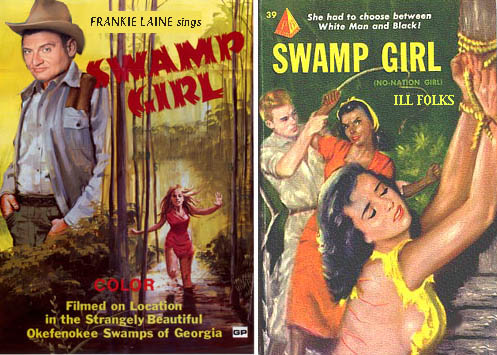
SWAMP GIRL! (Frankie Laine and Loulie Jean Norman)

Are you like me, do you pick a book off your shelf and just browse now and then?

It's ok to admit it. I didn't ask, "Do you like me," just "ARE you like me."

When it comes to non-fiction and especially biography, I might thumb through to the parts of a person's life that particularly interest me, and leave the rest. It's rare that the whole book is so compelling, and so full of anecdotes, that I read it straight through.

In the case of Frankie Laine's "That Lucky Old Sun," I did both. At first I just thumbed through for references to favorite songs. Then later on I found myself interested in going back to get the full story from beginning to end. And now, now and then, his is one of those books that I'll pick up in order to re-read an amusing story.

A few weeks ago, I re-read his recollection on "Swamp Girl," one of the greatest, and most bizarre songs in his catalog.

Mitch Miller had changed Frankie's career. Laine had been known as a jazz singer, a big-band guy. Some of his songs, like "Shine," even had listeners thinking he might be black. But when the peculiar Mr. Miller began producing Frankie, he had new ideas. He gave Frankie a western song to try. Laine thought the guy was nuts. "Mule Train" became a huge hit. Miller brought in another million-seller when he had Laine record "The Cry of the Wild Goose," with a typically overboard, bombastic arrangement.

Next, "we found another big hit in "Swamp Girl," a very offbeat song by a writer of specialty material named Michael Brown. It was all about a Lorelei of the marshes who lured men there to meet their doom, and it was out of line with anything I'd been doing up to that time. It still sounds avant garde today."

Indeed, of all the Laine songs, "Swamp Girl" might be a first choice to get a person involved in the amazing world of Frankie Laine. It might be a stretch, but it can be argued that Frankie Laine was THE GREATEST AMERICAN MALE VOCALIST OF ALL TIME.

Yes, you read that right. How do I place him above Sinatra?

Easy. Sinatra had two gears: ring-a-ding and morose. Yes, he had great phrasing, and some of his versions are definitive. He also had a tremendously fascinating private life. But if he wasn't doing some stupid fucking finger-snapping "Fly Me to the Moon," then he was moping about "It Was a Very Good Year" or "There Will Never Be Another You."

Laine? Laine could sing jazz damn well, from noir pieces like "Satan Wears a Satin Gown" to standards such as "Sunny Side of the Street." Unlike Sinatra, he could also sing a huge full-throated ballad like "Lord, You Gave me a Mountain." Could Sinatra put over a sappy religious ballad like "I Believe" or an over-baked bit of nutsery like "Annabel Lee" or "Blazing Saddles?" Hell no.

Oh yes...Frankie was a bit chubbier than Frank and had a more worse toupee.

But Francesco LoVecchio should be considered a damn strong contender to Francis Sinatra.

PS, as much as Sinatra needed a good arranger behind him (Gordon Jenkins or Nelson Riddle), Frankie Laine also was helped by strong production. If you listen to some of Laine's best work, you'll note that he had some of the finest producers in the business, and in his book he mentions how often he worked very hard with a full orchestra and take after take to get things right. The legendary "whip crack" noise on "Rawhide" took some ingenuity. And on "Swamp Girl," one of the key factors in making it brilliant is the ethereal vocalise work of Loulie Jean Norman. Loulie would later add strange counterpoint to "Lion Sleeps Tonight" by The Tokens, and was the soaring voice behind the original "Star Trek" theme.

"Swamp Girl" straddles the fragrant bog between Laine's romantic and jazz side, and his often blinding flare for the dramatic. He was a great man.

FRANKIE LAINE SWAMP GIRL

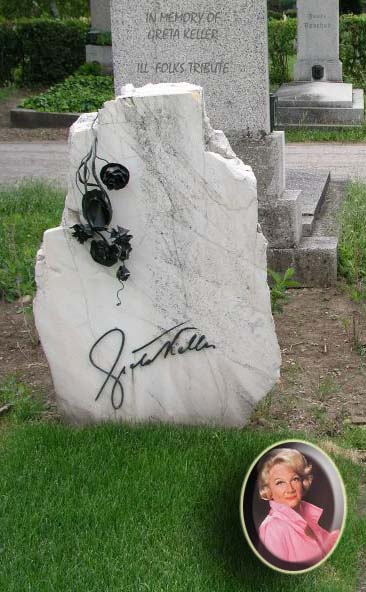
They Can't Take GRETA KELLER Away From Me


A sweet sorrow will comfort you hearing the voice of Greta Keller (1905-1977). Rather than wax melancholic over the wax, discover for yourself the nostalgic niche occupied, perhaps to waning interest, by the interestingly wan Greta Keller. Perhaps it's Keller's lingering German accent that makes her interpretations bittersweet, the tremulous attention she gives toward interpreting the lyrics, or just the aura she presents as a world-weary and aging chanteuse on a dreary tour through smoke-filled nightclubs.

Madame Keller's private life, as her voice suggests, included a variety of traumas. The worst was the murder of her husband David Bacon, apparently while he was patronizing a gay brothel. He was vaguely known at the time for portraying The Masked Marvel in a movie serial. Pregnant at the time of the tragedy, Greta's child arrived stillborn.

In 1940 she opened "Chez Greta" at New York's Algonquin Hotel. Noel Coward, Gertrude Lawrence, Tallulah Bankhead, Greta Garbo, Cole Porter and Maurice Chevalier all toasted her as one of the best. In 1947 she opened a new "Chez Greta" in St. Moritz Switzerland and in 1960 returned to New York for two years at the Waldorf Astoria. She continued to tour the world through the 60's and early 70's, evoking nostalgia and stoking libidos. Her rendition of "Married" can be heard in the 1972 film "Cabaret."

Dietrich was more theatrical, Hildegarde evinced more humor, but the tender Greta Keller has a way with a sad song.

Instant access, no Rapidshare, codes, or confusion in getting to a page where the link is hidden amid a dozen garish ads:

They Can't Take That Away From Me (or you)

Not Joan Baez - PULL THE TRIGGERS...Black Lives Smatter


.

.

.

.

.

.

.

It's really time for a white folkie to take up where Joan Baez left off, and warble an earnest ballad about misunderstood criminals. That would include gangsta wannabe's who goad police into pulling the trigger. At the moment instead of music, we get MEMES. After Doc Palmer killed a lion for no reason except joyful vanity, the "Black Lives Matter" people began firing up MEMES all over Facebook and Instagram. Like:

Nevermind that many victims of police brutality had been tormenting the cops, pretending to have weapons or resisting arrest. Also a bit galling is that a MEME such as the above is blindly insisting that anyone protesting the death of a lion can't possibly find time to protest one of the many incidents where excessive force was NOT needed and the cops were wrong.

One thing is certain; Baez doesn't matter much these days, and the folk-rock movement is deader than Trayvon. Nobody's a singin' protests anymore. And is that a good thing? Whether Bob Dylan was right about Hurricane Carter or not, it sure was a good song. When was the last time you heard a topical hit song that touched your heart? (Do NOT mention the word "BONO" if you leave a comment. It will be removed as SPAM).

Here's Joan protesting in 1965 (James Baldwin with the barefoot Baez) and in 2005 (re. the execution of "reformed" ex-crip Tookie Williams). But in 1972 the National Lampoon protested her, via parody.

Oh, the sacrilege!

How could they fug with such a well-meaning folkie?

First thing they had to do was avoid using the inflammatory title "Pull the Triggers, Niggers." On the National Lampoon album, the song was punningly if not cunningly titled "Pull the Tregroes." But the N-word was sung on that black vinyl of black humor.

Written by Tony "Going too Far" Hendra, and performed by a Baez soundalike named Diana Reed, the song references George Jackson. In 1970 Jackson and two other inmates killed a prison guard. As one of the "Soledad Brothers" he wrote a few books and joined rivals Eldridge Cleaver and Black Panther Huey Newton as a pet of white liberals, the kind who condoned violence as long as it was "just across the bay."

Liberals with the same perceived Baez bias against law enforcement probably admired Jackson's brother, who later in 1970 stormed into a Marin County courtroom and seized Judge Harold Haley as a hostage. Haley's face was blown off during the getaway, and Jackson was killed as well.

In 1971, after receiving a gun smuggled to him by a well-meaning white guy, George Jackson shot prison guard Jere Graham in the head, execution-style, exclaiming, "Let's see if this works." Two more guards as well as two white prisoners bled to death before Jackson was gunned down and the prison riot brought under control.

While it was actually Joan's ex-boyfriend Bob Dylan who came out of protest-song retirement to release a single called "George Jackson," the Lampoon gang mocked Baez instead.

The mock Joan sings: "Just because I can't be there doesn't mean I don't care. So next time, Brother, off a pig for me." The chorus: "Pull the triggers, Niggers, we're with you all the way, just across the bay."

Later in the song Joan is crucified for being sanctimonious ("I'm the world's Madonna...I'm needed from Belfast to Bangladesh"). She confesses to trying to right "grievous wrongs" by writing "tedious songs." All these years later, Joan Baez is still singing her heart out, and sometimes wearing it on her sleeve.

Pull the trigger on this download.

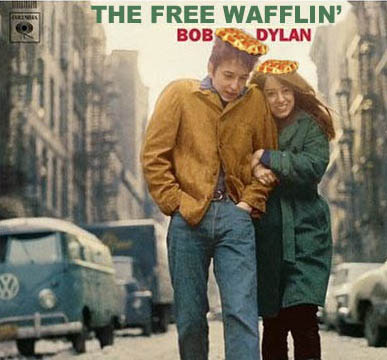
The Free-Wafflin' Bob Dylan - and his pickle grenades


"The waffle farmers got a chance to lob their pickle grenades..."
Gee! How waffle!
How does it feel, to no longer be a complete unknown...and the target of some jerks makin' fun of your hallucinogenic lyrics?
Watch out for the Yogurt People. Ketchup in your hair. Because..."17 Miles from Waukegan My Cantelope Died." That's the title of this very early Dylan parody.

It's on the Harvard Lampoon's "Sheep" album (many years before the National Lampoon and their "Lemmings").

What's it to ya, Moby Dick?

Genya Ravan and all artists..TIED TO THE WHIPPING POST


Artists used to complain, mildly, that there were problems with their record label, producer or agent. Even so, their product was in the stores. Making copies of vinyl, or even CDs was a nuisance, required some skill and equipment, and most people only made one or two copies for friends.

Now? Now artists are TIED TO THE WHIPPING POST, helpless against the massive "sharing" of their work. The rationale behind the Dementeds out there who couldn't keep their Hans off other peoples' copyrighted music, was "oh, it's not available on mp3." Remember that? Then the stuff was available on mp3. The reply was, "It's not cheap enough." So don't ruin the fun and just shut up. Some adorable Mephistophelian know-it-alls declared, "Ach, giving away music makes artists popular. Go sell t-shirts, and Zieg Heil to ME for putting your shit on my blog where I get banner ad money and Paypal tip money!"

It all worked out. NOT.

Aside from Taylor Swift or Sam Smith, most artists are discovering they've been cheated by Spotify to the point where it's embarrassing how many "hits" somehow only equal pennies. Artists have caved in and posted to YouTube to counter all the "fans" who have set up "juke box" accounts to take nickels for themselves. Yep, YouTube is a cheap nickelodeon where the parent company GOOGLE takes most of the money and tosses some chump change to the artists.

Think you can get somebody to untie the ropes to the WHIPPING POST for a tour? Well, how many venues are there? Most people stay home with their Netflix and their downloading. Without record label support and hiring a tour manager, it's difficult to tour. You have to truly be some "road warrior" who travels with just a guitar, and is young enough not to be worn out by the driving, the flying, the crappy hotels and the disorienting world of sound checks, talking to whatever local radio station might still be on the air, and of course shouting at your Twitter and Facebook followers about where you are. So you can hear: "Oh, damn, sorry to be missing it. Hope you come back my way again soon!"

Genya Ravan is among the many older stars who should be seeing royalties coming in. After all, her career stretches from "Goldie and the Gingerbreads" to "Ten Wheel Drive" to impressive solo albums that suffered from poor promotion (her debut on Columbia), bastardly production (like the well-titled "They Love Me, They Love Me Not") or drugged-up non-logic (an album titled "Goldie Zelkowitz" with no reference that this was actually Genya Ravan).

I did see Genya perform some years ago. It wasn't at a big venue. The place probably doesn't even exist anymore. A lot of the favorite places people like her used to perform at, simply got swallowed up by greedy landlords. Her autobiography, "Lollipop Lounge" tells the hard luck stories of her career (which also included being a men's mag model). I once complimented Genya; "you're a survivor," and that pissed her off, because she's been more than that...she's been a mover, a shaker, and she's beaten all the odds from addiction to cancer. She's also released new music on small indie labels. Some of her older material was re-issued on mp3 but that probably hasn't brought in much money. The quality isn't that great, either. This track, ripped from vinyl sounds better than the one I bought at eMusic.

A "little" material "free" isn't necessarily horrible. One or two items on YouTube to give an idea of how excited the audience is to see the artist live. One or two songs on a star's website or on a blog. In that spirit, here's a sample of Genya, for those who may know the name but not much else. "Whipping Post" is pure Ravan. Each stanza of this song brings Genya closer to the raw meat and the bare bones. Or to borrow, out of context, a Phil Ochs line: "The whipping was rotten with ecstasy." Good Lord...Good Lord...Lord...I feel like I'm DYIN'!!!
WHIPPING POST Instant download or listen on line. No code words, porn ads or pop-up ads.

Saturday, August 29, 2015

YOGI BEAR via FRANK MILANO : "CINDY BEAR"

Frank Milano is Yogi Bear (not Daws Butler) on this old kiddie 45rpm.

Smarter than the Average Bear, Yogi realized plundering pic-a-nic baskets wasn't all the fun he could have. As this song proves, he's now into Cindy and visiting her cave.

Why did Yogi wear a tie...but no pants?


CINDYBEAR! Instand upload or listen on line.

Alfred E. Neuman - POTRZEBIE

Yes, Mad Magazine is still around. Sort of. Quarterly.

Face it, with everyone roaring with laughter over MEMES tossed around on FARCEBOOK, and people constantly e-mailing zany YouTube videos, and various Twitter idiots stealing each others jokes to post, who needs to buy a magazine? Why encourage a new generation of cartoonists and comedy writers?

POTRZEBIE was a beloved nonsense word back when Mad was loaded with them. There were various Yiddish expressions thrown in (this song mentions the FURSHLUGGINER Five). Don Martin and Will Elder were especially fond of creating words to denote violence (a face slapping SMEKKITY-SMEK for example) but this one was pure idiocy.

The only name stranger than Potzrzebie was found over at DC Comics, via Mister Mxyzptlk. He was an imp that sometimes annoyed Superman. He lived in the "Fifth Dimension" (a zone, not a sappy group of overweight and over-age singers) and the only way to get him to go back was to trick him into saying his name backwards.

Like the imp, who underwent various changes in shape and features depending on who drew him, there were several variations on Alfred E. Neuman. The definitive Alfred (as seen here) was created by Norman Mingo.

Unfortunately Mad magazine's music, on flexi-discs in the mag, singles and occasional albums, rarely reached the level of Spike Jones or Raymond Scott. Sorry, but this instrumental doesn't live up to having a Mad Magazine catch-word for a title.

Sapristi!

A Mad instru-mental.

Instant download or listen on line. No tricky links, stupid passwords named Zinhof, or other distractions.

A HERRING and a DOMINO (Anne Herring and Anna Domino)

It's Anna Domino and Annie Herring.

And rather than do a Lawrence Welk impression by introducing "Anna one, Annie two," let's get the facts out of the way, fast. YOU may not have heard of either, but they have been in the music biz for 20 (Domino) and 30 (Herring) years now.

Herring is a Christian singer-songwriter, so chances are you'd know her if you feel more positive about Oral Roberts than oral sex. All her recordings are on Christian record labels, but don't label her a Jesus freak. Take the perky, pretty "Wild Child," from her very first album. It's faster than a pirouetting rodent and filled with the kind of free-wheeling glee that most will only get after an uplifting morning in church or an upshot of Summers' Eve.

Is it a sin to download this out of print bit of Herring? What would Jesus do?

Like many contemporary Christian singers Annie's lyrics are not always overt in referencing that Son of you-know-who. (Parenthetical note: the grand Rebecca St. James scored a massive contemporary Christian hit via "Me Without You," which SHE thought was about God. The songwriter, Martin Briley, was just writing a love song to a very real You. But the Lord moves in mysterious ways).

As sung very fast by A. Herring:

I always wanted my life to look like the right side of a tapestry, a tapestry, But darkness was weaved in when I was conceived in iniquity. And now I wanna be cut free... You took me out of hell when you tore through my veil And now all I can do is just look at you And be me for the first time. I feel like a child that's never gone wild. And I feel pretty in my soul The darkness is gone And what keeps me hangin' on is you. And that's all I want..."

As for Anna Domino, she's had a cult following for twenty years, which means she can pretty much walk around unnoticed. Her real name is the less ecclesiastical Anna Taylor. Her style of indie-pop, at least on the cut you're about to hear, puts her somewhere into the Joni Mitchell category of someone cool, literate and aloof.

Born in Tokyo, raised in Ann Arbor, Michigan, she gravitated to Manhattan and worked with various indie rock bands, releasing her first full length album in 1986. "Own Kind" is from that vinyl.

She has since gone on to record some interesting stuff with her husband Michel Delory (check out Favourite Songs from the Twilight Years 1984-90). In 1999 the duo re-named themselves Snakefarm and released "Songs from My Funeral," filled with traditional folk songs and murder ballads. Own Kind:

Here we are polite well informed and mannerly All our boys and girls have money and enough to eat And weave a thread through the whole community Showing how we value heredity And what it means to belong to a fatherland Know the aborigine, colourfull but out of hand And now and then others come and threaten us And we fall back on forces we can trust And we shake our fists at the posters on the barroom wall We display our public grievance In the editorial page or else we paint it on a subway hall. We look upon the world but we're not quite part of it All the trouble there surely isn't our fault All the pain and hate and the needless punishment We've grown out of that and we're quite proud of it And something else that should well bear mentioning Once we were on top fashionable and interesting And we held sway over half this ship of fools Subject to our values myths and rules We know we can't afford to lose the past So full of moral lessons we thought would always last But now so many years without a war We have a generation A generation rotten to the core.

WILD CHILD HERRING

OWN KIND DOMINO