Monday, October 29, 2018

"COLD PITTSBURGH MORNING" - Sammy Walker


There have been some cold mornings in America. It's Fall, after all. There's frost on the pumpkins some nights, and some days, the dawning gray is persistent and clouds keep the warming sun away. 

It seems that most every day, the cold is accompanied by the chilling reminders of the new age of intolerance, self-entitlement, selfishness and stupidity. A few days ago, in Pittsburgh, it was another machine-gun slaughter of innocent people by a paranoid gun-nut.

This morning, a defiant jerk named TORBA is spinning why his website of hate is a GOOD thing, and how "Freedom of Speech" won't be defeated. 


Torba thinks his site hasn't inspired maniacs to do everything from trolling online to murder. Maybe it's just an inconvenient truth that he can ignore. It doesn't prevent him from smirking at his bank account, or considering himself famous. Like Assange hiding in self-righteous exile to avoid rape and theft charges, this guy wraps himself up in "Freedom of Speech" and fights hard...so he can continue to MAKE MONEY.

This forum-father's definition of "Freedom of Speech" would say it's ok to yell "Fire!" in a crowded movie theater, to shout insults at the handicapped (it would do them good to get some reality), or to declare anyone who thinks the Holocaust never happened is "entitled" to their opinion of fake-news fact. No gray areas. Like, it was ok when YOUR immigrant grandparents came to America, NOT ok for anyone else's now. Come on, let's go to a cemetery and scream "God Hates Fags" while a patriotic hetero soldier is being buried. Makes sense. Freedom of Speech. FUN, too.

Hell, this guy is just a more lethal version of the assholes who think "Freedom of Speech" means giving away entire discographies and filmographies and bibliographies and TV shows on torrents and blogs because, er, uh, people in show biz are all millionaires including owners of book shops and record stores, and copyright is copy WRONG. You name the shit, somebody's gonna say it doesn't stink. But it does. 

Morons should be shunned, and called MORONS, and not given places online where they get sympathy and encouragement from even DUMBER MORONS.

Get real. These morons do it for fame. Give away enough shit in a shoutbox or in a forum and you can pretend you're a star. You get some stranger to shout "awesome!" or "we're not worthy" when you post discographies on everybody EXCEPT the artists YOU want people to buy. PS, if you dropped dead tomorrow, you MIGHT get a "R.I.P." followed by "here's somebody ELSE giving shit away. Been to THIS blog yet?"

Some morons do it for Paypal tips. Like: "Give me money so I can buy shit. My record store guy loves me. So do YOU. You don't have to buy from YOUR record guy and 50, 100 copies that could be sold aren't sold thanks to ME. So love me, love me, love me, I'm a music fan. Your hero."

Back to the more lethal versions of self-entitled sociopath. Assange did it for the money and fame. The jerks like Mark David Chapman mistake being infamous for being famous. The vainglorious bastard who killed eleven unarmed old Jews in a synagogue announced to his redneck retards on social media, "I'm going in!" Like this gun nut with his automatic weapon and his collection of glocks was a hero. Like Dylann Roof, his target was not a bunch of well-armed religious fanatics (like ISIS) but unarmed people quietly engaged in humble worship. 

It was a cold Pittsburgh morning recently, and things haven't really warmed up, unless you mean the wispy flames on the candles held by concerned citizens of all races and colors who gathered at the synagogue to pay their respects. Their number is dwarfed by the madding crowd of bigots who have a President who openly supports them and declares the mob includes plenty of "nice" people. 

Sammy Walker's song bleakly sketches the contrast between an old woman dying alone in poverty, and not far away, a crowd screaming in hysteria for the Steelers to win a game. Oh, and not take a knee because they're playing the REDSKINS, a team that refuses to change a blatantly racist name because the minority they abuse is not likely to set off bombs or riot. The Native Americans were pushed off their land. The Jews? Pushed off every bit of land in the world, and now, with the help of Peter Gabriel, Roger Waters and Patti Smith, told the tiny sandbox they call a homeland should be taken away from them, too. Holocaust denial is still popular, so who knows, maybe social media maniacs will declare the synagogue murders never happened. 

A bit of GOOD news here is that the Pittsburgh Steelers actually acknowledged the great tragedy in their town. It's not just the worst attack on Jews in America, it's another ugly and permanent scar on a country that once believed a Jewish woman's poem that graces the Statue of Liberty.

Sammy Walker hasn't made an album in a long, long time, and hasn't gigged in a long, long time. Part of the reason is piracy. The record business collapsed thanks to music assassins happily playing Santa, hipster, blogfather and basement anarchist in giving all the music away. Self righteous, all of them. Lots of excuses for their stealing and their sociopathic brattiness. The bottom line is they are as clueless as bigots, and just as lonely, too. People who do this are pathetic outsiders who will settle for a "nice" comment from a stranger, maybe a Paypal donations, or just the twisted notion of being "famous."

Sammy Walker, in an interview with Kasper Nijsen, tried to find some kind of silver lining in the dark cloud: "Without the internet and the new technologies, no one would be listening to my songs at all..." Which is the attitude of the pirates, and morons like Dave Marsh. Piracy is GOOD because people get free music and the artists get...er, uh, fame. They might even be famous enough to have a few hundred Facebook friends or Twitter followers who'll go to GoFundMe to pay the hospital bills Medicare doesn't pay. Oops, not enough to pay the bills. Oh well. Sell t-shirts.

The Pittsburgh morning that had the news about the synagogue murders? Already it's fading from memory. Anyone remember the killings in San Bernardino? Anyone still think about Charlie Hebdo? We all know the drill. Hear the news. Turn the perp into a star ("Why did he do it, let's hear ALL about him...."). Take a glance at the faces of the victims. Write "RIP" on social media somewhere. Wash your hands and rinse and repeat. And don't listen TOO closely to song lyrics that say "imagine...NO RELIGION...a brotherhood of man..."

Sammy Walker: "Sometimes it seems a lot of people have forgotten to listen to the words to songs. I mean, the general listening public. I don’t know how many people today can still sit and listen to the words and contemplate what they’re hearing. But there’s always the exceptions, of course, who are influenced by that kind of music and do listen to music where the words are a big part of the song." 

Listen to "Cold Pittsburgh Morning," and "IMAGINE" that the dead lady here is named Bernice Simon. She's one of the elderly women murdered by a 40-something nobody who probably has jerked off to Natalie Portman, Winona Ryder, Mila Kunis, Gal Gadot and Scarlet Johannson, without thinking Jewish genocide against them.

Sammy Walker's written songs that many critics consider right up there with the best of  Bob Dylan,  Phil Ochs and Leonard Cohen. All three, Jewish.

Sammy Walker your download of "Cold Pittsburgh Morning " 

Tuesday, October 09, 2018

Phil Ochs CHORDS OF FAME and the Rock and Roll HALL OF SHAME

Well, well, today's nominations came out. Guess who was NOT nominated for the Rock and Roll Hall of Fame in that fabulous city of musical greatness, CLEVELAND.

Phil Ochs. Warren Zevon. A whole bunch of people who should be in there. You can make up your own list.


It's still such a farce to even realize the Hall of Fame IS in Cleveland. Not New York City home of the Brill Building and dozens upon dozens of great people, from Paul Simon and Carole King and others born in NYC, to John Lennon who adopted the town as his own. Chicago would've been a good choice. Los Angeles. Motown. Nah. Fuckin' CLEVELAND. 

Today, John Lennon's birthday, you'll find below Phil playing "Chords of Fame" for him. John was very interested in the American folk tradition, and how melodies were adapted and freshened with new lyrics. Phil was talking about "Joe Hill," and how the melody was ased on "John Hardy" and "Tom Joad."

Phil, you may recall, was on the bill at Lennon's "John Sinclair Rally," performing "Here's to the State of Richard Nixon." In a hotel room, an eager Mr. Lennon  tried to calm an awed, and stuttery Phil Ochs, who became relaxed enough to launch into that enduring gem, "Chords of Fame." 

Today, the nominees for the idiotic "Rock and Roll Hall of Shame" were announced. While not as embarrassing as last year's bunch, it did include some people who are NOT "Rock and Roll" at all. Of course, one of them was chosen by several newspapers as the headline choice: 


That asshole, with his hat on backwards, and no guitar in his hand, yapping and yapping and rapping and rapping, is a "ROCK AND ROLL HALL OF FAME" nominee? In the immortal words of Pontius Pilate, "JESUS FUCKING CHRIST!"

The nominees: Def Leppard, Devo, Janet Jackson, John Prine, Kraftwerk, LL Cool J, MC5, Radiohead, Rage Against the Machine, Roxy Music, Stevie Nicks, The Cure, Todd Rundgren, Rufus & Chaka Kahn, and The Zombies

Who do you think will make the cut? As we have several generations with short memories, you can bet that the most classic rock group, The Zombies, will NOT get in. They failed last time, after all. All they're known for is "Time of the Season," and if Boko Haram hasn't made it, the unsightly bunch who had a hit with a "Whiter Shade" of something or other, forget THIS group. Even though both are still touring.

It's interesting to see John Prine in there. Singer/songwriter. Folkie. Hasn't remotely the number of famous songs of either Ochs or Zevon. He should be proud to have been nominated, but that's likely as far as it goes. 

Some of the more ridiculous nominees: L.L. Asshole, Janet Jerkson, and Chunka Con, NONE of whom are really "Rock and Roll." Just how a mediocre headbanger bunch of unoriginals as Def Leppard were even CONSIDERED is beyond belief. 

"Don't. Don't. Don't...don't play the Hall of Shame sham." Meaning, don't spend too much time predicting who the winners will be. Are YOU ever going to go to Cleveland to see some uninhabited costume and mute guitars behind glass?

 John Lennon listens to Phil Ochs sing Chords of Fame

October 9th - John Lennon's birthday and...an Eleanor McEvoy song

There's been a flurry of activity this year, for John Lennon fans.


A museum in Liverpool has staged a vivid exhibit of memorabilia, and there's been a re-issue of the movie "Imagine," and also a huge box-set version of the album complete with a book and a ton of out-takes.


October 9th is John's birthday. It's also the title of a song by Eleanor McEvoy:"Last Seen October 9th." The song isn't usually in her set list. It's pretty grim. In fact, she usually performs it only on October 9th. 

Over a decade ago, I was in the audience, on October 9th, at her show.  By way of preface, expecting her song title for an answer, she asked the audience, "Anyone know what day this is?" 

From my ringside seat, I answered, "Yes...John Lennon's birthday." 

"Is it? Really. I didn't know that..." 

The song is about a person gone missing, not someone assassinated, but the effect is the same. The song, in its quiet, sober, somber simplicity, says a lot about life's fragility and the emptiness that goes with loss.  


 OCTOBER 9th Listen on line, no pop-ups, porn ads or wait time.

October 9th - Rufus Griswold defames Edgar Poe


You can trace literary assassination in America, to the Rev. Rufus Griswold, and a piece he published anonymously in the New York Daily Tribune on October 9th, 1849. 


Griswold was a rival of Edgar A. Poe (as Poe's byline usually read). Poe was known as much for his fiery, influential magazine editing as anything else. He recklessly made enemies with his severe and witty comments on matters of the day, much of it directed at rival writers. Griswold published compilations of those he considered the best American poets, and resented it when Poe disparaged some of the choices. Griswold had included Poe, probably as much to stay on Poe's good side as to acknowledge that Poe was indeed one of the country's finest talents. 

Griswold probably burned with malice when a poetess Poe praised in a magazine, was more taken with that and the handsome poet, than with the compliment of being in a Griswold anthology.

It was all a secret hatred. Griswold was a true weasel, and didn't publicly feud with Poe and risk being ripped to pieces by someone known to be cutting and witty. Griswold, after all, was better known for compiling collections, not for his writing.


Poe was so sure that Griswold was a friend and admirer, he named him his literary executor. Griswold executed Poe in the anonymous obit, but dared not expose that it was the work of the very man Poe had entrusted with his life's work. Griswold's black portrait of Poe as a nasty drunk would be taken as fact, even as several biographers over the years pointedly refuted much of Griswold's charges. As executor, Griswold tightened the purse strings on any money coming in from Poe's published work. Poe's starving mother-in-law, Maria Clemm, had to beg Griswold over and over for a few coins, or a few copies of Poe's books that she could sell.

Here's how Griswold opened his obituary on Poe, who at age 40, was found in a Baltimore street after several days of exposure and delirium, and was too far gone to linger more than a few days in hospital:

"EDGAR ALLAN POE is dead. He died in Baltimore the day before yesterday. This announcement will startle many, but few will be grieved by it. The poet was well known, personally or by reputation, in all this country; he had readers in England, and in several of the states of Continental Europe; but he had few or no friends..."

Griswold then threw in a plug for himself, noting that any biographical material in the obit was from "Griswold’s “Poets and Poetry of America,” from which a considerable portion of the facts in this notice are derived." Yes, the weasel had made sure to include Poe in the anthology, so as not to get Edgar angry with him, but now was his revenge.

Like Poe, Griswold was a major flirt with the poetesses of his day, but the results were more erratic than erotic. He was married three times, which was quite unusual for that era. The last divorce was very messy, and somehow involved technical issues that affected his latest marriage. This was circa 1853, four years after he defamed Poe. His bride was so disgusted by the charges brought up when the divorce was re-affirmed, she left Griswold. His hellfire wasn't over. A gas leak burned him and his home, but he recovered. This was followed by his 15 year-old daughter Emily nearly left for dead when she was trapped on a train that careened into a river. She was pulled from the waters and placed with dozens of dead bodies. Ultimately, someone noticed she was still breathing.  The following year, Griswold died of tuberculosis. He was only 42.

Thus, the pendulum swings wildly, and for some, Griswold's long history of creepy activity, culminating in the Poe obituary, led to his ultimate horrors in the last few years of his life. 


The last gasp from The Ivy League Trio, a concept lp called "Folk Songs from the World of Edgar Allan Poe," included their colorful version of "The Pit and the Pendulum." It arrived not long after Vincent Price and Roger Corman began their series of Poe-inspired films, including "House of Usher" and, yes, "The Pit and the Pendulum."

The trio had been signed to Decca's Coral label, and given a chance with two albums that included vivid cover versions of recent folk songs ("The Ballad of Tim Evans" and "The Ballad of Springhill (Springhill Mining Disaster)." For Reprise, Ronn Langford replaced Bev Galloway as the bass voice, and they re-wrote and re-arranged the material they were given, to create a critically praised, if low-selling release.

Two of the three singers on the album survive: Langford's had a lucrative career in the world of car racing, and Bob Hider is known for his skilled photography. "Pit and the Pendulum" combines lusty folk balladry with over-the-top guignol as one might expect (and even demand).

IVY LEAGUE TRIO PIT AND THE THE PENDULUM

Jerry Yester - Admits to the Pedo Material

Pretty weird to see the reaction to Jerry Yester admitting that he did have child porn on his computer, and that he'd been dabbling in such imagery for several years.

Since his main claim to fame is being in the post-successful Lovin' Spoonful, some people have left comments on social media about how they "can't listen to that music again."

Is that such a bad thing? Outside of "Summer in the City" they were a pretty dippie bunch of hippies. And if you can't separate music from the people who make it, you might not be much of an adult.


Jerry was in several groups when he was young and not, uh, nostalgic for childhood. These included The New Christy Minstrels and the Modern Folk Quartet. Arguably either group produced music a little more challenging than the Poon Full. Er, Spoonful. PS, how many straight, upright and decent people did NOT find something lurid in the term "Lovin' Spoonful?" The same bunch that don't know how the band 10CC got its name?

While Jerry did play piano on "Do You Believe in Magic," he didn't actually join the Spoonful until Zal Yanovsky was replaced. The band limped along for another year and broke up in 1969. It was then, that Yester reached his artistic height with "Farewell Aldebaran," produced written and performed with his wife, the legendary Judy Henske. Buoyed by the critical (but not commercial) success of the album, Jerry and Judy formed a band called Rosebud, and issued another album.

Also in Rosebud was arguably one of the most brilliant of session keyboard players, Craig Doerge. Eventually, Jerry and Judy were divorced. Judy married Craig, and they've been together ever since. Yester worked as a producer, saw The Modern Folk Quartet briefly come back together, and eventually joined the reformed Lovin' Spoonful in 1991. Just about a year ago (October 7, 1917) he was arrested. Pedo porn was found on his computer. He was kicked out of the Spoonful, which was still touring at the time. Now, a year later, he awaits sentencing. He's 75, out of work, and the question is whether a few years in jail is really needed as a warning to him or a warning to others.

Meanwhile, below, a pensive track from "Farewell Aldebaran" with Jerry on lead vocal. It's a moody look at old age and death, a subject that might've had something to do with Jerry's sudden interest in the absolute reverse.

HENSKE YESTER
One More Time    Instant download or listen on line. No Zinfart passwords, links for bogus out-of-date Flash downloads, malware or spyware anywhere.

UPDATE, FEBRUARY 10th, 2019. Apparently Jerry was able to get a deal...and/or perhaps what was on his computer wasn't THAT bad. He turned up in November of 2018 at the Grand Tavern Restaurant (Grand Central Hotel, Eureka Springs, Arkansas) playing piano behind guitarist singer Catherine Reed (who was doing Paul Simon covers). Catherine and Jerry ended with a duet on the Everly Brothers tune "Bye Bye Love" that Simon and Garfunkel often played. "Bye bye love...bye bye happiness, hello loneliness, I feel like I could die...my lovin' baby is through with me..." February 7th, 2019 he was in Nyx in Eureka Springs, Arkansas for a set (photo below). Nice to know he's not in hell. Maybe purgatory or limbo...because yes, on the far right is the TIP jar and the $15 CDs are laid out, hoping somebody will buy.


THE EVE OF DESTRUCTION soothed by THE LIVING VOICES (of Ethel Gabriel)

Amazing: a gloomy climate change headline bounced Kardashian's butt off the vital front page of a news site:


Not to worry. 

The "terrifying climate change warning" scare headline isn't the top story. Who believes it, anyway? 

President Orange Man once declared that when he uses his hair spray, it "disappears into the air," and doesn't seem to do any damage to that precious (if not fictitious) ozone layer in the sky. Republicans in general don't believe in climate change, evolution, or disqualifying a Supreme Court candidate who gets as emotional as a six year-old with alternating sniffles and tantrums. The most quotable thing Kavanaugh has ever said in his life: "I like BEER." 

Shrug off the gloom and doom and be soothed by some "EASY LISTENING" music. 


    “Back in the day” the “silent majority” had an answer to Hiroshima,  fallout shelters and music interrupted by emergency broadcasting system “tests” on the radio. They turned it all off, slapped some EASY LISTENING on the phonograph set with the teakwood needle, and sipped Jack Daniels (country) or Dewar's or J&B (city). In fact, EASY LISTENING could sweeten anything sour, even "Eve of Destruction," which you'll hear below covered by some middle-aged denture-wearing ninnies. 

    What, an entire soothing album of protest songs gone toothless? Sure. The album was just another in an endless series of budget RCA Camden albums intent on making “living” a little “easier.” Most any genre of music could be rendered into aural oatmeal and easily digested by the “Living Strings” and “Living Voices” in the living room. While most of these albums concentrated on Christmas music, standards, show tunes and watered down classical music, nothing was safe, not even Bob Dylan and P.F. Sloan. As an “easy listening” choice, it lends a macabre reality to Tom Lehrer’s line, “we will all fry together when we fry.”

    Would it surprise you to learn that the idyllic life of Ethel Gabriel, inventor of “The Living Voices” and “The Living Strings” ended badly? She lost her husband, her affluent lifestyle, her gold records, her savings, and has ended up in a small room in an upstate New York home. It’s a sad fate for a woman that isn’t even known to feminists, despite being credited as the first female record producer. After starting her musical career with an unlikely instrument choice (the trombone) and fronting a dance band, she worked for RCA. She was one of the executives who went out to Tennessee to scout a refugee from Sun Records with the unlikely name of Elvis Presley. 

     Ethel reached a pinnacle in the 60’s when she helmed RCA’s budget Camden label (named after a mediocre town in New Jersey). She not only re-issued everything from Perry Como to Homer & Jethro, but became the label’s combo of Mantovani and Mitch Miller, signing or supervising all kinds of lame releases by the Boston Pops, pianist Peter Nero, and a vast array of flaccid bandleaders including Hugo Winterhalter, George Melachrino and Henri Rene. Her big singing stars were gooey voiced Roger Whitaker and the Ames Brothers. She also was in charge of the never-ending and constantly expanding “Living” albums (was that title inspired by the Playtex “Living Bra?” that would soon include “The Living Brass,” “The Living Guitars,” and so many others.  RCA was delighted that some albums Ethel produced actually won Grammy awards and were certified Gold. 

    Ethel prospered through the 60’s and even the 70’s. She made a fortune from selling Muzak to middle-aged zombies, cloth-eared wimps and crying Dutchmen, who all sighed over how EASY the listening was. But…interest in the inane world of musical tranquilizers waned. Instrumentals such as “Stranger on the Shore” and “Alley Cat” from Acker Bilk and Bent Fabric gave way to The Beatles, and   Henry Mancini’s “Moon River” and Paul Mauriat’s “Love is Blue” were eclipsed by grunge rockers such as Mick Jagger and Eric Burdon. Past the 70’s, melodic Broadway shows began, in all candor, to ebb. Sondheim offered “Send in the Clowns” but was soon exploring discord with “Sweeney Todd” and “Assassins.”  Few hit songs were coming from movies (the “Godfather Waltz” was a rare exception). The people who wrote hit songs for Sinatra were dead, and Frank wasn’t feeling so good himself.  A last gasp in the late 70’s and early 80’s was when big bands (Les Elgart in particular) and unlikely geezers like Ethel Merman and Cab Calloway, rode their old hits into the discos of the world. 

    By 1984, Ethel Gabriel had pretty much done the “Living Strings” to death. What next? She was persuaded to invest her life savings, a quarter of a million dollars, in starting up “Global Entertainment.” Her advisor was a guy named Robert Anderson, who had been Secretary of the U.S. Treasure under Eisenhower. Either he was senile, or a crafty old bastard. Probably the latter, since he eventually did time for bank fraud. Either way, the company failed, and the 60-something Ethel faced an uncertain future. A lot of her possessions, including her framed Gold Record awards, were sold at auction. She became a widow and had no children to help her. In 2013, at the age of 91, she briefly made the news when a fan discovered her living at the Rochester Presbyterian Home, and gave her a grand gift by spending some money to make a Gold Record replica of one of her long-sold triumphs:


     Thus, a happy ending, of sorts. She no doubt can also take comfort in knowing there are hundreds of blogs that give away "Living Strings" music and Elvis and everything else on RCA. What would she do with the royalty money anyway? Eat less spam and government cheese? 

      Born in 1921, she’s lived to see 9/11 and ISIS and climate change, and predictions that we are, indeed on the “Eve of Destruction.” What do you do about it? Growl like Barry McGuire? Nah, you just croon the tune like the “Living Voices” do, until you stop living.

LIVING VOICES "Eve of Destruction" - no weird foreign download site, no pop-ups, no "update your Flash" spyware games, no dopey PASSWORD, no whine for Paypal donations

Wednesday, September 19, 2018

KATHY'S SONG - the pick for sensitive singer-songwriters breaking in


As Paul Simon slip slides away, having contributed to the official bio "The Life," issued a weird new album covering old obscure songs, and taken his last tour, we look back at what Art Garfunkel considered his best song: "Kathy's Song." 

You've heard it sung in every park in the summer, strummed and bleated by some guy or girl trying to get some attention. It's almost a rite of passage to sit in some smelly coffee house, cross-legged, a candle nearby, and put on a glum face as, with closed eyes, the first words come out: "I hear the drizzle of the rain..." 

Most people listening, wish for the sound of silence. But "Kathy's Song" remains, ahead of "Wild World" and "Fire and Rain," the best number to say: "I'm here, I'm emotional, I'm serious about my singing and my art, and most of all, I really want to get laid." 

If you do have talent, like Sarah Jarosz, you can hook people with this familiar song into listening to your own originals, and you can end up with a Grammy or two! 

 The song is a traditional ode, a classic love ballad professing eternal devotion. It's a love that will last. The reality is that both Paul Simon and Kathy Chiddy had much longer relationships with others. Paul would get married three times (Kathy was not one of the wives). Kathy has been in a relationship with somebody else for 40 years. 

Paul was so nuts for her, that ala “Freewheelin’ Bob Dylan” who put HIS girlfriend Suze Rotolo on an album cover, he chose to add her to the front of the “Paul Simon Songbook.” How idyllic. 


 The truth seems to be rather mundane. The puppy love was there for a while, but, let’s quote another Simon, this one named Carly: 


She said, "I know he'll never leave me
I never felt it deep inside like this before"
It was good to see her, believe me
But I couldn't stand to hear this anymore


         Kathy probably did say something like that to her friends. She just couldn't express it as brilliantly as Paul Simon. Paul's poetic take, soaring into the regions of myth, make it tough for people to accept the truth: undying love and almost painfully intense devotion sometimes aren't enough. Love affairs can be hot and then cool. Those looking for for "the story behind the song" don't want to know that an artist's poetic song isn't totally based in reality. The Paul and Kathy relationship was no different than a million college romances or even high school romances where the couple vowed to be together forever, and sealed it with a kiss tasting of Burger King fries. 


       The many biographers of Paul Simon have been unable to get anything fantastic out of Paul about Kathy, and Kathy, perhaps bewildered by all the attention to what was just a first love that didn't last, figures that it's better to say nothing than to shrug, "Hey, I've been with another guy for 40 years." In "Paul Simon: The Life," the author merely writes: “Kathy first heard it on a tape Simon made of the song in New York. Garfunkel would refer to “Kathy’s Song” decades later as his favorite Paul Simon composition.” Ah. Thanks. This is  the definitive biography, folks.

      In 1963, 18 year-old Kathy was a folk fan and got a dream job selling tickets at the Railway Inn folk club, in Brentwood, Essex. She saw Paul there, but it was the following year that the shy girl, no groupie, got introduced to him by a mutual friend. As he would later do with his first wife Peggy ("Peg" in the song lyrics) and with Carrie Fisher (the two "one and one-half wandering Jews" of "Hearts and Bones") Paul found a muse in Kathy, and name-checked her in title of one song, and in the lyric of another. "Kathy's Song" was on the solo album he made in England. He sang it well, but eventually, like "Bridge Over Troubled Water," he gave it to Artie as a solo.

    Nobody can touch Garfunkel on “Kathy’s Song,” since his synagogue-trained voice, so often called “angelic,” conjures up the images of spirituality in Paul's lyric.


    On this blog of less renown, the choice of singer is, of course, a woman. Since both "Wide World" and "Fire and Rain" more obviously are songs by men sung to women, "Kathy's Song," despite the title, is the best choice for women because there's actually no gender in the lyrics:

And so you see I have come to doubt
All that I once held as true
I stand alone without beliefs
The only truth I know is you
And as I watch the drops of rain
Weave their weary paths and die
I know that I am like the rain
There but for the grace of you go I

       
    It's interesting that women could sing those lines at all. About men? Really? Those ripe, almost 18th century lyrics of almost-religious devotion???


    You can't imagine Edie Brickell singing that to Paul Simon. Yoko singing it to John. Linda to Paul. Sally Field to Burt Reynolds. Goldie Hawn to Bill Hudson. Tammy Wynette to George Jones. Nancy Sinatra to Lee Hazlewood. No woman would sing “there but for the grace of you go I" to a guy. Think about Sonny singing “the only truth I know is you" to Cher. Yeah. But not Cher singing that to Sonny! 

    Women who sing the song either just like the song and WISH they could find a guy for whom the lyrics would have some meaning, OR...having had their fill of guys in puffy shirts tied with string instead of buttons, who ask them to get into bondage games, they've gone to the other side, and are singing this song to another woman. 


    Sarah Jarosz, recorded “Kathy’s Song” as part of a 5-track  EP, “Live at the Troubadour” on August 9, 2012. It was released (today we say “dropped”) the following year.  Her supporting musicians on the album are Alex Hargreaves and Nathaniel Smith. The Troubadour, which hosted such legends as Phil Ochs and Joni Mitchell, remains an important credit for any folksinger to have. 


    The Texas-born folkie and Americana/roots singer issued two studio albums before this live one, and two studio albums since. The first, “Song Up in Her Head” (2009) was #1 on the Roots chart, and a cut from it was Grammy nominated for “Best Country Instrumental Performance.” And guess what, her latest, “Undercurrent,” also hit #1 on the Roots chart and was Top 10 on the Folk chart as well. All her albums are on the Sugar Hill label. 


    “Undercurrent” also won her the “Best Folk Album” Grammy, and the cut “House of Mercy” got her a “Best American Roots Performance” Grammy. You didn’t know that, because the Grammy show isn't about "diversity," it's about Beyonce and Jay-Z, and it's about rappers, and it's about prap -- the pop tarts who rap-sing their lyrics, like CardiB and Taylor "Look What You Made Me Do" Swift. The diversity of classical, jazz, roots and country aren't celebrated on the Grammy broadcast and awards in these and other categories are barely even mentioned. 


      Who is considered a sensitive singer-songwriter these days? Sam Smith? Darwin was wrong. And nothing by Sheeran, Adele, Taylor, Sam, or Kanye, Beyonce or Jay-Z will ever be as good as...

KATHY'S SONG - listen or download, no dodgy websites re-directing you, no ego Passwords, no Paypal tip nagging 

KATHY CHITTY...mentioned in "AMERICA" oom pah pah DAVID BOWIE


Do you suppose Kathy is feeling a tad old...hearing the news that her boyfriend from the 60's is in his 70's and on a retirement tour? (The same KATHY mentioned in Paul's "America" song covered weirdly by David Bowie, link below??)

Maybe she actually doesn't think about the little guy that much. Maybe she thinks too much about other things besides "Think Too Much." Ya think? 

I think she may think, "When is another obnoxious photographer from the London Daily Fail going to come out here to an obscure part of Wales, and take another unflattering photo of me? Why pick on ME when there's momentarily no wardrobe malfunction on a Kardashian and no Hadid exposing underboob?" 

Why am I mentioning Kathy? Because this is not only a music post offering a link to an odd-choice song Bowie sang as a "tribute" after 9/11, it also reviews the new bio on Paul, which didn't invade the woman's privacy by showing a photo of how she looks now. That's what TABLOIDS do, and really, SHOULD they??

It's possible that if Kathy took a long distance call and answered some questions, the new official (Paul cooperated) bio would answer any questions morbidly curious people have about her (and the song). Yet, even though asked, she chose NOT to participate in the book. 

Do you suppose if somebody from the LONDON DAILY FAIL had ASKED if she'd mind him taking a picture, she would've said yes? Of course not. So the guy snapped it without her knowing about it. Right? And after that, she couldn't sue because she's a "public figure."

Link to the London Daily Fail Article 

Since I like my readers to have an EASY time, and not have to click a link and then come back, I'll also give you the top part of the article, which is fair use, and I'll also show you the photo, which you'll see has no photo credit or copyright notice. Follow me: 


You'll also note that in the same article, the Daily FAIL used the cover of a Paul Simon album, probably without pay or permission, but DID save themselves by giving a copyright credit: 


Funny (not so much) they didn't give a credit on the unflattering image of Kathy Chitty. As Piers Morgan would say "IF I'M BEING HONEST," tabloids rarely give a photo credit because the photographer might be hounded by fans and beaten with a stick. OR, have his name out there to the point where bodyguards of stars would know him and block access by shoving him OR beating him with a stick.

The authorized "Paul Simon: THE LIFE" doesn't put a lid on any of the questions and controversies in the great man's life. The author doesn't analyze songs (even ones that have baffled people for years, like "Me and Julio"). 

The "authorized" Paul not only ignores Kathy Chitty, but ignores almost all of his wearisome bickerings with Garfunkel. He and his biogrpaher also don't explain how he and his third wife Edie ended up facing a judge in an embarrassing case of marital fighting. And NO, there's not much on the youthful first serious love affair that yielded some memorable songs.

“The Life” offers a few second-hand quotes about Kathy via a a couple she knew back then, the McCauslands. Lynne McCausland doesn’t say much: “Kathy was lovely, very gentle, very shy and quiet. Paul had his quiet and shy side, so they fit each other perfectly.” 

 Paul Simon, on a memorable SNL show, admitted that people come up to him and say “you take yourself SO seriously...” In “The Life,” his relationship with Kathy is taken so seriously that it becomes silly. While the woman refuses to talk, it turns out there's ONE THING she wanted to be in the book: the exact month she and Paul met. THAT is important: 


 “Contrary to repeated reports over the years that they met during Simon’s first trip to England in 1963 (Simon recalled simply seeing her taking tickets on the stops of the Brentwood Folk Club at the that time), they met formally in April 1964. Simon was performing at the White Swan in Romford when Dave McCausland introduced him to Kathy, a shy eighteen-year-old with long, brown hair. The date was supplied by someone close to Kathy, someone who - with both Kathy’s confirmation and permission - wanted to finally set the record straight.” 


Does that make your day? Will the month of April mean something different to you know? April, come she will? He glimpsed her in 1963, but was introduced to her in 1964. The taciturn Mr. Simon, who supposedly spent weeks and weeks being grilled by his biographer only remarks: “It felt like love at first sight. I had never felt that. It was just chemistry.” Anything else? “They may not have said anything more than hello that first night, Simon remembers, but they spent time together the next night, when she and a few other Brentwood folk fans went with him to the Troubadour club in central London, where he sang three songs.” 

Hey, the song about her says it all. There but for the grace of her go him.     

The London Daily Fail, having snapped a Chitty, didn't offer much real information other than "the 68 year-old grandmother" leads a "humdrum life...in a quiet Welsh-speaking village...in a small, detached three-bedoom house on a quiet cul-de-sac, and catches a bus each day to her job as an administrator for a technical college, where she has worked for 25 years." That's more than "The Life" tells us about her.

"The Life" doesn't quote the guy who has had a 40 year relationship with her, Kenneth Harrison. Journeying to that "remote mountain village in North Wales," the London Daily Fail reporter at least got him to admit that they have three children, and used to live in Essex. And that Kathy's fame as a muse was never amusing to her: ‘She wasn’t very comfortable with it. We’re very good friends with Mr Simon and there’s never been a rift. I was there. I was part of that crowd as the second person to meet Paul Simon when he came to Britain in 1963. "America" is the one song which we’ll never escape from because it’s a song about America losing its way.’

  
It is an irony, then, that David Bowie chose to sing "America" when thousands of Americans had just lost their way...staggering from the smoke and debris at the office buildings in which they worked at 9/11.

The song was an odd choice, as "America" is more about alienation and ennui with the American dream. Paul wrote "each town looks the same to me" about touring, but in this song, it seems like this young couple may have some moments that are light-hearted (making fun of fellow passengers) but in the end, it's "toss me a cigarette..." and read some magazines, and these famous lines: 

“Kathy I’m lost, I said, though I knew she was sleeping. I’m empty and aching and I don’t know why…”  People looking for recollections of a passionate romance between Paul and Kathy get the sound of silence, because like most anyone's puppy love, the end came because immature people eventually drift apart and find new interests, and if they remain they would only endure everyday monotony, ennui and empty yearnings. 

From “The Life” we learn…little: “In “America,” the narrator’s companion is a young woman named Kathy, which, understandably, led fans to assume that he and Kathy Chitty had taken a trip together during her visit in 1966, but there was no Simon-Kathy bus trip, Simon said. The images in the song were based on his own travels.” It’s always a little dicey, and ridiculous, to try and navigate between an artist’s fantasies and intellectual creativity, and his reality. Why be so eager to think that “America” is a journal song, and not a work of fiction?
         

They met in England, Paul had to come back to America, he later returned, and things just drifted. No big quotes from Paul or from Kathy. On page 237: “While on break, he flew to London to see if he and Kathy could figure out a way to make their lives compatible…he and Kathy acknowledged what had been apparent to them both for some time: their lives had simply drifted apart.” No quote from Kathy, of course. The author apparently couldn’t get Paul to comment further, so relies on a previous quote pried out of him by somebody else: “There was no big drama in our breakup,” Simon said years later. “I don’t remember ever having an argument with Kathy.” 

 Too bad, porn lovers, there will probably never be a graphic description of Chitty bang-bang, and how unseemly it would be to even imagine Paul Simon in the role of passionate lover. They were just a cute couple for a year or two. That's what the cover of "Paul Simon Songbook" shows you, doesn't it? She's just an old flame.

  
 Speaking of flame, the smoke was probably still in the air, and part of the core of the WTC was still glowing orange when David Bowie joined a bunch of superstars for a “Concert for New York City.” As Tom Lehrer might cynically declare, what better way of solving problems than to fire some songs at it? “Ready, aim, SING!” Some of the stars in attendance were only there because it would be good publicity.  Others sang weird defiant new songs (McCartney’s peculiar “FREEDOM”) or sing weirdly inappropriate oldies (McCartney again, doing “I’m Down.”  

 Why is the famous David Bowie on this blog of less renown? This blog of obscure performers? Because his cover of "America" was deemed by some to be inappropriate if not weird. For some reason known only to Sergeant Pepper’s ghost, Bowie sang the song with an oom-pah-pah waltzing tempo. Some androgynes in the band fluted it along with Ferris wheel wind toots. 


What was anyone expecting? A morbid twist on ground zero by re-writing "Ground control to Major Tom?" New lyrics for "Suffer a Jet City?" No, it was good enough that he was there, being a New Yorker, even if his choice of song was odd, and the arrangement odder. Who doesn’t adore Bowie, and the vocal styles that are sort of an anemic version of Anthony Newley? The Brit decided to come live in New York, and when disaster came, he sang for "America." 


DAVID BOWIE sings AMERICA - instant download or listen online. No Paypal tip whining, no grinning emoji of brattiness, no taking you to a freak site that will put spyware on you, tell you your FLASH is out of date, or re-direct you to hell.

Getting EMOTIONAL about PATTI DAHLSTROM


A check of Amazon reveals...what...Patti Dahlstrom's CD is now a $40 collectors item? Is that good news or bad news? 

It would seem like good news. If a re-issue on Patti's CD is sold out, it means there's a market for a second pressing. There's a market for releasing ALL FOUR of Patti's albums and giving them fresh, perfect CD treatment, complete with booklets. There ARE people out there who like quality sound, and who want to read a booklet and find out more about the artist and the songs. 

According to Rolling Stone, the best-selling category is no longer rock, it's rap. Second best is probably prap -- the pop-rap crap from Taylor "Look What You Made Me Do" Swift, Cardi-B and the rest of the stale tarts. Still, if rock fans can buy up the print run on a Dahlstrom album, it sends a message. PS, it would be nice if people not in the business, and with no knowledge of how it works, would stop giving away whole albums thinking it does no damage. It fucks up supply and demand, to put it politely, and can prevent rare vinyl from turning into digital CD with bonus tracks. And it can take money out of the hands of deserving artists, too.

There's a generous TWENTY songs on this re-issue:


1. Emotion (1973)
2. He Did Me Wrong, But He Did It Right (1975)
3. Sending My Good Thoughts To You (1975)
4. Get Along, Handsome (1972)
5. This Isn’t An Ordinary Love Song (1972)
6. Without Love (1976)
7. And I Never Did (1972)
8. Changing Minds (1976)
9. Give Him Time (1973)
10. Ollabelle And Slim (1972)
11. Cleveland Snow (1973)
12. Comfortable (1972)
13. Wait Like A Lady 1972)
14. For Everybody’s Sake (1973)
15. I’m Letting Go (1972)
16. Innate (1973)
17. One Afternoon (1976)
18. Rider (1972)
19. The Way I Am (1973)
20. What If (1972)


It's hard to find fault with the choices. They've included the darkly poignant ballad "For Everybody's Sake." You'll find good advice on the tender "Give Him Time" and the sassier "Wait Like a Lady." Everyone can enjoy the erotic "He Did Me Wrong, But He Did it Right," (still best in her version, though it's been covered by some very fine ladies). Also here, the elegantly wistful "And I Never Did," and two songs demonstrating the Texas girl's true grit, "Olabelle and Slim" and the moody masterpiece "Rider." Gotta love her down-home lyrics on "Emotion," mated to the exquisite French star Veronique Sanson's melody "Amoureuse."

One missing song is "If You Want it Easy." So...by way of a sample, and since it's unavailable otherwise, you'll find it below.

Some would say "but it's easy to offer the entire album. It's out of print." Yes, but if you want it THAT easy, then you're not an adult. Sure, we all "like it free," to quote Puzo (no, not Mario, the forum making money off everyone else's creativity.) "Sharing" with some of your friends is one thing. Giving away entire discographies to strangers is stealing. No rationalization about it. Look at how few record stores there are. It's galling that few vintage artists from the 70's can get into a studio and make new music without begging on Kickstarter and making it a vanity album to sell on a website or at a few gigs. Artists deserve dignity. Royalties. Respect. 

People who aren't in the business, aren't creative, aren't owners of record stores, aren't trying to make a living from music, and aren't even able to speak English because it's a second language, decide "piracy is good publicity," "artists should give away music and sell t-shirts at gigs" and "here's an album and a link to feed MY ego; I'm retired with nothing else to do but act like I'm in show biz and own music that I give away because I'm so lovable."

The inconvenient truth is that it wasn't exactly easy to get a record deal when Patti Dahlstrom was starting out. Now, thanks to ProTools, "everybody's in show biz" and everybody puts out albums and it's almost impossible for a new artist to get noticed amid the huge volume on Spotify and YouTube. 

"If You Want It Easy" is on the "Your Place or Mine" album. For those who aren't sure that true love travels on a gravel road, here's the smooth advice of Ms. Dahlstrom: "If You Want It Easy you don't want love." The album includes "Louisiana," a co-write with the well known typing error Al Staehely. As she often does, Patti shines a light in the darkness and comes up with something positive, like the line "The only chance of holding on is letting go within."

It's nice that the unique, original, and different (or, to use her unique Texas drawling pronunciation of it, "diff-a-rawnt") Patti Dahlstrom did get a Rev-ola revival re-issue. Hopefully they, Cherry Red or Omnivore will bring it back or offer a box set of all four of her albums. Patti's in the U.K. so, to use a stupid slang word, it would be ace if she's invited to the offices of ACE so they can plan a re-issue with her own album notes and recollections. How about a combo CD set and autobiography? 
 IF YOU WANT IT EASY (instant download or listen online. No dopey ego password, no dodgy spyware-malware crap, no  pop-ups or sending you suddenly to a spam page).


Sunday, September 09, 2018

PETE BEST explained by John Lennon & Paul McCartney - and MONEY


It was a nice day's week for Beatles fans, wasn't it? 

John Lennon was honored with an artless Photoshop-job commemorative stamp (long after Janis and Jimi were given better treatment). Yoko also announced a SIX CD set of outtakes from "Imagine," plus a re-imagined new print of their home movie of the same title. 

Paul McCartney went on the puppy Jimmy Fallon's show, where he teased up his "secret" NYC concert in support of "Egypt Station." EGYPT Station? Sure. Aside from Lagos, Nigeria, who wouldn't want to take a trip to, or promote calm, stable Egypt? A few nights after the Fallon-fawning-fest, Paul played an obscure closed-off room in gigantic Grand Central Station. He got a fairly mild reaction from the torpid 300 people (including the puppy Fallon, Paul's wife, some unimpressed kid standing with his Dad, and one or two people who weren't white). Hype-crazed TV news reporters were in Grand Central standing around, as were some fans ridiculously thinking they'd get an autograph or selfie or something. Usually at 8:30 on a Friday evening the place would've been deserted. The media, of course, insisted it was "rush hour" and there was feverish excitement and throngs of spectators.

Paul also found time to drop by Howard Stern's radio show, where Howard delighted in fawning over Paul and telling him how great "Too Many People" was. He dredged up the nastiness of John in writing the "How Do You Sleep" song, and how Paul topped him. Paul, as he usually does, deflected the put-downs about John with wide-eyed surprise.

In all of this, nobody mentioned Pete Best. Not Paul. Not Yoko. Not the US Post Office. Aside from Paul's mannequins on lead and rhythm guitar (the new album is not WINGS, after all), there was Abe Laboriel Jr. on drums, once best known for his seat of power behind France's superstar Mylene Farmer. But...couldn't Abe step aside and let PETE give it a go?

I remember seeing Pete Best sitting at a memorabilia table, ready to sign something for a twenty. Somehow, I didn't consider getting a signed photo or CD as owning a piece of history. A few tables away was Peter Tork, also signing for the same price. Or not. Neither had a long line of takers. 
 

Below, John and Paul's best interview remarks on Pete, and why he was sacked. It's followed by an example of his adequate but not innovative drumming. Happily, "MONEY" is not just a song title. A few of his tracks with The Beatles did manage to turn up on one of the Capitol re-issue CDs, and since people actually still buy everything Beatles, he got a decent paycheck. Pretty good, at a time when the royalties for almost everyone who made music 50 years ago have petered out. 

Lennon and McCartney talk about Pete Best - then you get MONEY instant download or listen online - no Password or Paypal-donation pestering.

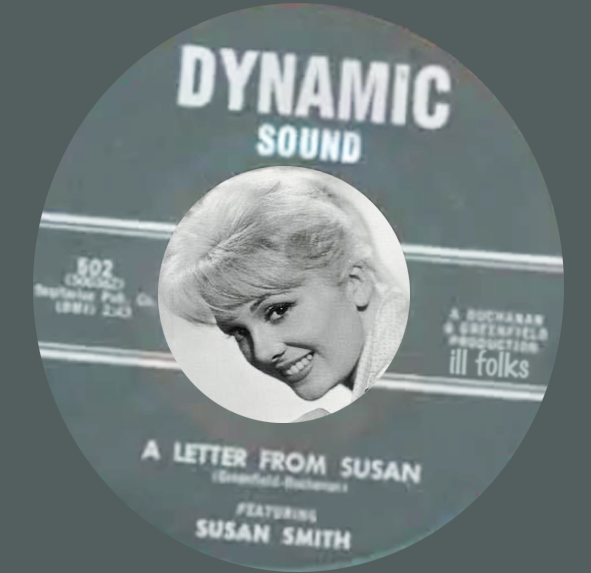
SUSAN SMITH - A LETTER FROM SUSAN - DICKIE GOODMAN’S WIFE BREAKS UP!


    Logic would tell you, “ah, Dickie Goodman’s wife was cajoled into doing a female narration for one of his dopey break-in novelty singles.” But in the world of Dickie Goodman, there is not a lot of logic. 

    First off, why would anyone change their name to something as bland as…SUSAN SMITH? That’s not too logical.  THEN we get to the amusement (almost as much fun as the record) of how this woman actually got a break in the comedy business from Dickie’s one-time partner Bill Buchanan instead. 


    According to the modest (the book IS full of typos, including the inability to spell Leiber or Stoller) tome authored by Dickie’s son Jon: 


    “My mother Susan Smith Goodman, was linked to Dickie Goodman by destiny before they even met. Her upbringing lead her to a singing career. And she recorded a break-in record, A LETTER FROM SUSAN (1962), with Dad’s former partner, Bill Buchanan. Bill Buchanan had acquired a new partner by then. Howie Greenfield was an established Brill Building music publisher…Ironically, this strange twist of fate wasn’t even what brought Susan to gaze into Dickie’s green eyes. It would be years before she met him and it wasn’t through these two artists…”

    “Mom’s father, Elliott Finkelstein, born August 19, 1902, grew up in Brooklyn. His parents were Russian Jew immigrants. Mom’s mother, Celia, was another Brooklyn born descendant of Russian Jew immigrants…on May 16, 1939, Esther Duchess Finkelstein (Mom) was born… (in) a pre WW II apartment building in Gravesend Brooklyn….Mom still lives in one of those buildings…paying rent…” 


    Esther Finkelstein, Esta as she was called, called herself by a less semitic name: Joan Elliott. Under this name, she appeared in road company musicals including “Damn Yankees” and “Pajama Game.” When this didn’t get her anywhere, she dyed her hair shiksa-blonde and took on the new name Susan Smith. She appeared on Broadway in “Bells are Ringing” and opened for Las Vegas singer Eddie Fisher among others. The Vegas beauty sometimes journeyed to California where shewon bit roles on a variety of TV shows, from “Dobie Gillis” to “Maverick” to “Perry Mason.”


    “A Letter from Susan” was atypical of what Susan Smith was all about, but she did seem to enjoy comedy, and hanging around comedians. Jackie Kannon, known to knock out a novelty single or two, had a stand-up club called The Ratfink Room. He even had a short-lived comedy/sex magazine by that name. It was there that Dickie Goodman glommed her and was smitten. We’ll leave it at that for this entry. Time for you to check out how a female does a “break-in.” 


A LETTER FROM SUSAN (break-in novelty) No dopey ego password, no pesty demand for a Paypal tip

SUSAN SMITH: BOY! Is there anybody going to listen to her story?


    The story of Susan Smith Goodman continues with…the a cover of the Lennon-McCartney classic, "GIRL."   

    As mentioned in the previous post, Susan Smith met her second husband Dickie Goodman at Jackie Kannon's club, The Ratfink Room. Jackie was signed to Roulette (home to Jimmie Rodgers, Tommy James, and Joey "Peppermint Twist" Dee) so Susan got a deal, too. It made more sense to be on a label with some well known names than try and put out a serious song on a novelty indie label.


     As Jackie Kannon knew, being signed to a "major label" had prestige, even if it didn't give royalties or lead to a Top 40 hit. Susan's "BOY," didn't go anywhere, but she went everywhere. The "major label" recording artist opened for Vegas stars and performed in nightclubs. “Susan Smith has the eyes of Kim Novak, a torso that commands attention, and a winning personality,” raved a review in the New York Herald. 

    “Boy” is a nice enough cover of “Girl,” isn’t it? The flip side was “I Won’t Turn Away Now.” Another Roulette single, which could be the title of a tome on Roulette's sneaky bookkeeping lies and misdemeanors: “The Cupboard’s Bare.”   


    After Roulette failed to do her justice, Dickie Goodman, now exploring more serious music styles via commercials and rock bands, tried to help Susan get that elusive hit. In 1967, they released a single called “Sunshine Days” b/w “Congressional Medal of Honor,” about Vietnam. He had other ideas for her, too. According to their son Jon, “Dickie’s connections got Susan a stellar opportunity to audition for singing the theme song to the movie “Valley of the Dolls.” But another young hopeful was given the role instead, Dionne Warwick…the studios were pushing new black performers at the time.”


    One of Goodman's better known projects was “The Glass Bottle,” a rock group born out of a promotion idea for selling recyclable glass over plastic. Around the same time, 1969, his wife was renamed "SUSANNA" Smith, and another single appeared, “Sarah Jane” b/w “St. Marks and Third” (a reference to where they picked up their older daughter from school). A semi-psych piece that started softly and then got more dramatic, it may have started too mildly to get the attention of busy disc jockeys and reviewers who gave an unknown maybe 10 seconds to wow 'em.

     Susan Smith may not have been too disappointed. She'd been kicking around show biz a long time, and now had two kids to raise. The Goodmans lived on East End Avenue, near Gracie Mansion and the East River, a neighborhood so tony, guys named Tony didn’t live there. Unfortunately wildman Dickie gambled his money away, and philandered on his pretty wife. He began to brazenly record with his mistress “Ruthie.” Her name was on a single…which led Susan Smith to become single. She filed for divorce. She got the apartment, but she gave up show biz to try and keep paying the rent, and raising her kids. 

    Son Jon again: “Let’s face it, you don’t go into a relationship thinking, I’ll marry this person, we’ll bring children into the world and then we’ll destroy each other and live out the rest of our lives in squalor…She could have had any man she wanted and all the good ones were taken.” 

     For more information on how the story unfolded for Susan and Dickie, get Jon’s book, which, amazingly, he doesn’t give away as a free download on a blog. Sadly, Susan’s collected works have yet to make it to a full-length tribute CD. It’s probably a combo of not being able to find good masters on some of her indie works and not owning the rights to the few major label things she did. Oh yes, and one other thing: who buys CDs? In fact, who buys music unless it's by Kanye or Taylor? People prefer to stream off a juke-box like YouTube or the low-paying royalty-challenged Spotify. If they own, it's because somebody offered a free download. Oh…BOY....

BOY - Beatles cover by Susan Smith - instant download, listen on line. No creepy German or Iron Curtain server loaded with spyware and porn ads

KATE SMITH - the THANK YOU song (you're SO welcome)


     Every now and then you need a lecturing reminder of how GRATEFUL you should be for what you have. This could be "You Have No Right to Be Sad," by PhD (on this blog somewhere) or even "Count Your Blessings (instead of sheep)" by Eddie Fisher (not on this blog anywhere.) 

      Be thankful, for example, that you didn't buy "Songs of the Now Generation" by Kate Smith. 

    When sappy big band songs went out of favor, Kate’s label suggested she simply sing sappy pop songs. You know, shit like “Little Green Apples.” Seriously. Little green apples WILL give you the shits. Why sing about them? And don't add "Honey."

    She put out a few albums that dragged Beatles songs and others into the middle of the road.  She didn’t get much of a “thank you” for this. Her old fans were not ‘In the Mood’ and young fans actually LIKED the Beatles and didn’t need grandma enunciating the lyrics. Maybe Mrs. Miller fracturing them, but not Kate doin’ it straight. 


    While Kate's game takes on Jimmy Webb ("Didn't We" and "By the Time I Get to Phoenix") might get gales of laughter at some gay party where the laughing gas goes in one end and out the other, they really aren't worth posting to normal people.  Out of curiosity, a Beatles track did appear on the blog last month. However...in actually re-listening to Kate's album, no question, “The Thank You Song” is a curio worth a listen. 


    It sounds like a kiddie record, not something that belongs between Bacharach and The Beatles. Music scholars might nestle this nugget between such horrors as "The Children's Marching Song" (aka "Nick Nack Paddy Whack" or "This Old Man") and the worst of show tune advice songs ("Whistle A Happy Tune"). The latter would be the right track. "The Thank You Song" was performed in "Maggie Flynn," a short-lived musical that starred Shirley Jones and Jack Cassidy. The book and lyrics were from Hugo and Luigi (Hugo Peretti and Luigi Creatore) and George Weiss (yes, the same team credited with souping up "Wimoweh" into "The Lion Sleeps Tonight.")


     Yes, there IS a good reason why this blog’s links do NOT have “ENJOY!” or “DIG IT!” on the link. Maybe "BEWARE" would be more like it. "The Thank You Song" is something you have to experience, like licorice chewing gum. 

You don't have to leave a nice comment over THE THANK YOU SONG

LORNE GREENE - SOMETHING’S GOTTA GIVE + Gene Barry "Burke's Law"


     One of the preoccupations with campy gays, and jealous nerds, is making fun of celebrities who sing. As in: how DARE they? As Shatner sang, in his great “Has Been” song, it’s “The never was talking about still trying…Forever bitter gossiping about never say die.” 


    Which isn’t to say that Lorne Greene wasn’t being risky when he switched from narration (“Ringo”) to handle swingin’ jazz. Greene, like another Jewish leading man, Gene Barry, had a very distinctive voice. Gene put out a solo album and even starred in a stage musical or two. He and Lorne figured an actor’s voice, trained for inflection, could handle mere musical notes. Lorne and Gene could carry tunes without dropping the key. 


    At worst (and there are those "golden throats, worst of celebrities singing" CDs) you get to hear what these people sound like in the shower. If you're a fan, you're not going to be too disappointed. With very few exceptions, the stars, the managers and the record labels haven't put out roaringly "so bad it's good" stuff. You have to be one hell of a pathetic loser to force laughter through your Chapstik-coated lips because Lorne Greene's just a tad creepy about swingin' the jazz.  


   As for Gene Barry, if you remember "Burke's Law," then you know he was always fond of singing, and a few episodes gave him the chance to carry a tune. He was always musical, studying violin in his early days, and getting a scholarship to the Chatham Square School of Music on the basis of his singing. His first Broadway appearances were in operetta (Rosalinda in 1942, The Merry Widow in 1943) and of course he returned to Broadway 40 years later for La Cage aux Folles.  


    Even so, some may cringe slightly as the former Eugene Klass uses his New Yawk accent ("Hey, Luvvah.....") to croon the hacky lyrics ("...let's make the scene") grafted onto the "Burke's Law" theme song. But....hilariously awful? Only to people who dress in drag to look hilariously awful. 


LORNE GREENE - instant download or listen on line. NO Paypal Tip wheedling, no ego-asshole passwords

BURKE'S LAW THEME BY GENE BARRY

Wednesday, August 29, 2018

KATE vs McCARTNEY - The Beatles weren't easy listening and didn't enunciate


A very queer musical term is: “easy listening.” 

    What is so difficult about music? Few things are EASIER than listening to music. You don’t have to do anything. As anyone who has suffered a bad train ride, an irritating visit to a shopping mall, or moronic neighbors know, it’s TOO easy to listen to music. The HARD part is shutting it out! 


    Years ago, snowflakes unable to tolerate voices, bought Mantovani “instrumentals,” accent on “mentals.” The idea was to "easy listening." Like having thicker white bread for your sandwich, because you don't want to taste the meat. Or adding few extra spoonfuls of sugar in your coffee and maybe fill half the cup with cream. Mmmm, good. Let's not actually taste the coffee too much. Lack of taste can be a taste. So say the fans of James Last and Ray Coniff and the rest. 


     You might think "easy listening" is now out of style. After all, Kate Smith is dead. But we do have Adele. She's made a fortune by appealing to all the saps in the trees. There are bloggers who still weep and sigh and post Acker Bilk stuff, and figure Andy Williams' take on "Bridge Over Troubled Water" was the definitive one. Contemporary pop and jazz vocalists continue to cover rock songs THE RIGHT WAY, and unlike Pat Boone doing heavy metal, there's absolutely no sense of humor behind it.  

    When “Here, There and Everywhere” came out, young rock fans figured their parents MIGHT not object to The Beatles if they heard this lovely, simple ballad. But, no…STILL not “easy listening” enough. They had to hear it from an "easy listening" vocalist, or somebody who knew how to enunciate clearly, like Kate.


Kate Smith was so fat she was HERE THERE AND EVERYWHERE - no ego password, no snotty demand for Paypal money, no download server sending you to bogus porn sites or trying to malware you

KATE vs CAT -- was the Kate Bush really...definitive?


    You all know Kate Bush’s version of her song “Babooshka.” Too screamy. Too dramatic. You want to know how it should be sung? Cool. That’s how. Restrained. Sophisticated. Done in the style of a chanteuse in an expensive French bistro that specializes in JAZZ.


    Right? Jazz and easy listening fans would think so.


    As Billy Joel once pointed out, we all have a “pointless point of view,” and it extends to music. We think what we like is right. Some old white European will tell you Beethoven’s music is REAL MUSIC. Some young black African is proud of banging on a drum and clapping the discs in her mouth together for some added clack. According to Rolling Stone, the most popular music now is RAP. That means it's art, too.


    Some brag that the REAL DEAL is the soul music they like (whites need not even TRY to sing it), or hardcore Hank Williams country music, or Miles blowin’ a riff on his horn. Genre music fans are often insistent that their outsider music is in. Meanwhile Adele and Taylor Swift fans tell you to go with the mob and stop calling that stuff crap.


    You remember when the Hollyridge Strings, Sinatra and Aretha all gave you the RIGHT way to listen to Beatles songs?  


    Most would say the artist has the definitive take, and most cover versions are way off. Then there's the easy listening bunch who say "tone it down," and the jazz crowd who say "that's not cool if you don't croon it." 


    Jazz singers sure wanna SMOOTH that rock! Right, Cat-Ballou? 


BABOOSHKA - listen online or download - no dopey passwords, no "tip jar" Paypal whining, no slimy servers that give you spyware and trick you into downloading a NEW version of Adobe

Thursday, August 09, 2018

Charlotte Rae passed away on August 5th. She was 92. A "sick" MERRY MINUET


      First off, in offering a picture of Charlotte in her TV sitcom prime, the full cover of her obscure album was cut off a bit. The title is NOT, "Songs I Taught my Moth." 

    Sad that the lovely, talented and naturally funny Charlotte Rae is no longer with us.  Also sad is that the representative song below is not up to the usual blog-basic standards. The one time I saw it, in one of the used record shops I used to haunt, the jacket was split on most of its seams and the previous owner had played the vinyl a lot. Fortunately with some careful digital work, the sound quality picks up after some unavoidable crunchiness during the first 20 seconds. Another problem is that back then (around 1955) some records were pressed “quietly,” and you had to turn up the volume just to hear it at all, thus magnifying any dust or scratches.

    When the obits arrived on Charlotte Rae Lubotsky, almost all of them concentrated on her mature work as a sitcom star. That would be “Diff’rent Strokes,” which evolved into “The Facts of Life.”  There was some mention that she played Mrs. Schnauzer on “Car 54 Where Are You,” but you’d have to be OLD to remember or care about that show. (Remembering and caring being two different things). 


    Charlotte was atypical of most Jewish entertainers; she was born in Wisconsin and attended Northwestern University. She didn’t come to New York City till 1948. It took a half-dozen years for her to establish herself, as she worked the posh nightclubs (Blue Angel, Village Vanguard) with comedy routines and parody songs (including a Zsa Zsa Gabor imitation, courtesy of songwriter Sheldon Harnick).  


    She managed to snag a role in the obscure musical "Three Wishes for Jamie" in 1952, and got good notices for “The Threepenny Opera” in 1954. The following year she turned up in "The Golden Apple," and parlayed her credits into a record deal. Her first and last album is a rather fey and chi-chi collection of sophisticated songs. Frankly, it's dated now, and the stylings would seem pretentious to anyone who doesn't know and like some of Rae's contemporaries: Cole Porter (she covers two of his songs), Noel Coward, Hildegarde, Anna Russell and Elsa Lanchester. Rae's stand-up style was like Jean Carroll's, without the neurotic quavery voice that she (and Alice Ghostley) would find so lucrative in TV sitcom work. 

    “Merry Minuet,” one of four Sheldon Harnick songs on the album (which is, amazingly, now on CD) was first sung by Orson Bean in John Murray Anderson’s revue “Almanac.” Revues were all the rage back then, with Leonard Sillman creating his annual “New Faces” variety show (Rae was in one of those), Ben Bagley offering his “Shoestring” revues (Rae was in one of those, titled "Littlest Revue") and Julius Monk selecting promising stars for his “Upstairs at the Downstairs” shows. Harnick would go on to write the lyrics for “Fiddler on the Roof,” including one of the most charmingly cynical songs in Broadway history, “When Messiah Comes.” How cynical does it get…the song was funny, cutting, and cut from the show before the curtain rose. (When Herschel Bernardi replaced Zero Mostel as Tevye, and issued his own album of “Fiddler” songs, he made sure to cover “When Messiah Comes.”) 


    If the name “Merry Minuet” sounds familiar, it’s probably because of the Kingston Trio version, which hammered the song into folk, and accentuated the Tom Lehrer-like ghoulishness of cheerfully acknowledging world chaos. 


    Here, Rae performs it very much in cabaret style, with the so-called “Baroque Bearcats” helping out, and John Strauss at the piano. Strauss and Rae were married in 1951. Although she worked TV (since so many variety shows were shot in New York) she preferred Broadway. This included her very atypical turn as “Mammy Yokum” in the original stage production of “Li’l Abner,” her co-star role with Ghostley in "The Beauty Part," and her Tony nomination opposite Harry Secombe in the failed musical "Pickwick." She ended the 60's with her second Tony nomination for "Morning Noon and Night." She was in "Boom Boom Room" with Madeline Kahn in 1973, and won an off-Broadway Obie for "Whiskey," written by Terrence McNally.


     She moved out to California for TV work, including a memorable guest spot as a neurotic, emotional Tupperware saleslady in "All in the Family." From there, producer Norman Lear cast her in “Diff’rent Strokes,” and the spinoff "The Facts of Life" where her character Mrs. Garrett was housemother in a school for girls. The 70’s was a time for explosive new freedoms, from stage nudity to edgy political comedy. People were encouraged to be themselves, and husband John Strauss came out of the closet and told Charlotte that he was really gay. Now was the time for him to realize who he really was, and be a happy gay. It was time for Charlotte to get a divorce.

    "The Facts of Life" helped Charlotte Rae achieve fame and economic security. It might not buy health, but it allowed her to keep on top of emerging problems, and she beat pancreatic cancer and had a pacemaker installed in 1982. She left her sitcom due to the strain of the work (Cloris Leachman, her friend from Northwestern University became the new housemother) but she took roles at her leisure. This included the challenge of a Chicago stage production of “Driving Miss Daisy.” She wrote her autobiography and was still in demand for interviews and other work when was diagnosed with bone cancer last year. The fact is...she had a very full life. Her autobiography will tell you much more. 


 The wry, doom-loving MERRY MINUET by Sheldon Harnick, performed by Charlotte Rae